RTI INTERNATIONAL
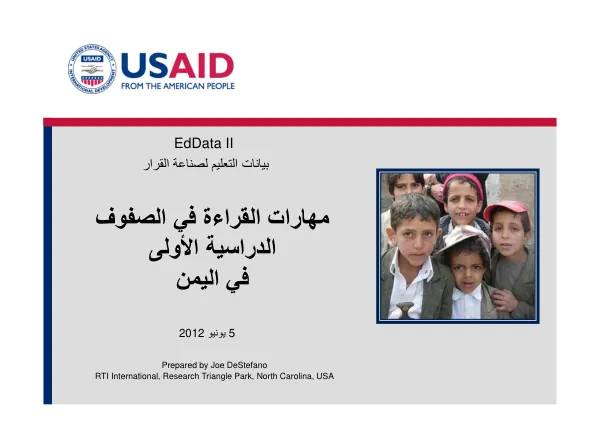
EdData II: Biannual Education Data for Reading Skills in Yemen
In Yemen, the EdData II project was conducted in 2012 to assess the quality of education in the country.
2012 · 13 pages
Sign in to readA free account is required to download.
Abstract
The project aimed to provide a comprehensive picture of the education sector in Yemen, focusing on the quality of education, access to education, and the effectiveness of education policies. The EdData II project used a range of data collection methods, including surveys, interviews, and observations. The project collected data from a sample of 5,000 students in grades 2 and 3, as well as from teachers, school administrators, and other education stakeholders. The results of the EdData II project showed that the quality of education in Yemen is a major concern. The project found that many students are not able to read or write, and that the education system is plagued by a lack of resources, inadequate infrastructure, and poor teacher training. The project also found that the education system in Yemen is not equitable, with girls and boys having different levels of access to education. The project recommended that the government of Yemen take steps to improve the quality of education, including increasing funding for education, improving teacher training, and expanding access to education for girls and boys. In Yemen, the Early Grade Reading Assessment (EGRA) was conducted to assess the reading skills of students in grades 2 and 3. The EGRA is a standardized test that measures students' ability to read aloud and comprehend texts. The test is administered in a controlled environment, and the results are used to identify areas where students need additional support. The results of the EGRA in Yemen showed that many students are struggling to read and comprehend texts. The test found that 43% of students in grade 2 and 25% of students in grade 3 were not able to read a single word correctly. The test also found that many students were not able to answer questions correctly, with 65% of students in grade 2 and 42% of students in grade 3 unable to answer a single question correctly. The EGRA results also showed that students who were able to read and comprehend texts were more likely to be able to answer questions correctly. The test found that students who were able to read at a level of 11-20 words per minute were more likely to be able to answer questions correctly, with 44% of students in this category able to answer a single question correctly. The EGRA results have important implications for education policy in Yemen. The test highlights the need for improved reading instruction and support for students who are struggling to read and comprehend texts. The test also highlights the need for increased funding for education and improved teacher training to support the development of reading skills among students. The project also found that the education system in Yemen is plagued by a lack of resources, inadequate infrastructure, and poor teacher training. The project recommended that the government of Yemen take steps to address these issues, including increasing funding for education, improving teacher training, and expanding access to education for girls and boys. The EdData II project has important implications for education policy in Yemen. The project highlights the need for improved reading instruction and support for students who are struggling to read and comprehend texts. The project also highlights the need for increased funding for education and improved teacher training to support the development of reading skills among students. The project also highlights the need for improved access to education for girls and boys, and for increased funding for education to support the development of reading skills among students. The project recommends that the government of Yemen take steps to address these issues, including increasing funding for education, improving teacher training, and expanding access to education for girls and boys. The EdData II project has also identified several key areas for improvement in the education system in Yemen. The project recommends that the government