ENCOMPASS, LLC
Education Brief: DRC
The Democratic Republic of Congo's education sector is characterized by significant challenges, including low youth literacy rates and high rates of youth unemployment.
2020 · 5 pages
Sign in to readA free account is required to download.
Abstract
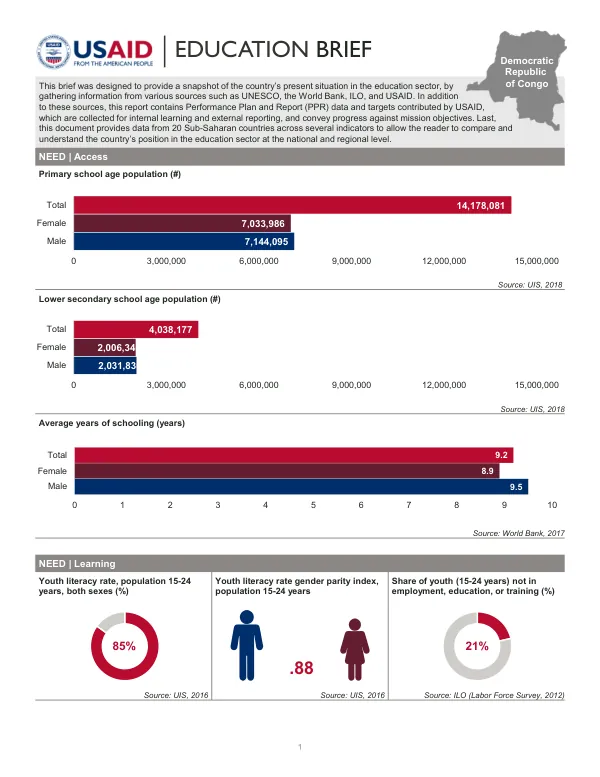
According to UNESCO data from 2016, the youth literacy rate in the Democratic Republic of Congo is 85%, with a gender parity index of 0.88. However, 21% of youth aged 15-24 are not in employment, education, or training. The country's education system faces a shortage of infrastructure, with a significant gap in the number of learners in primary and secondary schools. According to UIS data from 2018, the primary school age population in the Democratic Republic of Congo is approximately 7.1 million, while the lower secondary school age population is around 2.1 million. The average years of schooling in the country is 9.2 years, with a slight disparity between male and female students. The country's capacity to govern its education sector is also a concern, with a self-reliance capacity score of 0.43 out of 1, according to USAID's Country Roadmaps from 2018. This score indicates a need for improvement in the country's ability to manage its education system independently. The country's commitment to education governance is also a challenge, with a self-reliance commitment score of 0.43 out of 1. The Democratic Republic of Congo's education sector is also affected by fragility, with a Fragility Index score of 110.7 out of 120, according to the Fund for Peace Fragile States Index Annual Report from 2018. This score indicates a high level of fragility in the country's education sector. In terms of education expenditure, the country's government expenditure on education as a percentage of GDP is 3%, which is below the UNESCO benchmark of 5%. The initial government funding per student in constant PPP$ is $583, which is also below the UNESCO benchmark. The USAID's Performance Plan and Report (PPR) indicators provide data on the country's progress in achieving its education goals. According to the PPR data, the number of learners in primary schools or equivalent non-school based settings reached with USG education assistance is 1,071,584, while the number of learners in secondary schools or equivalent non-school based settings reached with USG education assistance is 896,428. The number of primary school educators who complete professional development activities on implementing evidence-based reading instruction with USG assistance is 4,788, while the number of primary or secondary educators who complete professional development activities with USG assistance is 18,434. The PPR indicators also provide data on the country's progress in achieving its higher education and workforce development goals. According to the PPR data, the number of host country tertiary education institutions receiving capacity development support with USG assistance is 5, while the number of individuals attending tertiary education institutions with USG scholarship or financial assistance is 4. The number of individuals with new or better employment following completion of USG-assisted workforce development programs is 13,488, while the number of individuals with improved skills following completion of USG-assisted workforce development programs is 9,389.