ENCOMPASS, LLC
Education Brief: Mali
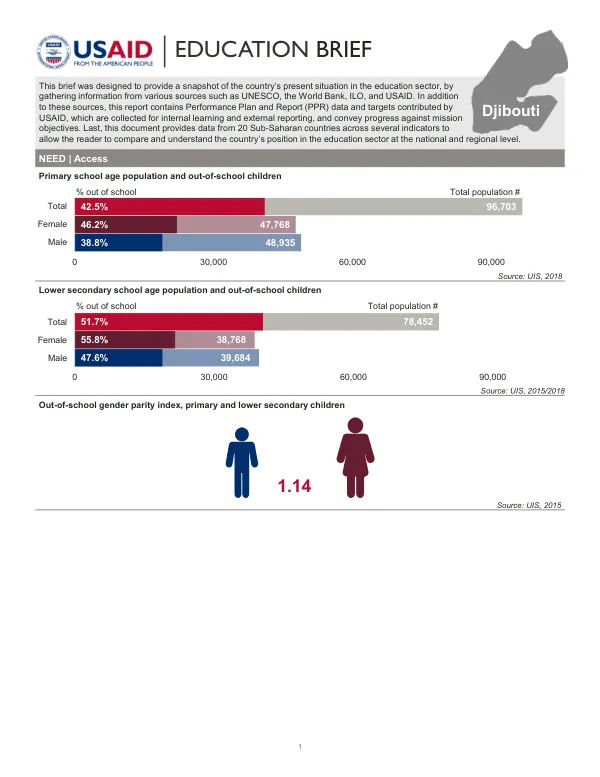
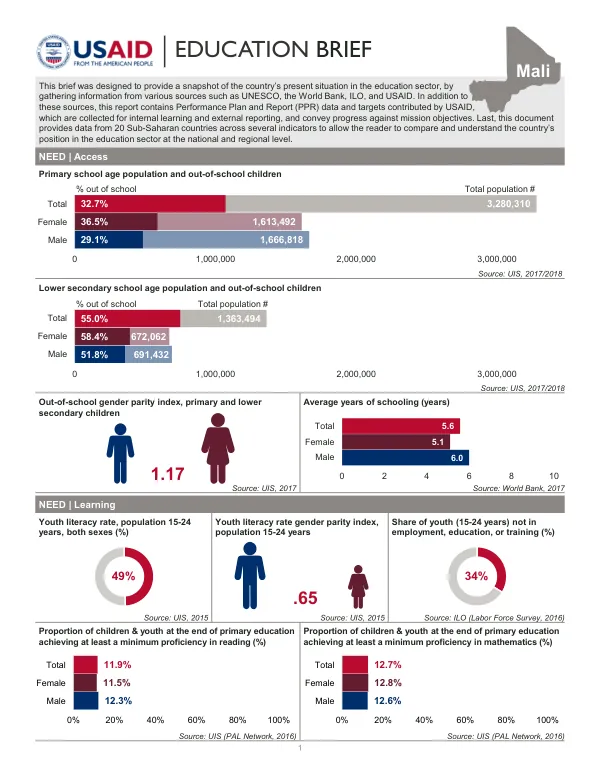
The education sector in Mali has a significant number of out-of-school children, with 32.7% of the total population aged 5-14 not attending school.
2020 · 5 pages
Sign in to readA free account is required to download.
Abstract
The country's education system faces challenges in providing quality education to its citizens, particularly in rural areas. The government has implemented various initiatives to improve education outcomes, including increasing access to education for girls and women. According to UNESCO, the literacy rate in Mali is 49%, with a significant gap between men and women. The country has made progress in increasing access to education, with a 27% increase in the number of learners in primary schools between 2015-2018. However, the quality of education remains a concern, with a significant proportion of learners not attaining minimum proficiency in reading and mathematics. The government has also implemented programs to improve teacher training and professional development, with a focus on increasing the number of teachers with specialized training in areas such as special education and conflict resolution. Additionally, the government has invested in infrastructure development, including the construction of new schools and the repair of existing ones. In terms of funding, the government has committed to increasing its expenditure on education as a percentage of GDP. However, the country still faces significant challenges in providing adequate resources to support the education sector. The government has also implemented programs to improve the management of education resources, including the establishment of a new education management information system. The education sector in Mali has made progress in increasing access to education, particularly for girls and women. However, the country still faces significant challenges in providing quality education to its citizens, particularly in rural areas. The government has implemented various initiatives to improve education outcomes, including increasing access to education for girls and women, improving teacher training and professional development, and investing in infrastructure development. The country's education system faces challenges in providing quality education to its citizens, particularly in rural areas. The government has implemented various initiatives to improve education outcomes, including increasing access to education for girls and women, improving teacher training and professional development, and investing in infrastructure development. The government has also committed to increasing its expenditure on education as a percentage of GDP. The government has also implemented programs to improve the management of education resources, including the establishment of a new education management information system. The country's education system faces challenges in providing quality education to its citizens, particularly in rural areas. The government has implemented various initiatives to improve education outcomes, including increasing access to education for girls and women, improving teacher training and professional development, and investing in infrastructure development.
Related documents