THE AMERICAN INSTITUTES FOR RESEARCH
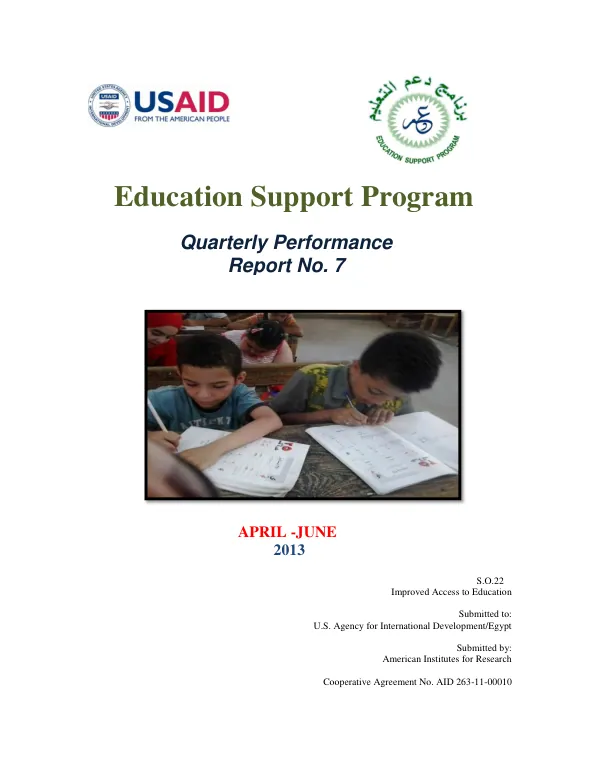
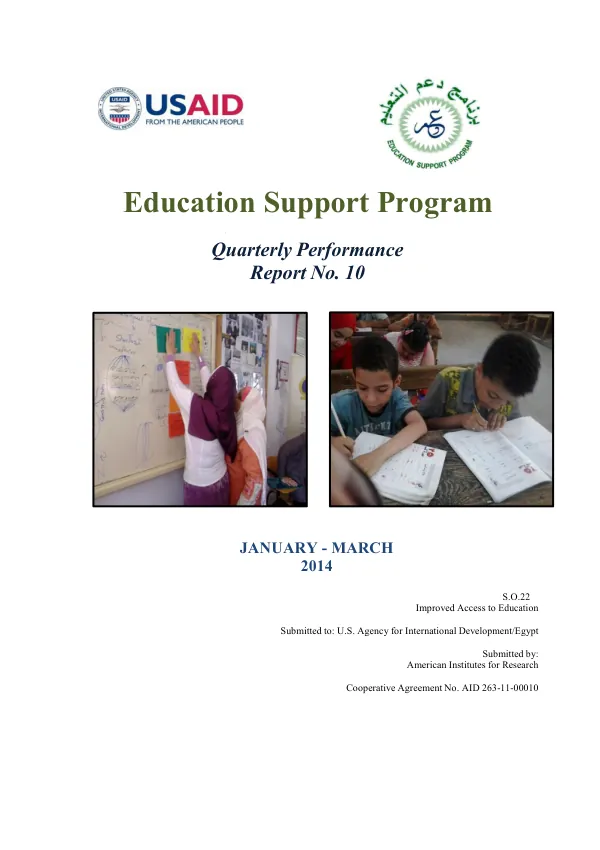
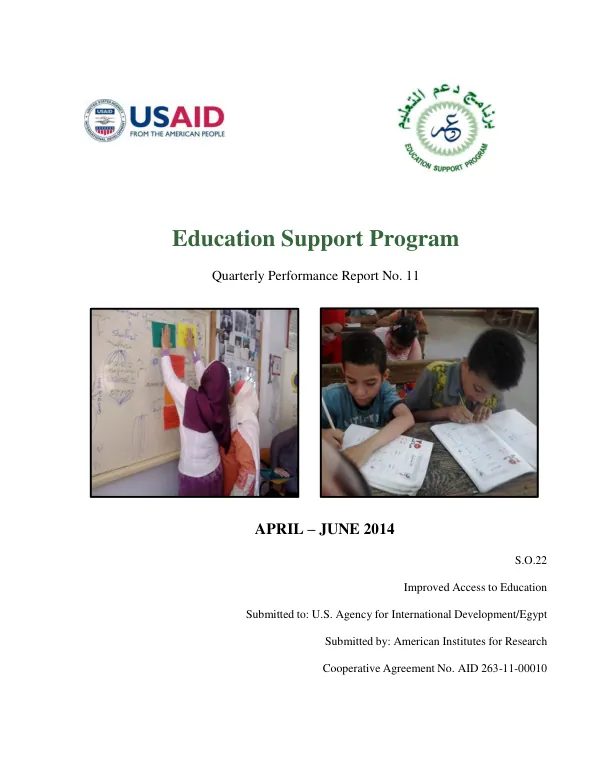
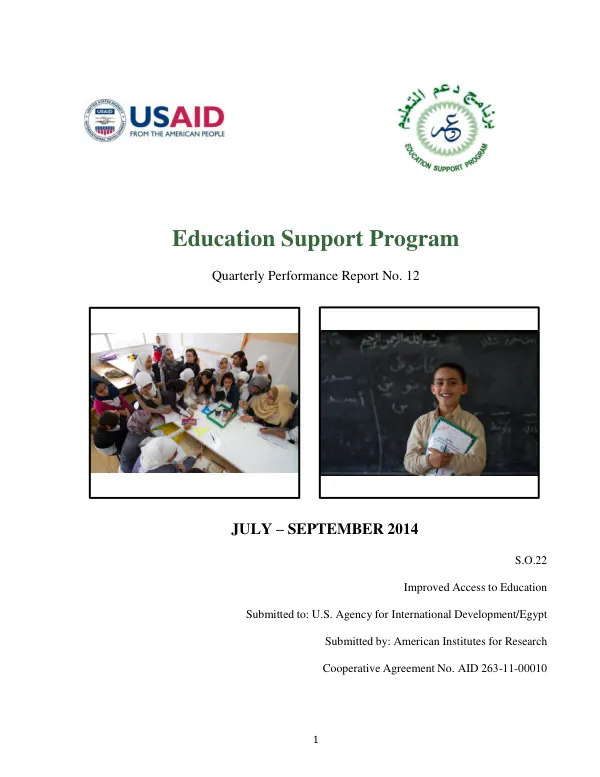
Education Support Program
The Education Support Program (ESP) aims to support the delivery of educational services in Egyptian schools during a critical period in the country's history.
2014 · 28 pages
Sign in to readA free account is required to download.
Abstract
The program focuses on two key elements: the role of school Boards of Trustees (BoTs) in promoting citizenship, community participation, and participation in educational decision-making, and the infusion of young Assistant Teachers (ATs) into the education system. These ATs bring a new hope to the education system, inspired by the values of the Arab Spring: human rights, dignity, and justice. The ESP team regards education as an opportunity to aid and enhance Egypt's reform process. Since the political transition in Egypt began on January 25, 2011, Egyptian schools have undergone changes relating to two key elements of the country's human resource capital: the role of BoTs in promoting citizenship, community participation, and participation in educational decision-making, and the infusion of young ATs into the education system. The new role of the BoTs and the infusion of young ATs into the education system underscore the principal focus of ESP. In the beginning of Year 4, ESP implemented newly added and modified activities to meet the needs in both focus areas. These activities included developing and implementing a remedial reading and writing program, initiating Science Clubs, building BoTs' capacity to support at-risk students, building the capacity of school-based mentors, supporting the selection and training of school leaders, and supporting the certification of 50 local MoE training units. ESP also increased the target number of ATs to 100,000 and modified the indicators, activities, and reports accordingly. Throughout this quarter, Social Work Departments (SWDs) independently continued BoT training, where 4,291 new BoTs were trained, bringing the total number to 26,771 BoTs to date. ESP also supported the training of 937 BoTs in supporting students at risk of dropping out. In addition, the ESP team worked closely with the MoE to make the remedial reading and writing program readily available to roll out in all governorates. The remedial program was in line with the ministry's strategy to improve reading and writing levels. ESP continued to sustain the implementation of Science Clubs through supporting BoTs and providing other services. The Science Clubs continued to attract the community's engagement throughout this quarter, and meetings were held to prepare for new cycles of Science Clubs. The Science Clubs enabled students to discover their passion for science and join STEM schools. ESP conducted a study to assess the model, particularly focusing on the mechanisms that would allow the MoE and other stakeholders to roll it out in more schools. This report highlights the milestones and achievements of ESP within the period between July and September 2014. It expounds on the progress made in this summary and details the activities ESP initiated and implemented during this quarter. ESP is committed to carrying on and spreading its mission of providing the utmost support to the process of delivering good education to all Egyptians. The ESP team worked closely with the MoE to make the remedial reading and writing program readily available to roll out in all governorates. The remedial program was in line with the ministry's strategy to improve reading and writing levels. ESP continued to sustain the implementation of Science Clubs through supporting BoTs and providing other services. The Science Clubs enabled students to discover their passion for science and join STEM schools. ESP conducted a study to assess the model, particularly focusing on the mechanisms that would allow the MoE and other stakeholders to roll it out in more schools. The study aimed to identify the key factors that contributed to the success of the Science Clubs and to provide recommendations for scaling up the model. The study also aimed to identify the challenges faced by the MoE and other stakeholders in implementing the Science Clubs and to provide recommendations for addressing these challenges. The ESP team worked closely with the MoE to identify the key factors that contributed to the success of the Science Clubs and to provide recommendations for scaling up the model. The team also worked closely with the MoE to identify the challenges faced by the MoE and other stakeholders in implementing the Science Clubs and to provide recommendations for addressing these challenges. The ESP team also worked closely with the MoE to identify the key factors that contributed to the success of the remedial reading and writing program and to provide recommendations for scaling up the model. The team also worked closely with the MoE to identify the challenges faced by the MoE and other stakeholders in implementing the remedial reading and writing program and to provide recommendations for addressing these challenges. The ESP team also worked closely with the MoE to identify the key factors that contributed to the success of the teacher professional development program and to provide recommendations for scaling up the model. The team also worked closely with the MoE to identify the challenges faced by the MoE and other stakeholders in implementing the teacher professional development program and to provide recommendations for addressing these challenges. The ESP team also worked closely with the MoE to identify the key factors that contributed to the success of the instructional leadership development program and to provide recommendations for scaling up the model. The team also worked closely with the MoE