USAID DEC
Effect of Cooking Methods and Formulation of Fortified Blended Foods on the Food Matrix and Nutrient Bioavailability: An Experiment from The Food Aid Quality Review, Sierra Leone Four Foods Study
Sign inUNIVERSITÉ DE TUFTS
Effect of Cooking Methods and Formulation of Fortified Blended Foods on the Food Matrix and Nutrient Bioavailability: An Experiment from The Food Aid Quality Review, Sierra Leone Four Foods Study
The Food Aid Quality Review, Sierra Leone Four Foods Study, was conducted in 2019 to investigate the effect of cooking methods and formulation of fortified blended foods on the food matrix and nutrient bioavailability.
2019 · 13 pages
Sign in to readA free account is required to download.
Abstract
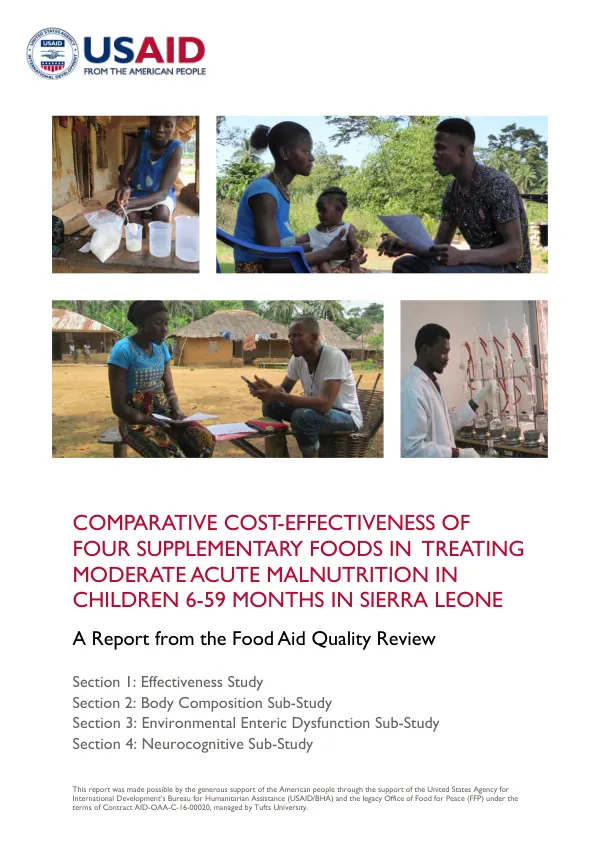
The study was designed to determine the relative effectiveness and cost-effectiveness of four supplementary foods in the treatment of moderate acute malnutrition in children ages 6 to 59 months. Three fortified blended foods (FBFs) were tested: Corn Soy Whey Blend (CSWB), Corn Soy Blend Plus (CSB+), and Super Cereal Plus with amylase (SC+A). The study found that the cooking method for the FBFs varied, but it was primarily the differences in formulation that led to different physical properties of the porridge food matrices. The differences in formulation, in combination with the nutrient profile of the FBFs, would affect nutrient availability and effectiveness of the food aid products. SC+A has a greater likelihood of being the most effective amongst the FBFs in terms of health outcomes because it is the least viscous, has a higher micronutrient profile, and dairy protein. Next in order would be CSWB, due to inclusion of dairy protein and higher level of micronutrients. CSB+ is likely to be least effective. The study also highlighted the importance of considering the overall food matrix, including its physical properties, when interpreting results in relation to intended health outcomes. The hypothesis is that the final food matrix, including its physical properties, of each cooked FBF would impact nutrient absorption and may affect health outcomes at the end of the study period. This hypothesis should be tested because health outcomes in individuals are affected by several factors, including the type of food consumed, nutrient density of the foods, overall health of the person, environmental factors, etc. The Food Aid Quality Review project, implemented by Tufts University, has recommended ways to improve the nutritional quality of food aid products since 2009. Some of these recommendations have been tested in field trials to assess their practical implications. The Sierra Leone Treatment of Moderate Acute Malnutrition (MAM) Four Foods study is one such field study that seeks to determine the relative effectiveness and cost-effectiveness of four supplementary foods in the treatment of MAM in children 6-59 months. The study foods included three fortified blended flours (FBFs), Corn Soy Blend Plus (CSB+), Corn Soy Whey Blend (CSWB), and Super Cereal Plus with amylase (SC+A), and a lipid-based ready-to-use supplementary food (RUSF).