USAID DEC
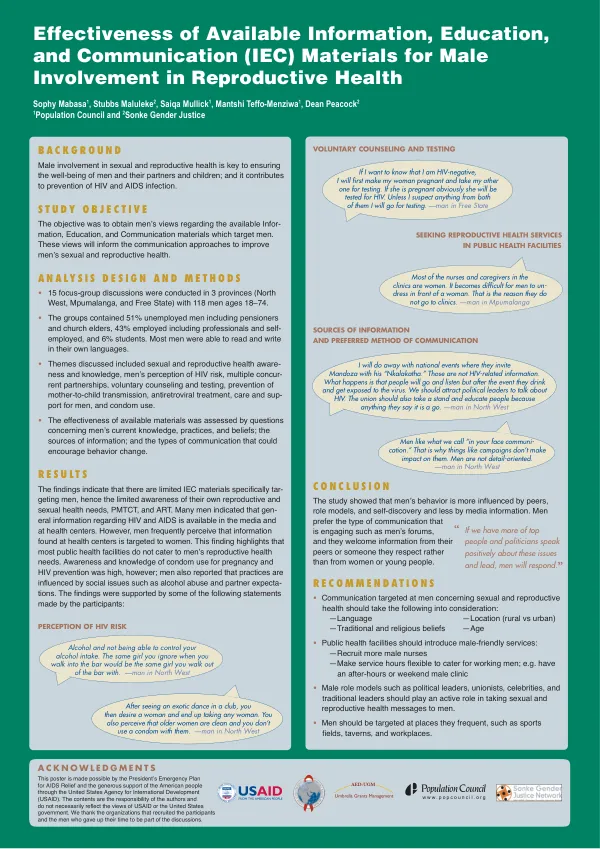
Effectiveness of Available Information, Education, and Communication (IEC) Materials for Male Involvement in Reproductive Health
Sign inPOPULATION COUNCIL
Effectiveness of Available Information, Education, and Communication (IEC) Materials for Male Involvement in Reproductive Health
Male involvement in sexual and reproductive health is crucial for ensuring the well-being of men and their partners and children, and it contributes to the prevention of HIV and AIDS infection.
2009 · 1 pages
Sign in to readA free account is required to download.
Abstract
The Population Council and Sonke Gender Justice conducted a study to obtain men's views regarding the available Information, Education, and Communication (IEC) materials that target men. These views will inform communication approaches to improve men's sexual and reproductive health. The study involved 15 focus-group discussions conducted in three provinces (North West, Mpumalanga, and Free State) with 118 men aged 18-74. The groups consisted of 51% unemployed men, including pensioners and church elders, 43% employed individuals, including professionals and self-employed individuals, and 6% students. Most men were able to read and write in their own languages. The discussions covered various themes, including sexual and reproductive health awareness and knowledge, men's perception of HIV risk, multiple concurrent partnerships, voluntary counseling and testing, prevention of mother-to-child transmission, antiretroviral treatment, care and support for men, and condom use. The effectiveness of available IEC materials was assessed by questions concerning men's current knowledge, practices, and beliefs, as well as the sources of information and the types of communication that could encourage behavior change. The findings indicate that there are limited IEC materials specifically targeting men, resulting in limited awareness of their own reproductive and sexual health needs, prevention of mother-to-child transmission (PMTCT), and antiretroviral treatment (ART). Many men reported that general information regarding HIV and AIDS is available in the media and at health centers, but they frequently perceive that information found at health centers is targeted towards women. Awareness and knowledge of condom use for pregnancy and HIV prevention were high among the men, but they also reported that practices are influenced by social issues such as alcohol abuse and partner expectations. The findings were supported by statements made by the participants, including the importance of having male role models, such as political leaders, unionists, and celebrities, to take sexual and reproductive health messages to men. Men also preferred communication that is engaging, such as men's forums, and welcomed information from their peers or someone they respect rather than from women or young people. The study concluded that men's behavior is more influenced by peers, role models, and self-discovery, and less by media information. Public health facilities should introduce male-friendly services, including recruiting more male nurses and making service hours flexible to cater for working men. Male role models should play an active role in taking sexual and reproductive health messages to men, and men should be targeted at places they frequent, such as sports fields, taverns, and workplaces.
Related documents