USAID DEC
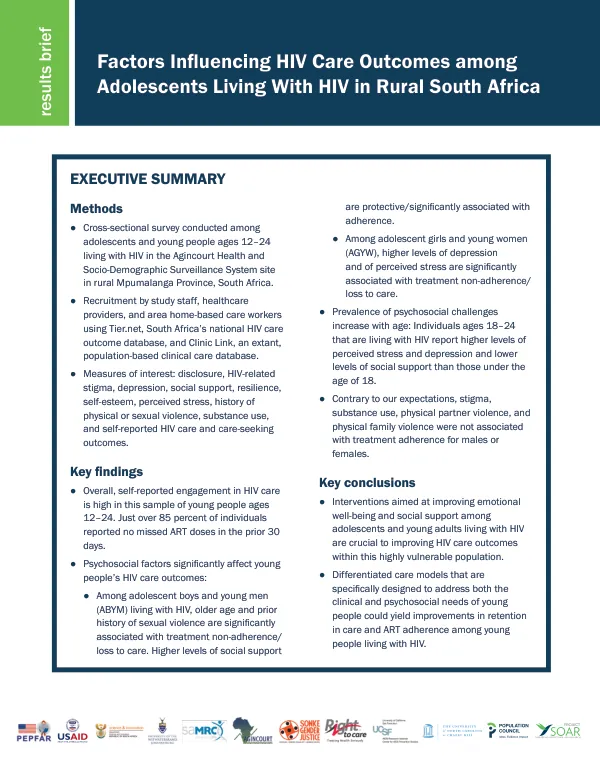
Factors Influencing HIV Care Outcomes among Adolescents Living With HIV in Rural South Africa
Sign inNORTH CAROLINA A&T STATE UNIVERSITY
Factors Influencing HIV Care Outcomes among Adolescents Living With HIV in Rural South Africa
Adolescents living with HIV in rural South Africa continue to bear a disproportionate burden of the HIV epidemic.
2021 · 10 pages
Sign in to readA free account is required to download.
Abstract
In the Agincourt Health and Socio-Demographic Surveillance System (HDSS) site in rural Mpumalanga Province, a cross-sectional survey was conducted among HIV-positive young people ages 12-24 to better understand HIV care outcomes in the era of Universal Test and Treat (UTT) policy. The study aimed to identify factors influencing HIV care outcomes among adolescents living with HIV in rural South Africa. The survey included 362 young people, with a median age of 21 years. The majority of participants were female (70%), unemployed (46%), and single (82%). Over half of participants were single or double orphans, and over 75% had completed at least some secondary school. Male participants were substantially younger than female participants, with 48% under the age of 18 compared to 21% of female participants. Self-reported disclosure of HIV status varied by gender and age. Approximately 54% of study participants reported prior disclosure of their HIV status, with ABYM less likely to report disclosure than AGYW (31% versus 64%). Disclosure also varied by age, with 70% of young people ages 18-24 reporting prior disclosure, while only 20% of respondents under the age of 18 had disclosed. The most commonly reported reasons for choosing not to disclose among individuals under the age of 18 were lack of knowledge about HIV and fear of being told by the person they wanted to disclose to. The Berger HIV Stigma scale, which captures respondents' personalized stigma, disclosure concerns, negative self-image, and perceptions of public attitudes, had a median score of 24 (IQR: 21-27). Possible scale scores range from 10 to 40, indicating that stigma was a significant concern among study participants. Psychosocial factors significantly affected young people's HIV care outcomes. Among ABYM, older age and prior history of sexual violence were significantly associated with treatment non-adherence/loss to care. Higher levels of social support were protective and significantly associated with adherence. Among AGYW, higher levels of depression and perceived stress were significantly associated with treatment non-adherence/loss to care. Prevalence of psychosocial challenges increased with age. Individuals ages 18-24 reported higher levels of perceived stress and depression and lower levels of social support than those under the age of 18. Contrary to expectations, stigma, substance use, physical partner violence, and physical family violence were not associated with treatment adherence for males or females. The study's findings highlight the importance of addressing psychosocial challenges and improving emotional well-being and social support among adolescents and young adults living with HIV. Differentiated care models that are specifically designed to address both the clinical and psychosocial needs of young people could yield improvements in retention in care and ART adherence among young people living with HIV.
Related documents
Documents in this collection
 2009
2009USAID DEC
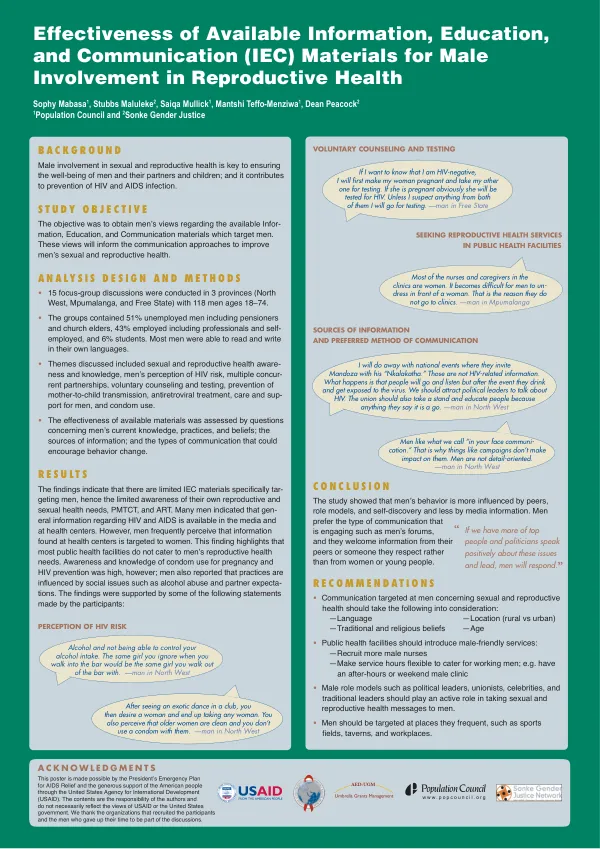
Effectiveness of Available Information, Education, and Communication (IEC) Materials for Male Involvement in Reproductive Health
Open record 2021
2021USAID DEC