USAID. BUR. FOR POLICY AND PROGRAM COORDINATION. CENTER FOR DEVELOPMENT INFORMATION AND EVALUATION (CDIE)
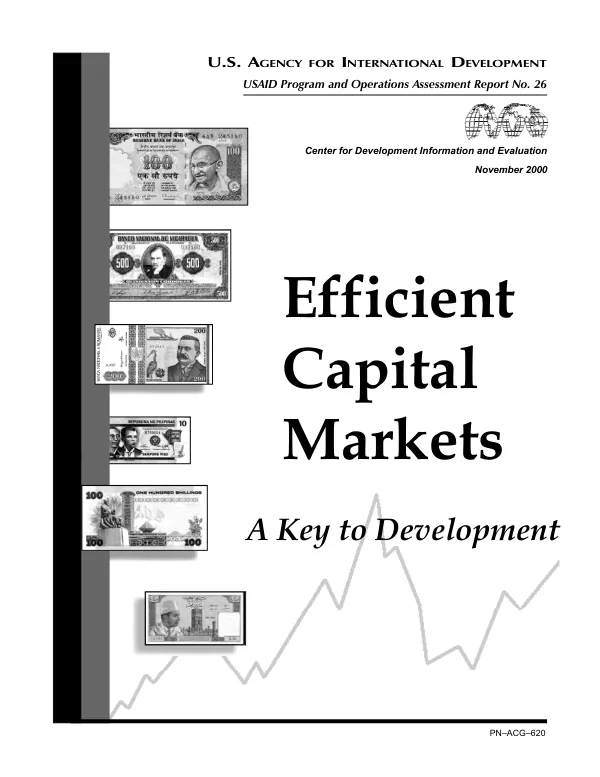
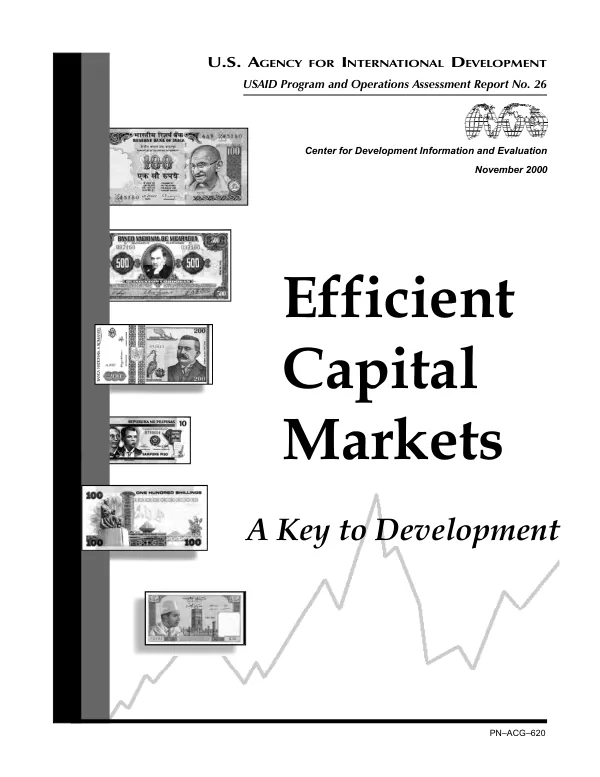
Efficient capital markets : a key to development
This study examines USAID activities to help create or strengthen capital markets in developing countries, specifically India, Kenya, Morocco, the Philippines, and Romania.
Fox, James W. · 2000
Sign in to readA free account is required to download.
Abstract
An earlier USAID effort to create investment banks in Central America in the 1960s is also reviewed. First, USAID has been successful in promoting capital market development. The general approach promoted by USAID -- emphasizing the strengthening of government regulatory institutions -- is sound, and USAID has been able to contract capable expertise to carry out such projects. Second, an efficient capital market is an important ingredient of a successful development strategy. Though the effects of strengthening capital markets on the poorer strata of society are indirect and long-term, they also have important consequences in generating increased investment and creating more productive employment. Moreover, the failure to provide strong oversight of capital markets, evident in the Asian financial crisis of 1997- 98, also can have severe adverse consequences for poor people. Specific lessons learned from the study include the following: (1) Effective capital market development should not be left to the private sector. Government oversight is needed to prevent market intermediaries from maintaining monopolistic arrangements that lead to high transactions costs, to an atmosphere permissive of self-dealing and rigged transactions, and to insufficient flow of information to potential investors. (2) Donor support should aim primarily at strengthening this governmental regulatory framework. Payoffs to such support are likely to be much higher than direct support of individual enterprises or investment houses. (3) Capital market projects are unlikely to stimulate economic growth where economic conditions are unfavorable. Inflation, large government budget deficits, and uncertainty about the path of future government policies all deter investment. Capital market reforms will not produce growth in a stagnant economy. Rather, such projects are best suited to rapidly growing economies where existing capital structures are limiting investment, and where firms are actively interested in additional financing. (4) In the longer term, creation of long-term debt markets is essential to reduce the risk of financial crises, such as recently occurred in Asia. That will require improvements in government policy to eliminate inflationary expectations and reduce crowding out by government. (Author abstract, modified)