DEMOCRACY INTERNATIONAL, INC.
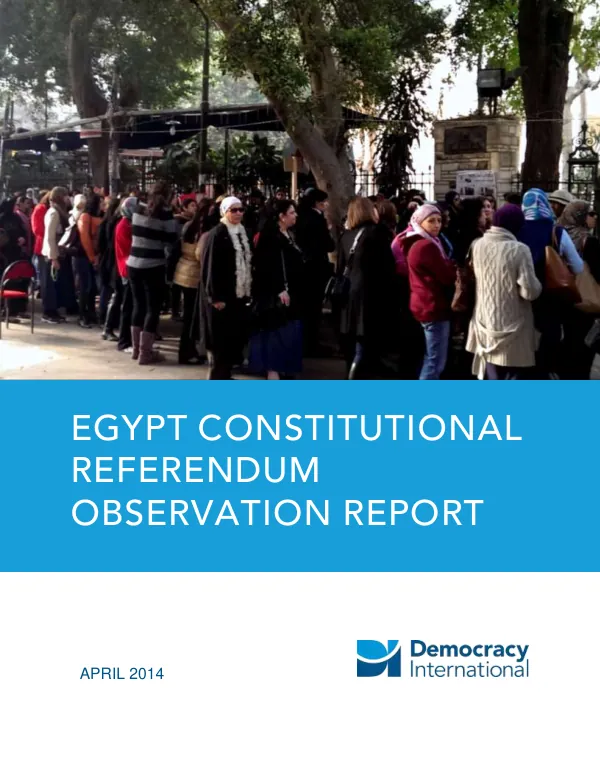
Egypt Constitutional Referendum Observation Report
Egypt's Constitutional Referendum Observation Report began in early December 2013 with the deployment of long-term observers throughout the country.
2014 · 55 pages
Sign in to readA free account is required to download.
Abstract
These observers held dozens of meetings with domestic and international stakeholders to gather information on the referendum and the broader political environment. The report is primarily based on the work of the observer delegation, which included individuals with experience in election observation, election administration, political campaigning, Egyptian politics, and international relations. The observation mission was led by a core team that worked extensively in the weeks leading up to the referendum. This team included DI Director of Programs Jed Ober, Program Officers Alice Guilford and Naomi Rasmussen, Logistics and Operations Manager Augusto Comé, Observer Coordinator Emanuel Gény, Electoral Legal Expert Christopher Jackson, and Civic Engagement Expert Kourtney Pompi. These individuals played a crucial role in ensuring the smooth execution of the mission. The report assesses the 2014 Constitutional Referendum, which was held in April 2014. The observation mission focused on the political context and legal framework, election administration, campaign environment, and civil society engagement. The report highlights concerns about political freedoms and provides recommendations for future electoral processes. The referendum was observed by a team of international and domestic observers, who deployed throughout the country to monitor the voting process. The observers reported on the electoral procedures and administration, campaign environment, and civil society engagement. The report also includes an analysis of the results of the referendum and the new constitution. The new constitution was adopted through the referendum, which was held on April 14-15, 2014. The constitution was the result of a long process of drafting and negotiation, which involved various stakeholders, including the government, opposition parties, and civil society organizations. The constitution includes provisions on human rights, the role of the military, and the relationship between the government and civil society. The report concludes that the referendum was generally well-administered, but there were concerns about the campaign environment and the role of the military in the process. The report recommends that future electoral processes should prioritize the protection of political freedoms and the promotion of a level playing field for all candidates and parties.