USAID DEC
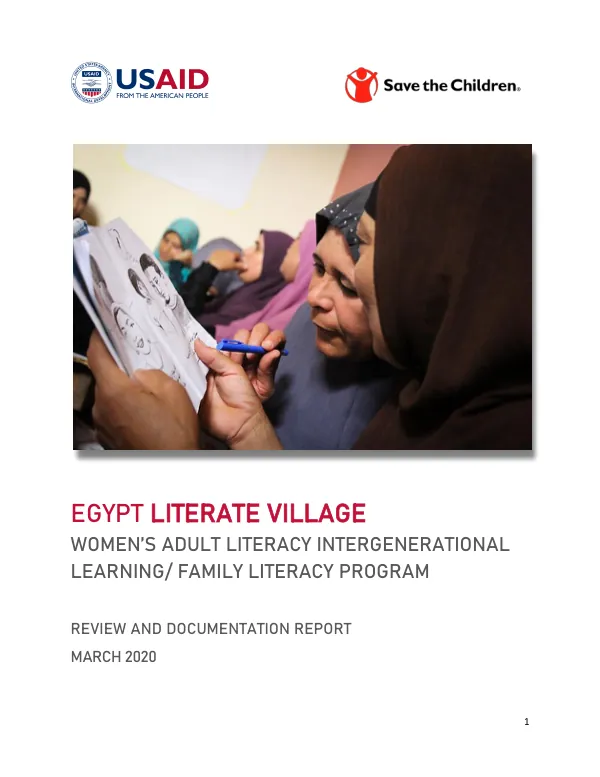
Egypt Literate Village Women’s Adult Literacy Intergenerational Learning/Family Literacy Program Review and Documentation Report
Sign inUSAID DEC
Egypt Literate Village Women’s Adult Literacy Intergenerational Learning/Family Literacy Program Review and Documentation Report
The Egypt Literate Village program aims to break the cycle of generational illiteracy in rural Egypt by providing sustainable and effective learning approaches, fostering a culture of reading across communities and generations, and strengthening local community and governance structures.
2020 · 13 pages
Sign in to readA free account is required to download.
Abstract
One of the activities under this goal is to provide intergenerational learning and family literacy (IL/FL) training to mothers enrolled in the initial adult literacy program. The IL/FL model is integrated into the adult literacy program through an additional module that complements the existing Talaam Tahrar adult literacy curriculum. Learners are introduced to IL/FL in the fourth month of the program and encouraged to integrate these activities into their home life. Each month consists of four weeks, with one session or meeting dedicated to either intergenerational learning or family literacy activities. Intergenerational learning activities focus on preparing women to initiate family discussions on topics of interest, while family literacy activities involve reviewing a family literacy book and having a conversation with family members. The IL/FL model goes beyond the adult literacy program, with activities carefully woven into other components such as community school activities, book banks, and reading clubs. This approach is designed to connect the various elements of the program, creating a community of readers, learners, and thinkers. The Literate Village project developed six family literacy books, each focusing on topics connected to the Talaam Tahrar curriculum and relevant to women's lives. The documentation and review process aimed to verify whether the IL/FL activities have been working as intended. This process involved examining the adult literacy IL/FL activities from multiple perspectives, including focus group discussions with women participants, adult literacy facilitators, Adult Education Authority (AEA) master trainers, and women participants' children. Class observation, adult literacy class enrollment and attendance data, and Literate Village staff interviews and observations were also used to enhance the focus group discussion data. Focus group discussions and interviews were conducted to gather information on the strengths and weaknesses of the adult literacy program's IL/FL component. The discussions primarily focused on the effectiveness of IL/FL class administration, the quality of interactions between mothers/women and children/family, and impressions from individuals involved with program implementation. The interviews and focus group discussions were conducted in a few communities from both Sohag and Beheira. The findings from the documentation and review process indicate that the IL/FL activities have been successful in promoting a culture of reading and learning among participating families. Women participants reported improved self-confidence and well-being, while their families showed increased participation in monitoring children's education. The integration of intergenerational learning mindset into families was also observed, with women using open-ended, non-judgmental questions and active listening skills to talk with family members and deepen their understanding of topics. However, some challenges were identified, including conflict in families and inadequate training for some program staff. Recommendations for improving the IL/FL sessions include providing more training for program staff and increasing the availability of family literacy books. Overall, the IL/FL model has shown promise in promoting literacy and learning among rural Egyptian communities, and further refinement and implementation are necessary to achieve the program's goals.