USAID
Governance Strengthening Project
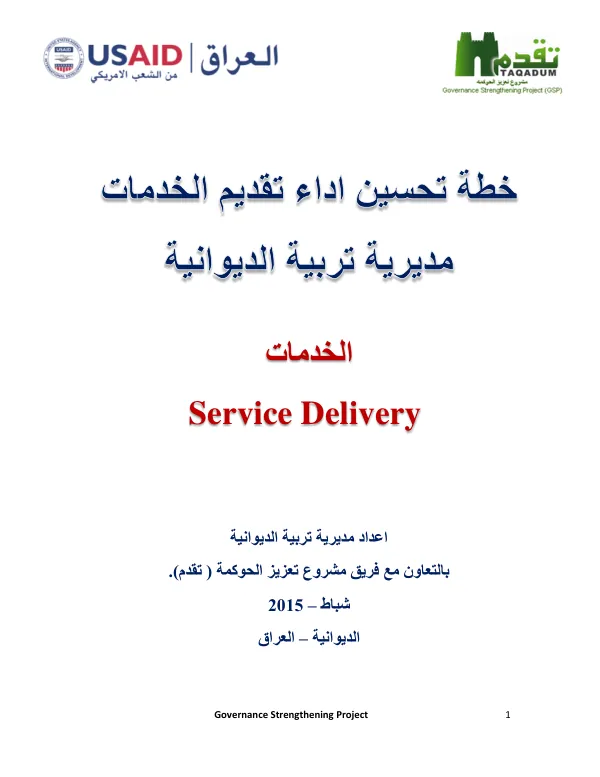
The Governance Strengthening Project aims to improve service delivery in the education sector.
182 pages
Sign in to readA free account is required to download.
Abstract
The project focuses on strengthening the capacity of the Ministry of Education to deliver quality services to students. The project's main objective is to improve the quality of education and increase access to education for all. The project's scope includes improving the management of schools, enhancing the capacity of teachers, and increasing the availability of educational resources. The project also aims to improve the quality of education by introducing new curricula, improving teacher training, and increasing the use of technology in education. The project's methodology involves conducting a thorough analysis of the current education system, identifying areas for improvement, and developing a comprehensive plan to address these areas. The project also involves working with stakeholders, including teachers, parents, and community leaders, to ensure that the project's objectives are met. The project's geographic focus is on the education sector in Rwanda, with a specific emphasis on improving service delivery in rural areas. The project's time frame is three years, with the following milestones: * Year 1: Conduct a thorough analysis of the current education system, identify areas for improvement, and develop a comprehensive plan to address these areas. * Year 2: Implement the project's plan, including improving the management of schools, enhancing the capacity of teachers, and increasing the availability of educational resources. * Year 3: Evaluate the project's impact, identify areas for further improvement, and develop a plan to sustain the project's gains. The project's recommendations include: * Improving the management of schools by introducing new management systems and enhancing the capacity of school administrators. * Enhancing the capacity of teachers by providing them with training and development opportunities. * Increasing the availability of educational resources by introducing new technologies and improving the distribution of educational materials. * Improving the quality of education by introducing new curricula and improving teacher training. The project's methodology involves using a participatory approach, which involves working with stakeholders to identify areas for improvement and develop solutions. The project also involves using a results-based approach, which focuses on achieving specific outcomes and measuring progress towards these outcomes. The project's evaluation framework includes the following indicators: * Improved management of schools * Enhanced capacity of teachers * Increased availability of educational resources * Improved quality of education The project's budget is $10 million, which will be used to fund the project's activities, including training and development opportunities for teachers, the introduction of new technologies, and the improvement of school management systems. The project's sustainability plan includes the following components: * Developing a comprehensive plan to sustain the project's gains * Identifying areas for further improvement and developing a plan to address these areas * Ensuring that the project's activities are integrated into the Ministry of Education's regular operations * Providing ongoing support and training to teachers and school administrators to ensure that they have the skills and knowledge needed to sustain the project's gains. The project's impact will be evaluated using a combination of quantitative and qualitative methods, including surveys, focus groups, and case studies. The project's evaluation framework will include the following indicators: The project's expected outcomes include: The project's expected impact includes: * Improved access to education for all * Increased economic growth and development * Improved social cohesion and stability. The project's expected sustainability includes: * Sustained improvement in the management of schools * Sustained enhancement of the capacity of teachers * Sustained increase in the availability of educational resources * Sustained improvement in the quality of education. The project's expected legacy includes: * A strengthened education system that is capable of delivering quality services to students * A more effective and efficient education system that is better equipped to meet the needs of students * A more equitable education system that provides opportunities for all students to succeed * A more sustainable education system that is better equipped to withstand future challenges.
Related documents