USAID DEC
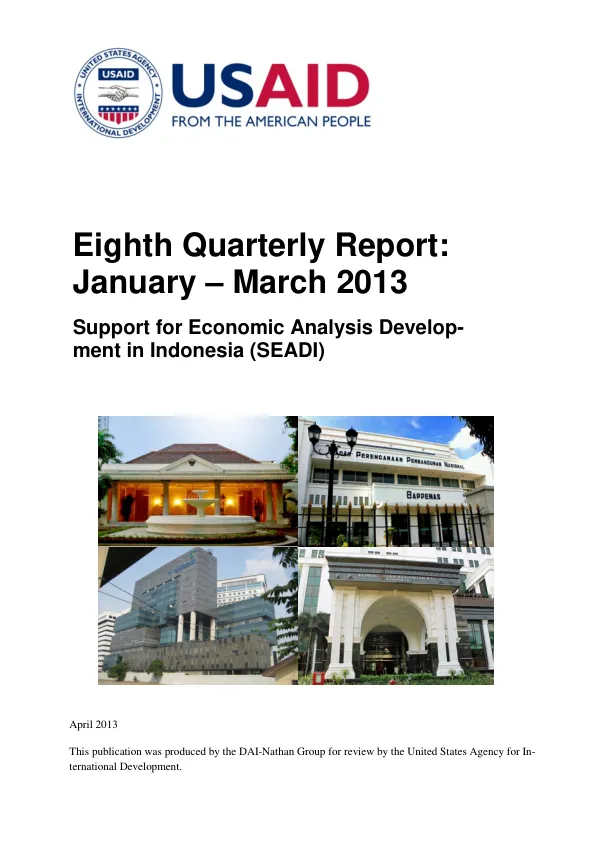
Eighth Quarterly Report: January – March 2013 Support for Economic Analysis Development in Indonesia (SEADI)
Sign inUSAID/INDONESIA/OPH
Eighth Quarterly Report: January – March 2013 Support for Economic Analysis Development in Indonesia (SEADI)
The Support for Economic Analysis Development in Indonesia (SEADI) project began in 2011 with the goal of enhancing the capacity of the Government of Indonesia to conduct economic analysis and policy development.
2013 · 58 pages
Sign in to readA free account is required to download.
Abstract
The project is implemented by the DAI-Nathan Group under contract with the United States Agency for International Development (USAID). The project's core objectives include strengthening the capacity of the Ministry of Trade, the National Development Planning Agency (BAPPENAS), and other key institutions to conduct economic analysis and policy development. Technical assistance and capacity building are key components of the SEADI project. The project has provided training and technical assistance to the Ministry of Trade, BAPPENAS, and other institutions to enhance their capacity to conduct economic analysis and policy development. The project has also supported the development of a scholarship program to provide opportunities for Indonesian scholars to pursue advanced degrees in economics and related fields. The scholarship program has been successful in attracting high-quality candidates and has contributed to the development of a pool of skilled economists in Indonesia. The SEADI project has also implemented a grants program to support research and policy development activities in Indonesia. The grants program has supported a range of research projects and policy development activities, including studies on trade policy, economic development, and poverty reduction. The project has also supported the development of a monitoring and evaluation system to track progress and identify areas for improvement. The project has made significant progress in achieving its core objectives. The Ministry of Trade has strengthened its capacity to conduct economic analysis and policy development, and BAPPENAS has improved its ability to develop and implement national development plans. The project has also contributed to the development of a pool of skilled economists in Indonesia through the scholarship program. The grants program has supported a range of research projects and policy development activities, and the monitoring and evaluation system has provided valuable insights into the project's progress and areas for improvement. The SEADI project has also contributed to the development of Indonesia's economic development plans, including the Master Plan on Acceleration and Expansion of Indonesia's Economic Development 2011-2025 (MP3EI). The project has provided technical assistance and capacity building to support the development of the MP3EI, and has also supported the implementation of the plan through the grants program. The project has also contributed to the development of Indonesia's trade policy, including the negotiation of free trade agreements with other countries. Overall, the SEADI project has made significant progress in achieving its core objectives and has contributed to the development of Indonesia's economic development plans. The project's technical assistance and capacity building activities have strengthened the capacity of key institutions to conduct economic analysis and policy development, and the grants program has supported a range of research projects and policy development activities.
Related documents