USAID DEC
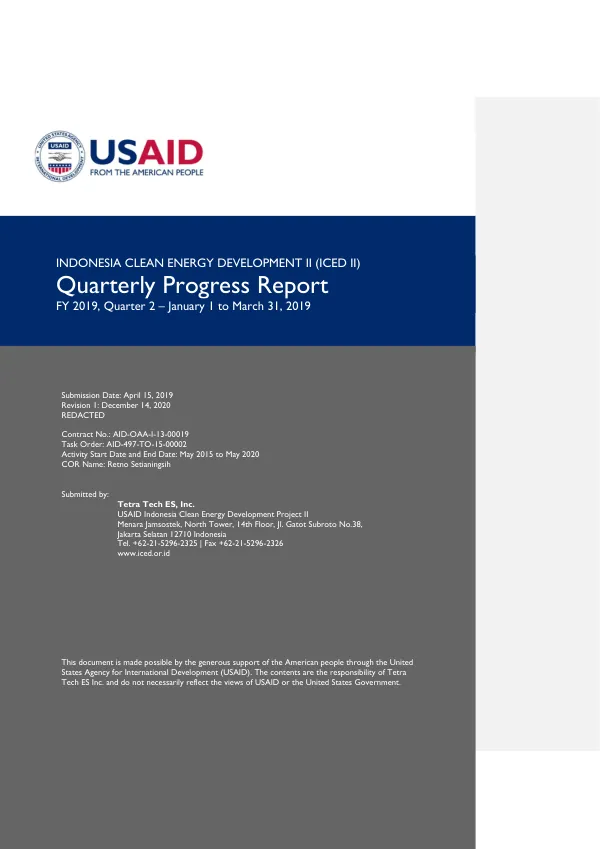
Indonesia Clean Energy Development II (ICED II) Quarterly Progress Report FY 2019, Quarter 2 – January 1 to March 31, 2019
Sign inTETRA TECH ESI, INC.
Indonesia Clean Energy Development II (ICED II) Quarterly Progress Report FY 2019, Quarter 2 – January 1 to March 31, 2019
The Indonesia Clean Energy Development II (ICED II) program is a USAID-funded initiative aimed at promoting clean energy development in Indonesia.
2019 · 185 pages
Sign in to readA free account is required to download.
Abstract
The program began in May 2015 and concluded in May 2020. ICED II focused on supporting the development of Indonesia's renewable energy sector, with a particular emphasis on solar and wind energy. Implementation of the program involved several key interventions, including the development of a national renewable energy policy framework, the establishment of a solar energy market, and the promotion of energy efficiency in buildings. ICED II also supported the development of a national energy plan, which aimed to increase the share of renewable energy in Indonesia's energy mix. One of the key achievements of the ICED II program was the development of a national renewable energy policy framework, which was endorsed by the Indonesian government in 2018. The framework set out a vision for Indonesia's renewable energy sector, including targets for the development of solar and wind energy. ICED II also supported the development of a solar energy market in Indonesia, including the establishment of a solar energy association and the development of a solar energy industry roadmap. The program also promoted energy efficiency in buildings, including the development of a national energy efficiency standard for buildings. In addition to these achievements, ICED II also supported the development of a national energy plan, which aimed to increase the share of renewable energy in Indonesia's energy mix. The plan set out a vision for Indonesia's energy sector, including targets for the development of renewable energy and the reduction of greenhouse gas emissions. The ICED II program was implemented by Tetra Tech ES, Inc. in partnership with the Indonesian government and other stakeholders. The program was funded by USAID and was implemented over a period of five years. The program's achievements were monitored and evaluated through a range of indicators, including the development of renewable energy capacity, the reduction of greenhouse gas emissions, and the promotion of energy efficiency. Overall, the ICED II program made significant contributions to the development of Indonesia's renewable energy sector, including the development of a national renewable energy policy framework, the establishment of a solar energy market, and the promotion of energy efficiency in buildings. The program's achievements are expected to have a lasting impact on Indonesia's energy sector and contribute to the country's efforts to reduce greenhouse gas emissions and promote sustainable development.
Related documents