THE INTERNATIONAL FOUNDATION FOR ELECTORAL SYSTEMS
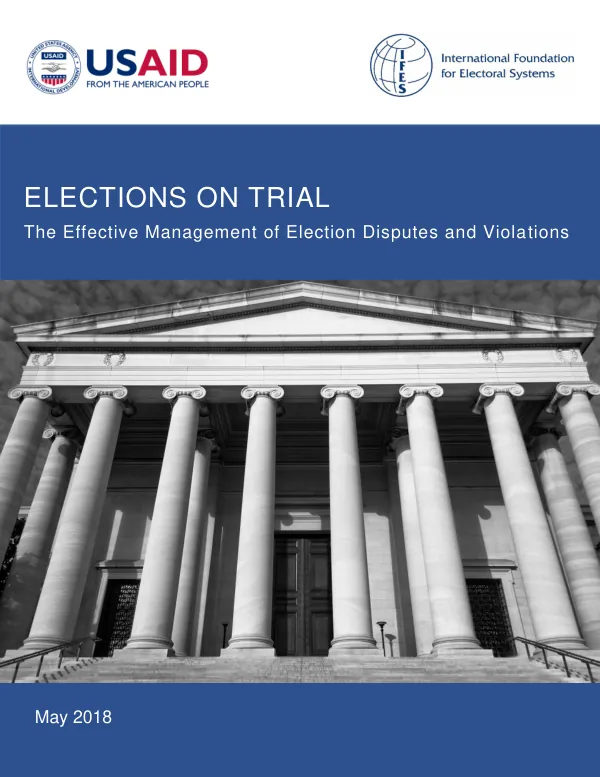
Elections on Trial: The Effective Management of Election Disputes and Violations
The credibility of elections, acceptance of election results, and stability of the election environment increasingly hinge on the effective resolution of disputes and violations throughout the electoral cycle.
2018 · 45 pages
Sign in to readA free account is required to download.
Abstract
Mechanisms for election dispute resolution (EDR) must withstand new forms of sophisticated political and electoral manipulation. Electoral democracies are facing attempts by political actors to use the courts to legitimize staying in power, and must address rising impunity for violence, intimidation, and harassment in election campaigns. Election contests can devolve into battles or negotiations for political power, with the assumption or inevitability that winners will not be held accountable for their actions after the election is over. A refusal by opposition parties or losing candidates to accept electoral outcomes can undermine the authority of the government, weaken trust in democracy and democratic institutions, and in extreme cases trigger violence. The strength of the EDR process can have a profound impact on whether results are accepted. Public perceptions around elections have become the new battleground for actors seeking to undermine the electoral process, and these perceptions can have tremendous implications for the peaceful transfer of power and the viability of governing institutions, particularly in fragile and transitional contexts. The effective management of election disputes and violations is critical to maintaining the integrity of the electoral process and ensuring the legitimacy of election outcomes. Procedural justice and open justice principles are essential components of effective EDR. Procedural justice principles emphasize the importance of fairness, impartiality, and transparency in the EDR process. Open justice principles, on the other hand, require that the EDR process be accessible to all stakeholders, including citizens, candidates, and parties. The effective implementation of these principles is critical to ensuring that the EDR process is fair, efficient, and effective. The International Foundation for Electoral Systems (IFES) has identified several key challenges to effective EDR, including the need for robust rules of procedure, effective case management systems, and transparent and accountable EDR institutions. IFES has also emphasized the importance of protecting procedural justice and open justice in election cases, including ensuring fairness, efficiency, effectiveness, transparency, and accountability in the EDR process. In order to address these challenges, IFES recommends the development of robust rules of procedure, effective case management systems, and transparent and accountable EDR institutions. IFES also emphasizes the importance of protecting procedural justice and open justice in election cases, including ensuring fairness, efficiency, effectiveness, transparency, and accountability in the EDR process. By implementing these recommendations, electoral democracies can ensure the integrity of the electoral process and maintain the legitimacy of election outcomes. The effective management of election disputes and violations is critical to maintaining the integrity of the electoral process and ensuring the legitimacy of election outcomes. Procedural justice and open justice principles are essential components of effective EDR, and the effective implementation of these principles is critical to ensuring that the EDR process is fair, efficient, and effective. By addressing the challenges to effective EDR and implementing robust rules of procedure, effective case management systems, and transparent and accountable EDR institutions, electoral democracies can ensure the integrity of the electoral process and maintain the legitimacy of election outcomes.