USAID
Leveraging Technology to Support Conservation and Development
USAID has invested in various initiatives to support conservation and development efforts globally.
2014 · 2 pages
Sign in to readA free account is required to download.
Abstract
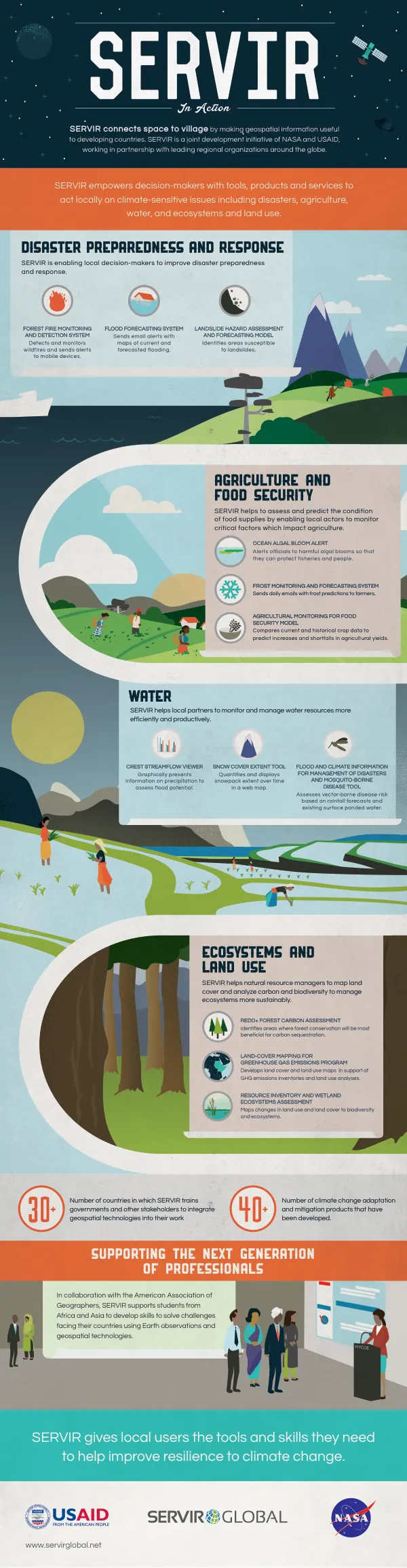
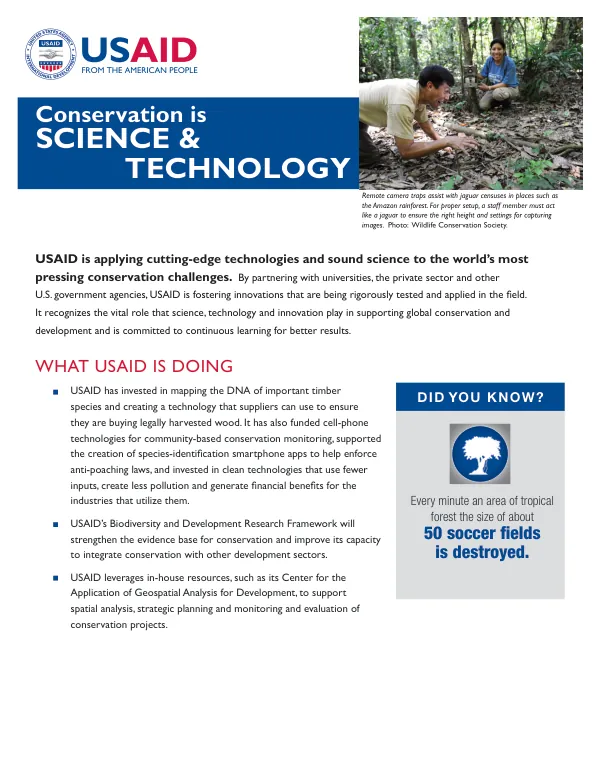
The organization has mapped the DNA of important timber species to create a technology that suppliers can use to ensure they are buying legally harvested wood. This technology aims to prevent the trade of illegally sourced wood and promote sustainable forestry practices. USAID has also funded the development of cell-phone technologies for community-based conservation monitoring. These technologies enable local communities to track and report on wildlife populations, habitat health, and other conservation indicators. Additionally, the organization has supported the creation of species-identification smartphone apps to help enforce anti-poaching laws and combat wildlife trafficking. The Biodiversity and Development Research Framework is a key initiative that aims to strengthen the evidence base for conservation and improve its integration with other development sectors. This framework will support the development of new conservation technologies and strategies, as well as the evaluation of existing programs. USAID's Center for the Application of Geospatial Analysis for Development provides in-house expertise in spatial analysis, strategic planning, and monitoring and evaluation of conservation projects. Remote camera traps are being used to assist with jaguar censuses in places such as the Amazon rainforest. Proper setup of these cameras requires a staff member to act like a jaguar to ensure the right height and settings for capturing images. USAID is also leveraging in-house resources to support spatial analysis, strategic planning, and monitoring and evaluation of conservation projects. The organization is applying cutting-edge technologies and sound science to address pressing conservation challenges. Through partnerships with universities, the private sector, and other U.S. government agencies, USAID is fostering innovations that are being rigorously tested and applied in the field. The organization recognizes the vital role that science, technology, and innovation play in supporting global conservation and development, and is committed to continuous learning for better results. USAID's work in conservation and development is focused on leveraging technology to combat wildlife trafficking. The organization has launched a Wildlife Trafficking Technology Challenge, which aims to attract software engineers, forensic scientists, and social media experts to develop and test important tools for those on the front lines of the fight against wildlife trafficking. The Challenge will focus on disrupting trafficking networks, reducing consumer demand, and rooting out corruption. In the Congo Basin, USAID is teaching conservation partners to use GIS and remote-sensing technologies to monitor forest cover change. These tools have enabled researchers to study previously inaccessible remote areas, and have supported the development of new conservation strategies. USAID's work in the Congo Basin aims to ensure sustainable resource management in an area of extraordinary ecological value, and to support the livelihoods of more than 80 million people who depend on the forest for their food, water, shelter, and medicine.