USAID DEC
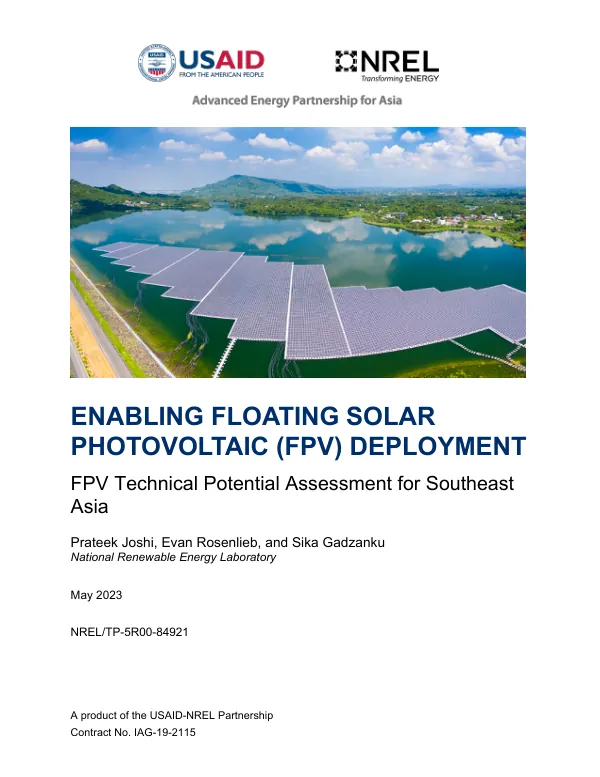
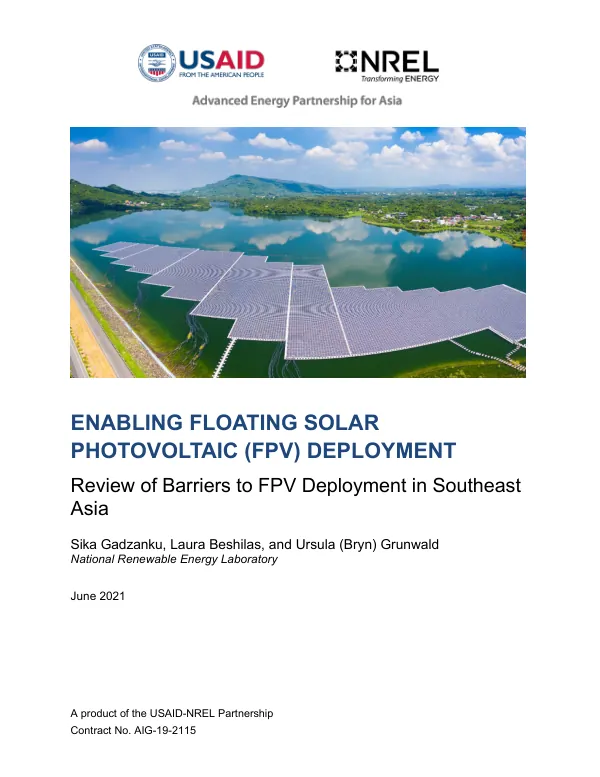
Enabling Floating Solar Photovoltaic (FPV) Deployment: Review of Barriers to FPV Deployment in Southeast Asia
Sign inU.S. NATIONAL RENEWABLE ENERGY LABORATORY
Enabling Floating Solar Photovoltaic (FPV) Deployment: Review of Barriers to FPV Deployment in Southeast Asia
Southeast Asia is experiencing rapid energy sector transitions, with countries setting ambitious renewable energy goals and exploring floating solar photovoltaic (FPV) systems to diversify their energy mixes.
2021 · 36 pages
Sign in to readA free account is required to download.
Abstract
FPV systems may play a significant role in renewable energy deployment in the region, providing additional economic, societal, and environmental benefits. Recent work has identified the potential benefits of FPV systems, including lower land acquisition and site preparation costs, improved solar PV performance, and reduced capital costs when FPV is co-located with hydropower. The countries in the region will likely require significant amounts of new renewable energy capacity to meet their ambitious goals and growing energy demand. FPV systems may be a key component of this effort, but there are several barriers to their deployment. Economic barriers include subsidizing fossil fuels, phasing out incentives for emerging renewable energy, and economic policy uncertainty. Environmental barriers include uncertainty about FPV ecological impacts, which may increase public opposition to projects and lengthen the environmental review process. Cultural barriers, including a lack of public buy-in and unfavorable public opinion due to perceived visual impacts, competing uses of water bodies, and previous negative experiences with other renewable energy technologies, may also serve as obstacles to FPV project deployment. Regulatory barriers include uncertainty about water rights, lack of interagency cooperation and coordination, and lengthy, expensive, and unclear environmental approval processes. Technical barriers include unclear and nonexistent FPV installation, operation, and maintenance standards, uncertainty about climate change impacts on extreme weather events, and poor transmission planning. Despite these barriers, there are several best practices that may support FPV deployment. Creating clear, complementary, transparent, and consistent incentives for energy development can reduce uncertainty for FPV projects and reduce project development costs. Consistent and targeted government support to FPV systems in the form of rebates, tax incentives, and competitive renewable energy auctions could help de-risk FPV systems and attract private sector financing. Developing an FPV workforce through increased education and training for students and professionals can empower the local community, equip professionals to support the growing FPV industry, and help reduce FPV project development costs. Workforce development efforts could also involve gender mainstreaming to help provide women with equal opportunities to pursue careers in the FPV industry and other renewable energy technology industries. Conducting a national skills assessment to determine the current state of the FPV workforce, identify the potential transferability of skills from other industries, and identify the types of skills or certifications needed in the FPV industry can strengthen and grow the FPV workforce. Government support for additional research and development, new management techniques, long-term monitoring, and secure but collaborative data sharing processes can increase knowledge about environmental impacts of FPV systems, which could shorten the environmental review process and reduce public opposition. More transparent and straightforward regulations and robust equipment and installation standards may also help address some of the regulatory barriers. These best practices may help inform policy considerations for the creation of an enabling policy and regulatory environment for FPV deployment.