USAID DEC
Enhancing Coordination in Humanitarian Settings: Diaspora Engagement Efforts in Afghanistan
Sign inUSAID DEC
Enhancing Coordination in Humanitarian Settings: Diaspora Engagement Efforts in Afghanistan
The Afghan diaspora plays a significant role in humanitarian responses, particularly in countries facing crises.
2021 · 76 pages
Sign in to readA free account is required to download.
Abstract
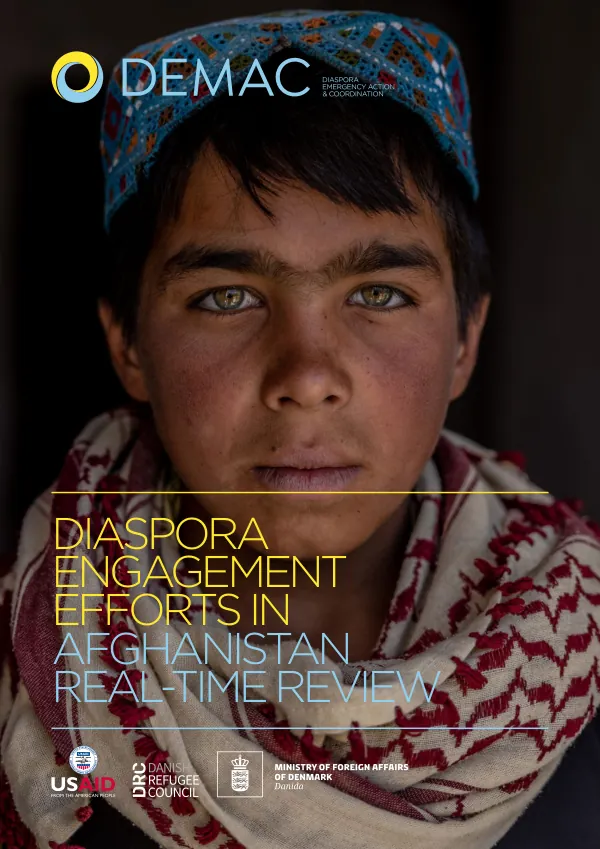
Diaspora organizations are multi-sectoral, fast responding actors who work transnationally, often providing the first response in the aftermath of a disaster. They are also key actors in raising the alarm in times of crisis, with their capacity to collect and disperse funds rapidly ensuring they are a crucial factor in unlocking the first responses in crisis settings. Diaspora organizations have a unique advantage in hard-to-reach places due to their local connections and ties. They use their transnational position to respond to the growing demands for remote management and cross-border response in countries where international actors have a limited presence. Supporting diaspora as part of a broader humanitarian ecosystem to play a key role in humanitarian responses and provide vital support to communities in countries of origin contributes to the relevance, effectiveness, and sustainability of humanitarian responses. The localization agenda, one of the main commitments under the Grand Bargain, aims to strengthen the resilience of local communities and support local and national responders on the front line. UNOCHA has called for an indispensable opening of the resource base of humanitarian action by integrating 'non-traditional actors' - such as diasporas - to enhance the effectiveness of the humanitarian response and render it interoperable. Diaspora organizations are part of and play a central role in localization, with many considered frontline responders themselves, making direct and concrete contributions to emergency responses in their home countries. The Afghan diaspora is now in flux, with diaspora organizations navigating the personal and professional effects of the new political reality in Afghanistan. The Taliban's takeover has resulted in heated public debate about the two-decade war, the humanitarian implications of the withdrawal, and the future of women and civil society in Afghanistan. In response, DEMAC and DRC's Diaspora Program commissioned a real-time review to capture the evolution of diaspora engagement in the immediate aftermath of the Taliban gaining control over Afghanistan. The real-time review consisted of two main approaches to data collection: online media monitoring and key informant interviews. Online media monitoring was conducted from 15 August 2021 to 31 September 2021 of 60 Afghan Diaspora Organizations (ADOs) from various regions, including Europe, North America, Afghanistan's neighboring countries, Australia, and one global organization. Key informant interviews were also conducted with representatives of ten ADOs, as well as DRC Diaspora Program staff. Before the takeover of Kabul by the Taliban, most of the ADOs included in this study were working in the fields of integration, culture, advocacy, legal aid, resettlement support, and education, primarily focusing on the Afghan community in their host countries. However, since the Taliban takeover, ADOs have been engaging in various activities, including advocacy, coalition building, and direct engagement. The real-time review aims to assess these actions, changes in diaspora dynamics, and the resulting tangible outcomes and actions. The study found that ADOs have been engaging in various activities, including advocacy, coalition building, and direct engagement. They have been working to raise awareness about the humanitarian implications of the Taliban takeover, advocating for the rights of Afghan women and girls, and providing direct assistance to affected communities. The study also found that ADOs have been building coalitions with other organizations to amplify their impact and advocating for policy changes to address the humanitarian crisis in Afghanistan. However, the study also identified challenges faced by ADOs, including limited resources, lack of coordination, and limited access to information. Despite these challenges, ADOs have been playing a crucial role in responding to the humanitarian crisis in Afghanistan, and their engagement is expected to continue in the coming months. The real-time review provides valuable insights into the evolution of diaspora engagement in the immediate aftermath of the Taliban gaining control over Afghanistan. It highlights the importance of supporting diaspora organizations in humanitarian responses and the need for coordination and collaboration between diaspora organizations and institutional humanitarian actors. The study's findings and recommendations are expected to inform humanitarian responses and policy decisions in the coming months.