USAID DEC
Ensuring the quality of medicines in the Greater Mekong Sub-region to protect the public health
Sign inWORLD HEALTH ORGANIZATION
Ensuring the quality of medicines in the Greater Mekong Sub-region to protect the public health
The Greater Mekong Sub-region faces significant challenges in ensuring the quality of medicines, which poses a substantial threat to public health.
2012 · 1 pages
Sign in to readA free account is required to download.
Abstract
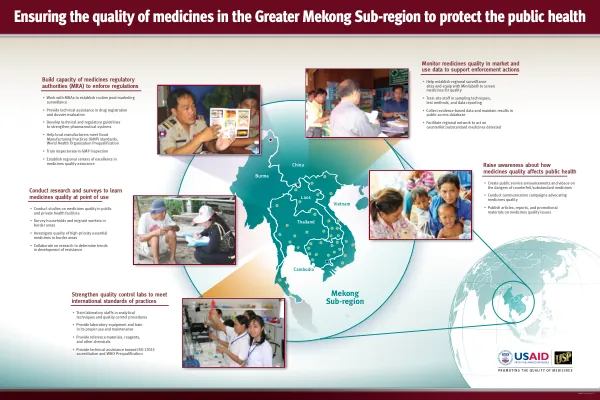
To address this issue, regulatory authorities must be empowered to enforce regulations effectively. A key strategy involves working closely with medicines regulatory authorities (MRAs) to establish routine post-marketing surveillance. This process enables the monitoring of medicines quality after they have been released onto the market, allowing for swift action to be taken in the event of any quality issues. Technical assistance is also provided to MRAs in the areas of drug registration and dossier evaluation. This support helps to ensure that medicines meet the necessary standards before they are approved for use. Furthermore, the development of technical and regulatory guidelines is crucial in strengthening pharmaceutical systems. These guidelines provide a framework for the regulation of medicines, ensuring that they are manufactured, distributed, and sold in a manner that is safe and effective. Local manufacturers are also assisted in meeting Good Manufacturing Practices (GMP) standards, as well as World Health Organization Prequalification. This involves training inspectorates in GMP inspection and establishing regional centers of excellence in medicines quality assurance. These centers serve as hubs for the sharing of best practices and expertise, helping to improve the overall quality of medicines in the region. Research and surveys are conducted to gain a deeper understanding of medicines quality at the point of use. This involves studying the quality of medicines in public and private health facilities, as well as surveying households and migrant workers in border areas. The investigation of high-priority essential medicines in border areas is also a key component of this research. By understanding the trends in medicines quality, policymakers can develop targeted strategies to address these issues. Quality control labs are strengthened to meet international standards of practice. This involves training laboratory staff in analytical techniques and quality control procedures, as well as providing laboratory equipment and training in its proper use and maintenance. Additionally, reference materials, reagents, and other chemicals are provided to support the work of these labs. Technical assistance is also offered toward ISO 17025 accreditation and World Health Organization Prequalification, further enhancing the capacity of these labs to ensure the quality of medicines. Medicines quality is monitored in the market, and data is used to support enforcement actions. This involves helping to establish regional surveillance sites and equipping them with Minilabs to screen medicines for quality. Site staff are trained in sampling techniques, test methods, and data reporting, and evidence-based data is collected and maintained in a public access database. A regional network is also facilitated to act on counterfeit or substandard medicines that are detected. Public awareness campaigns are conducted to educate the public about the dangers of counterfeit or substandard medicines. This involves creating public service announcements and videos, as well as conducting communication campaigns advocating for medicines quality. Articles, reports, and promotional materials are also published on medicines quality issues to raise awareness and promote education. The countries involved in this initiative include Burma, Laos, China, Thailand, Vietnam, and Cambodia, all of which are part of the Greater Mekong Sub-region.