USAID DEC
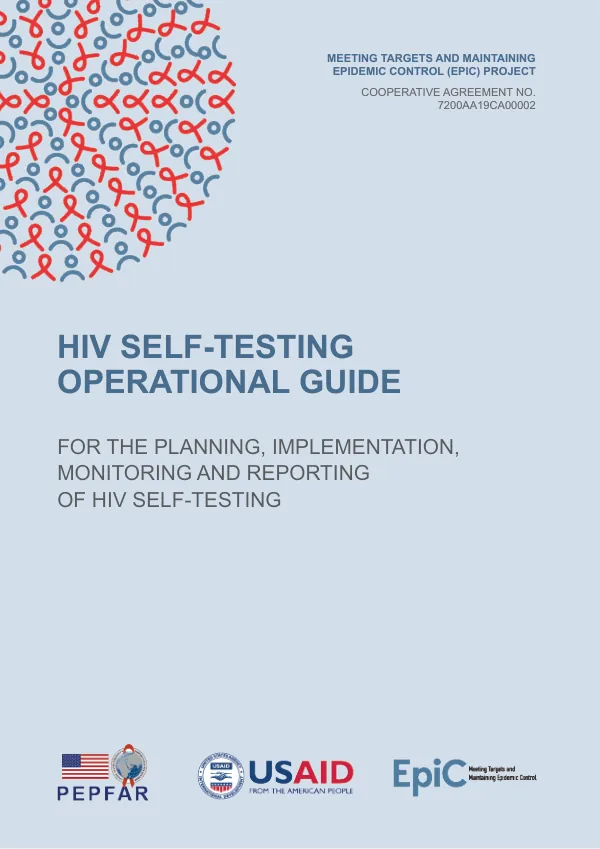
HIV SELF-TESTING OPERATIONAL GUIDE FOR THE PLANNING, IMPLEMENTATION, MONITORING AND REPORTING OF HIV SELF-TESTING MEETING TARGETS AND MAINTAINING EPIDEMIC CONTROL (EPIC) PROJECT
Sign inJOINT UNITED NATIONS PROGRAMME ON HIV/AIDS , GENEVA
HIV SELF-TESTING OPERATIONAL GUIDE FOR THE PLANNING, IMPLEMENTATION, MONITORING AND REPORTING OF HIV SELF-TESTING MEETING TARGETS AND MAINTAINING EPIDEMIC CONTROL (EPIC) PROJECT
HIV self-testing (HIVST) is a critical component of HIV prevention and control strategies, particularly in low- and middle-income countries (LMICs).
2021 · 101 pages
Sign in to readA free account is required to download.
Abstract
The development of HIVST has been guided by the World Health Organization (WHO) Guidelines on HIV self-testing and partner notification, as well as the WHO HIV Self-Testing Strategic Framework. HIVST involves the use of rapid diagnostic tests (RDTs) that allow individuals to test themselves for HIV in the comfort of their own homes or in community-based settings. The tests are designed to be user-friendly, easy to interpret, and provide rapid results. HIVST has been shown to increase HIV testing rates, particularly among hard-to-reach populations, such as men who have sex with men (MSM) and sex workers. The HIVST operational guide is designed to support the planning, implementation, monitoring, and reporting of HIVST programs. The guide is based on evidence and best practice experience gathered by the Unitaid-funded HIVST Africa (STAR) Initiative and USAID-funded HIVST implementation. The guide provides practical considerations for HIVST implementation, including identifying priority populations, selecting HIVST products, and designing delivery models. The guide emphasizes the importance of tailored services for priority populations, including MSM, sex workers, and people living with HIV (PLHIV). It also highlights the need for community-based distribution agents (CBDA) to facilitate HIVST distribution and promote demand creation. The guide provides a framework for monitoring and evaluation, including data collection and management, and emphasizes the importance of quality assurance (QA) and supply chain management (SCM). In the context of the COVID-19 pandemic, the guide provides considerations for HIV testing services and HIVST. It highlights the need for increased access to HIVST for populations that may be disproportionately affected by the pandemic, such as PLHIV and key populations. The HIVST operational guide is a critical resource for program implementers, policymakers, and stakeholders working to scale up HIVST in LMICs. It provides a comprehensive framework for HIVST implementation, monitoring, and evaluation, and highlights the importance of tailored services, community-based distribution, and demand creation. The guide is aligned with the WHO HIV Self-Testing Strategic Framework and the PEPFAR 2021 COP guidance. It is based on evidence and best practice experience gathered by the Unitaid-funded HIVST Africa (STAR) Initiative and USAID-funded HIVST implementation. The guide provides practical considerations for HIVST implementation, including identifying priority populations, selecting HIVST products, and designing delivery models. The guide emphasizes the importance of monitoring and evaluation, including data collection and management, and emphasizes the importance of quality assurance (QA) and supply chain management (SCM). It also highlights the need for increased access to HIVST for populations that may be disproportionately affected by the pandemic, such as PLHIV and key populations.