ACTION CONTRE LA FAIM
USAID Haiti Cholera Fact Sheet #18
The cholera outbreak in Haiti began in October 2010, with the first reported cases occurring in the Artibonite Department.
2011 · 4 pages
Sign in to readA free account is required to download.
Abstract
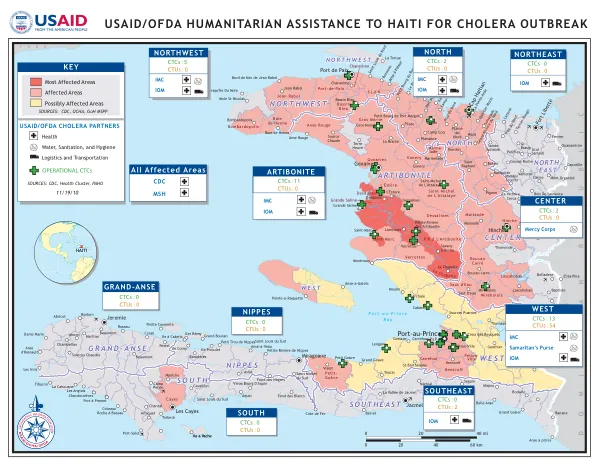
The outbreak was attributed to a combination of factors, including poor sanitation, inadequate access to clean water, and a lack of hygiene practices. The Government of Haiti (GoH) Ministry of Public Health and Population (MSPP) reported a significant increase in hospitalizations and deaths due to cholera, with a total of 216,938 cases and 4,120 deaths reported as of January 30, 2011. The U.S. Agency for International Development (USAID) deployed a Disaster Assistance Response Team (DART) to Haiti on October 26, 2010, to coordinate the U.S. government's response to the outbreak. The DART worked closely with the MSPP, the U.N. Office for the Coordination of Humanitarian Affairs (OCHA), and other humanitarian organizations to provide emergency assistance, including the provision of chlorine to increase the availability of safe drinking water, expansion of national hygiene education outreach, and the establishment of cholera treatment facilities (CTFs). As of January 30, 2011, the number of daily hospitalizations had decreased from 515 to 377, and the caseload at CTFs had fallen from approximately 80 patients per day to 40 patients per day. The U.N. OCHA reported that an estimated 30 to 50 percent of individuals with cholera were receiving treatment at oral rehydration points (ORPs), which had been established throughout Haiti. USAID/OFDA had funded nearly 130 ORPs, and the International Organization for Migration (IOM) had set up ORPs and hand-washing stations in market areas and surrounding communities in the Northeast Department. The USAID/OFDA emergency cholera response plan focused on preventing cholera cases, reducing the number of cases requiring hospitalization, and reducing the case fatality rate (CFR). The plan included four elements: provision of chlorine to increase the availability of safe drinking water, expansion of national hygiene education outreach, provision of sachets of oral rehydration salts and medical supplies, and an increase in the number of CTFs, particularly in underserved and rural areas. USAID/OFDA recognized that cholera would likely remain present in Haiti for several years and that the rainy and hurricane seasons may cause additional caseload spikes. As of February 4, 2011, USAID/OFDA had provided $44,160,390 in humanitarian assistance to Haiti for cholera response efforts. The assistance was provided through a variety of grants to non-governmental organizations (NGOs), including Action Contre la Faim, American Refugee Committee, CARE, Catholic Relief Services, and International Medical Corps. The grants supported a range of activities, including health, water, sanitation, and hygiene (WASH) interventions, logistics and relief commodities, and emergency response efforts.
Related documents