USAID DEC
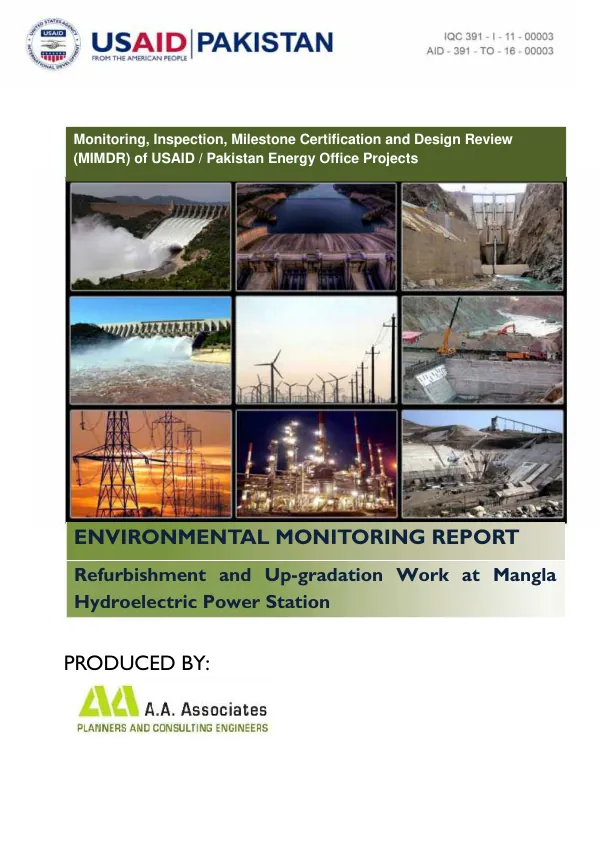
Environmental Monitoring Report: Refurbishment and Up-gradation Work at Mangla Hydroelectric Power Station
Sign inUSAID
Environmental Monitoring Report: Refurbishment and Up-gradation Work at Mangla Hydroelectric Power Station
The refurbishment and up-gradation work at Mangla Hydroelectric Power Station began in October 2016, with the first shipment of new equipment arriving and being stored at the site.
2016 · 190 pages
Sign in to readA free account is required to download.
Abstract
The storage area was properly demarcated and identified, with separate storage of each item adopted and each area marked either on the floor or cordoned off by tapes. The new equipment was stored in a single place but in a proper way, with lifting equipment used for the equipment following the prescribed safety specification. The project activities carried out during the monitoring period included onsite handling and storage of new equipment, waste generation and handling, and transportation of equipment. The monitoring team observed that the new equipment was stored in a separate storage area, with safety markings in the storage area. The team also noted that the vehicles used for transportation were NEQS compliant for emissions and noise. The monitoring team identified several occupational safety, health, and environmental issues during the monitoring period. These included the need for proper documentation and implementation of safety procedures, the use of protective leather gloves while handling sharp-edged metals, and the proper segregation of wastes in the scrap yard. The team also noted that sharp-edged metals were not to be left unattended at any time, and that potentially hazardous substances such as lead or material containing lead were to be identified and disposed of accordingly. The monitoring team observed that the project activities were in compliance with the environmental monitoring requirements. The team noted that the waste handling and storage procedures were in place, with separate bins marked for the designated purpose. The team also observed that the equipment was opened only under the supervision of a qualified person, and that potentially hazardous materials such as mercury were identified prior to dismantling and appropriate safety measures were taken. The monitoring team also observed that the project activities were in compliance with the waste disposal requirements. The team noted that the oil contaminated parts of waste were cleaned before being fed into the furnace, and that the risk associated with the wastes was identified and accepted disposal methods were followed. The team also observed that only certified recycling contractors were used for disposal from the relevant agencies. The monitoring team concluded that the project activities were in compliance with the environmental monitoring requirements, and that the project was being implemented in a safe and environmentally responsible manner. The team recommended that the project continue to follow the environmental monitoring requirements and that the project activities be continued in a safe and environmentally responsible manner. The monitoring team consisted of Dr. Sardar Ahsan Younus and Ms. Sana-e-Sakina, who visited the site on October 26, 2016, and conducted the monitoring activities. The team observed that the project activities were in compliance with the environmental monitoring requirements, and that the project was being implemented in a safe and environmentally responsible manner. The report was prepared by the Environmental Expert, MIMDR, and was submitted to the USAID MEO on October 28, 2016. The report was prepared in accordance with the environmental monitoring requirements, and it provided a detailed account of the project activities and the environmental monitoring requirements. The report also provided recommendations for the project to continue to follow the environmental monitoring requirements and to continue to implement the project activities in a safe and environmentally responsible manner.
Related documents