USAID DEC
Estrategia de prevención y protección de los DD.HH para los líderes, lideresas y víctimas del conflicto armado
Sign inUSAID
Estrategia de prevención y protección de los DD.HH para los líderes, lideresas y víctimas del conflicto armado
The Colombian Pesos municipal prevention and protection plans are currently being developed in collaboration with civil society organizations, local authorities, and ethnic-territorial authorities.
1 pages
Sign in to readA free account is required to download.
Abstract
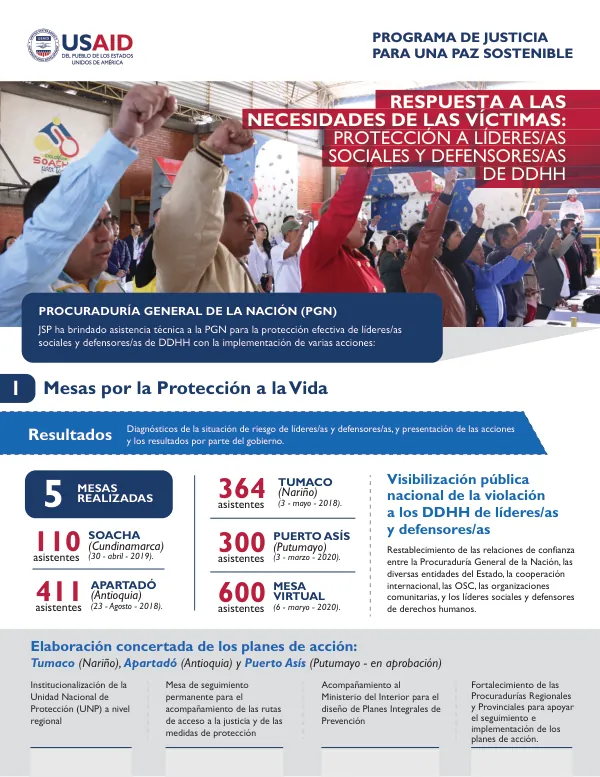
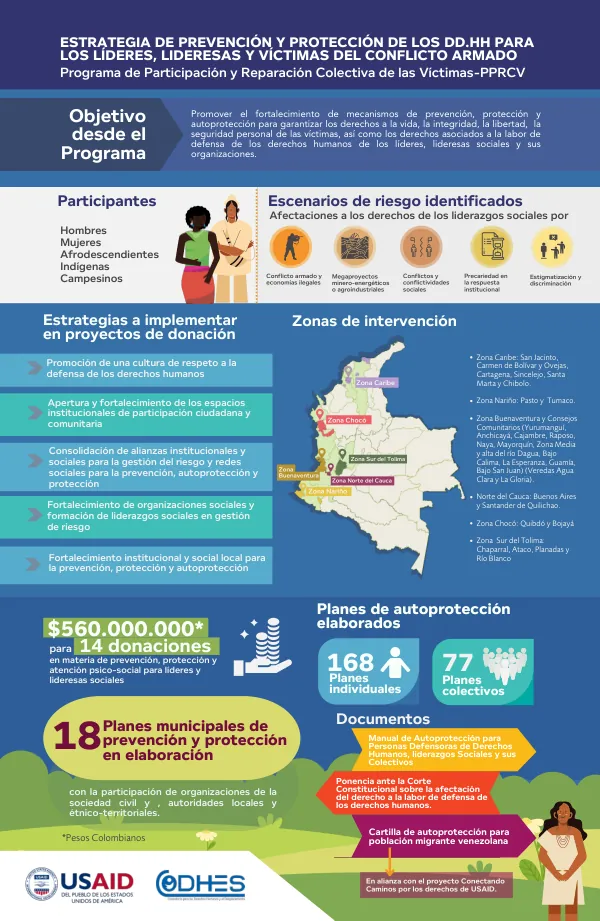
Identified risk scenarios include megaprojects such as mining and energy, agroindustrial projects, and social conflicts. Institutional response precarity and stigmatization and discrimination are also areas of concern. The Programa de Participación y Reparación Colectiva de las Víctimas (PPRCV) has implemented strategies to address the impact of armed conflict and illegal economies on social leadership rights. These strategies include the development of cartillas and manuals for protection and the promotion of a culture of respect for human rights defense. The program has received $560 million in donations for prevention, protection, and psychosocial attention for social leaders. A total of 14 donations have been made to support the development of individual and collective protection plans. These plans have been implemented in 168 individual cases and 77 collective cases. The zones of intervention include the promotion of a culture of respect for human rights defense, the strengthening of institutional spaces for citizen and community participation, and the consolidation of alliances for risk management and social networks for prevention and protection. The program aims to promote the strengthening of mechanisms for prevention, protection, and self-protection to guarantee the rights to life, integrity, freedom, and personal security of victims, as well as the rights associated with the defense of human rights of social leaders and their organizations. The objective is to be achieved in specific zones, including the Caribe region, Nariño, Buenaventura, Norte del Cauca, Chocó, and Sur del Tolima. The program is being implemented in collaboration with the Conectando Caminos project by USAID.