USAID DEC
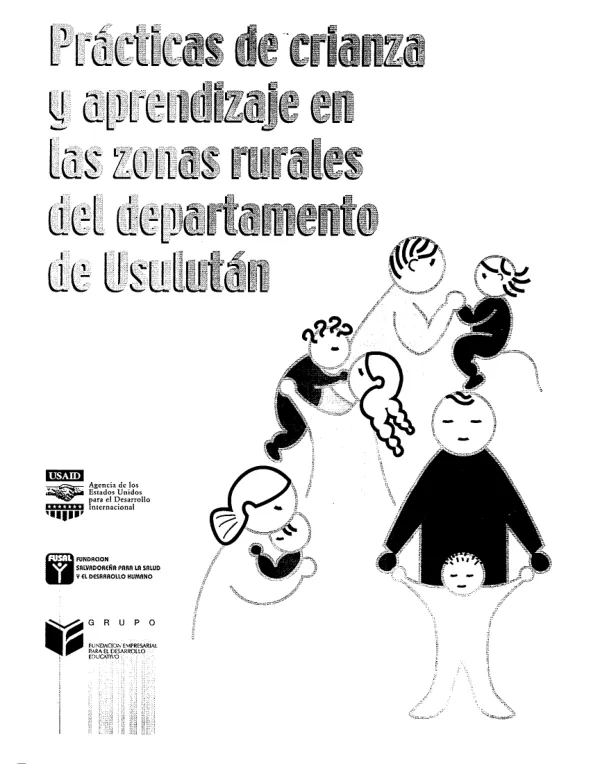
Evaluación de las Prácticas de Crianza en Hogares Rurales de El Salvador
The study on early childhood education in El Salvador was conducted by a team of researchers from the Fundación Salvadoreña para la Salud y el Desarrollo Humano.
2014 · 148 pages
Sign in to readA free account is required to download.
Abstract
The study aimed to investigate the practices of childcare in rural areas, with a focus on the role of community actors and institutions in shaping these practices. The study found that childcare practices in rural El Salvador are shaped by a complex interplay of factors, including cultural norms, economic conditions, and access to education and healthcare. The researchers identified several key actors who play a crucial role in childcare, including grandparents, midwives, traditional healers, and community leaders. The study also highlighted the importance of early childhood education in rural areas, where access to formal education is limited. The researchers found that community-based early childhood education programs, such as the Centros de Bienestar Infantil (CBI), play a critical role in providing young children with a foundation for future learning and development. The study's findings have important implications for policymakers and practitioners working to improve early childhood education and childcare in rural El Salvador. The researchers recommend that policymakers prioritize the development of community-based early childhood education programs and provide support for community actors who play a crucial role in childcare. The study's methodology involved a mixed-methods approach, combining both qualitative and quantitative data collection and analysis methods. The researchers conducted in-depth interviews with community actors, parents, and caregivers, as well as surveys and focus groups with community members. The study's findings are based on data collected from 15 rural communities in El Salvador. The study's results highlight the importance of community-based early childhood education programs in rural El Salvador. The researchers found that these programs are effective in improving young children's cognitive, social, and emotional development, and in preparing them for future learning and development. The study's findings also highlight the need for policymakers to prioritize the development of community-based early childhood education programs and provide support for community actors who play a crucial role in childcare. The researchers recommend that policymakers work with community leaders and organizations to develop and implement effective early childhood education programs that meet the unique needs of rural communities.