AGENCIA DE LOS ESTADOS UNIDOS PARA EL DESARROLLO INTERNACIONAL
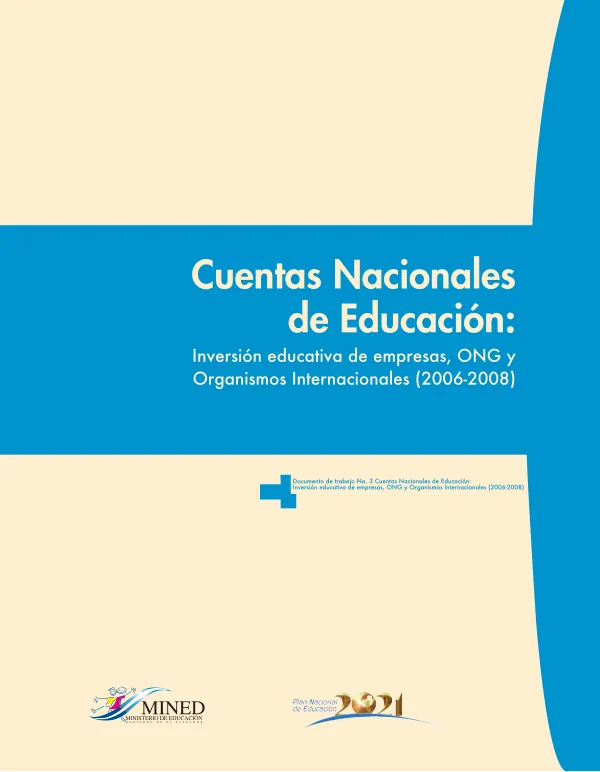
Cuentas Nacionales de Educación: Inversión Educativa de Empresas
The Cuentas Nacionales de Educación (CNE) initiative in El Salvador is a permanent system for generating and analyzing information on the flow of financial resources in the education sector.
2009 · 48 pages
Sign in to readA free account is required to download.
Abstract
The CNE methodology is recognized internationally for its effectiveness in determining a country's total investment in education. The initiative includes contributions from public, private, and donor actors, allowing for the identification of details on investment and resource distribution. The CNE initiative is part of the Plan Nacional de Educación 2021, which aims to improve education in El Salvador. As part of this initiative, the Ministerio de Educación (MINED) conducted a study on the contribution of the private sector to education, excluding households, for the period 2006-2008. The study found that the private sector invested a total of US$136.8 million in education during this period. The private sector's contribution to education was broken down into three categories: organizations of international cooperation, non-governmental organizations (ONGs), and private companies. The study found that organizations of international cooperation invested US$116.8 million, ONGs invested US$13 million, and private companies invested US$6.8 million. The average annual investment of these actors was US$39 million for international cooperation organizations, US$4 million for ONGs, and US$3.3 million for private companies. The study also analyzed the distribution of investment by level of education, with the majority of investment focused on primary education, followed by pre-primary and third-cycle education. The study found that the majority of private sector investment was concentrated in urban areas, with a smaller proportion invested in rural areas. The study also examined the sources of financing used by the private sector, with the majority of ONGs and international cooperation organizations relying on donations. In contrast, private companies relied heavily on their own funds, with around 90% of their investment coming from internal sources. Regarding the Plan 2021, the study found that ONGs and international cooperation organizations had a higher level of knowledge about the plan, with 93% representation. In contrast, private companies had a lower level of knowledge, with only 48% representation. When asked about their interest in supporting the education sector, the majority of respondents cited the goal of forming integral persons and achieving 11th-grade education in the population. The study's findings are based on a total of 202 effective interviews with private sector actors, including companies, ONGs, and international cooperation organizations. The study aims to recognize the valuable contribution of the private sector to education and to encourage further investment in the sector.
Related documents