TETRA TECH
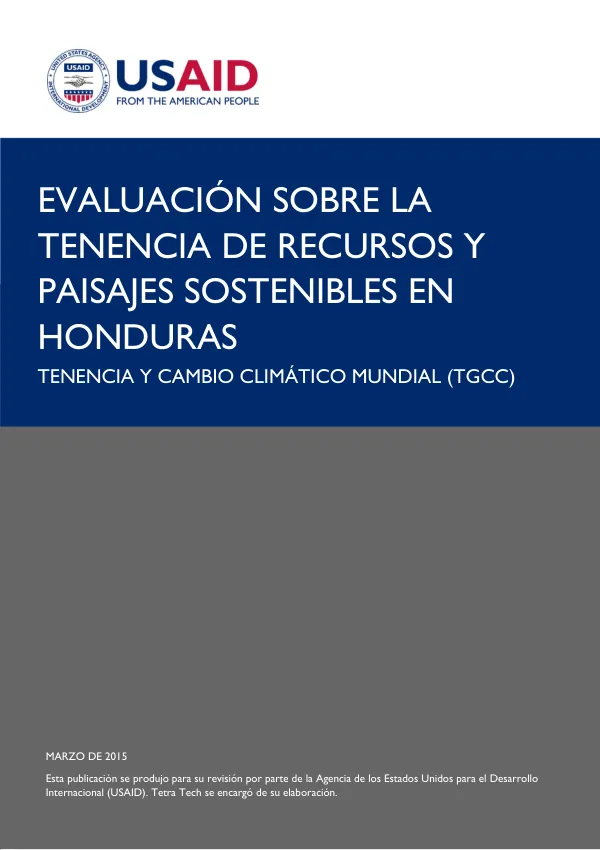
Evaluación sobre la tenencia de recursos y paisajes sostenibles en Honduras
The evaluation on tenure of resources and sustainable landscapes in Honduras, conducted in March 2015, was produced for review by the United States Agency for International Development (USAID).
2015 · 93 pages
Sign in to readA free account is required to download.
Abstract
Tetra Tech was responsible for its elaboration. The evaluation aimed to assess the implementation of REDD+ programs in Honduras, focusing on tenure and climate change. The REDD+ program in Honduras is a key component of the country's efforts to reduce greenhouse gas emissions and promote sustainable land use. The program involves the creation of a national REDD+ strategy, which aims to reduce deforestation and forest degradation while promoting the conservation and sustainable use of forests. The evaluation identified several key stakeholders involved in the REDD+ process, including the government, civil society organizations, and indigenous communities. The evaluation also highlighted the importance of involving local communities in the decision-making process and ensuring their free, prior, and informed consent (FPIC) is obtained before any project is implemented. The evaluation recommended that the government of Honduras establish a clear policy framework for REDD+ and ensure that all stakeholders are involved in the decision-making process. The evaluation also recommended that the government establish a system for monitoring and verifying the effectiveness of REDD+ projects and ensure that the benefits of these projects are shared equitably among all stakeholders. The evaluation also highlighted the importance of addressing the root causes of deforestation and forest degradation, including poverty, lack of access to markets, and limited economic opportunities. The evaluation recommended that the government of Honduras implement policies and programs that address these underlying causes and promote sustainable land use practices. The evaluation identified several key institutions that play a critical role in the implementation of REDD+ in Honduras, including the National Forest Conservation Commission (CONAFOR), the Ministry of Environment and Natural Resources (SENAFRONT), and the National Institute of Conservation and Development of Forests, Protected Areas, and Wildlife (ICF). The evaluation recommended that these institutions work together to ensure the effective implementation of REDD+ projects and programs. The evaluation also highlighted the importance of addressing the rights of indigenous peoples and local communities in the context of REDD+. The evaluation recommended that the government of Honduras establish a clear policy framework for the recognition and protection of indigenous peoples' rights and ensure that these rights are respected and protected in the implementation of REDD+ projects and programs. The evaluation concluded that the implementation of REDD+ in Honduras requires a comprehensive and inclusive approach that addresses the needs and concerns of all stakeholders. The evaluation recommended that the government of Honduras establish a clear policy framework for REDD+ and ensure that all stakeholders are involved in the decision-making process.