USAID
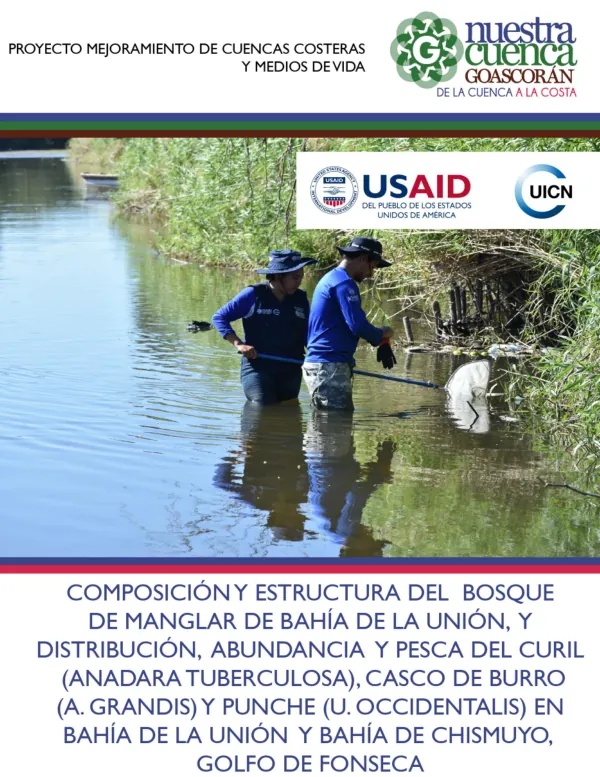
Proyecto Mejoramiento de Cuencas Costeras y Medios de Vida
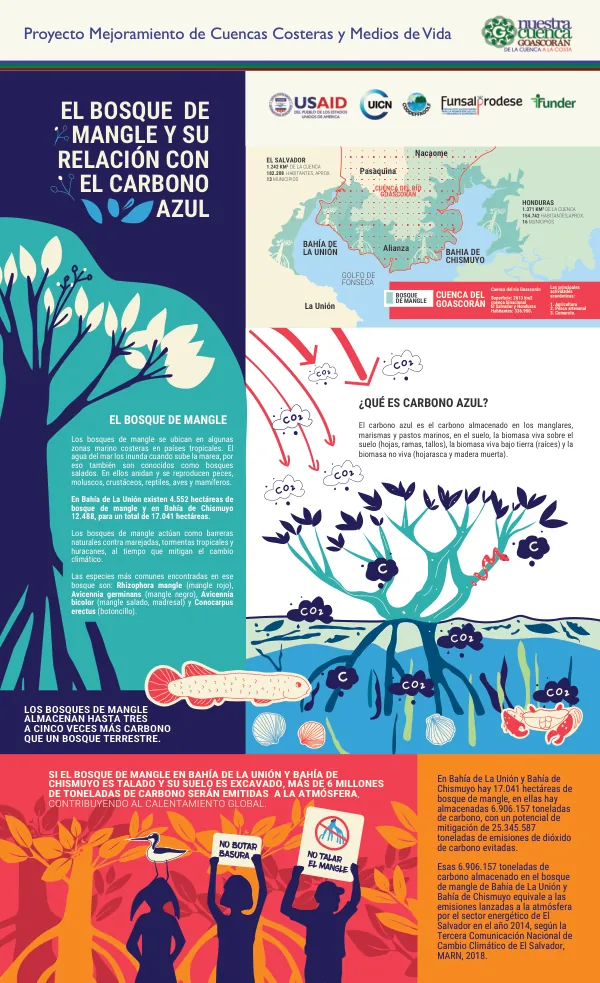
The Cuenca del Río Goascorán is a binational region shared by El Salvador and Honduras, covering an area of 2613 km2.
3 pages
Sign in to readA free account is required to download.
Abstract
The region has a population of 336,950 inhabitants, with the main economic activities being agriculture, artisanal fishing, and commerce. The Cuenca del Río Goascorán is a critical ecosystem that supports a diverse range of flora and fauna, including mangrove forests, which are essential for maintaining the region's biodiversity. Mangrove forests, also known as bosques de mangle, are found in coastal areas of tropical countries and are known for their ability to act as natural barriers against storms, hurricanes, and tsunamis. They also play a crucial role in mitigating climate change by storing carbon dioxide. In the Cuenca del Río Goascorán, there are 17,041 hectares of mangrove forests, which store approximately 6,906,157 tons of carbon. The mangrove forests in the region are home to a variety of species, including Rhizophora mangle, Avicennia germinans, Avicennia bicolor, and Conocarpus erectus. These forests are essential for maintaining the region's biodiversity and supporting the livelihoods of local communities. However, the mangrove forests are facing threats from human activities, such as deforestation, pollution, and overfishing. The Proyecto Mejoramiento de Cuencas Costeras y Medios de Vida (Project for the Improvement of Coastal Watersheds and Livelihoods) aims to conserve and restore the mangrove forests in the Cuenca del Río Goascorán. The project focuses on promoting sustainable practices, such as responsible fishing and forestry management, to ensure the long-term health of the ecosystem. The project also emphasizes the importance of community involvement in the conservation and management of the mangrove forests. Local communities are encouraged to take an active role in protecting the forests and promoting sustainable livelihoods. The project's goals include reducing pollution, promoting sustainable fishing practices, and increasing the resilience of local communities to climate change. The mangrove forests in the Cuenca del Río Goascorán are a critical component of the region's ecosystem, providing essential services such as shoreline protection, water filtration, and habitat for a diverse range of species. The project's efforts to conserve and restore the mangrove forests are essential for maintaining the region's biodiversity and supporting the livelihoods of local communities. In addition to the mangrove forests, the Cuenca del Río Goascorán is home to a variety of other ecosystems, including estuaries, lagoons, and wetlands. These ecosystems support a diverse range of species, including fish, shellfish, and other marine life. The project's efforts to conserve and restore these ecosystems are essential for maintaining the region's biodiversity and supporting the livelihoods of local communities. The project's approach to conservation and restoration is based on a participatory and inclusive process, involving local communities, government agencies, and other stakeholders. The project's goals include reducing pollution, promoting sustainable fishing practices, and increasing the resilience of local communities to climate change. Overall, the Proyecto Mejoramiento de Cuencas Costeras y Medios de Vida is a critical initiative that aims to conserve and restore the mangrove forests and other ecosystems in the Cuenca del Río Goascorán. The project's efforts are essential for maintaining the region's biodiversity and supporting the livelihoods of local communities.