MINISTRY OF HEALTH
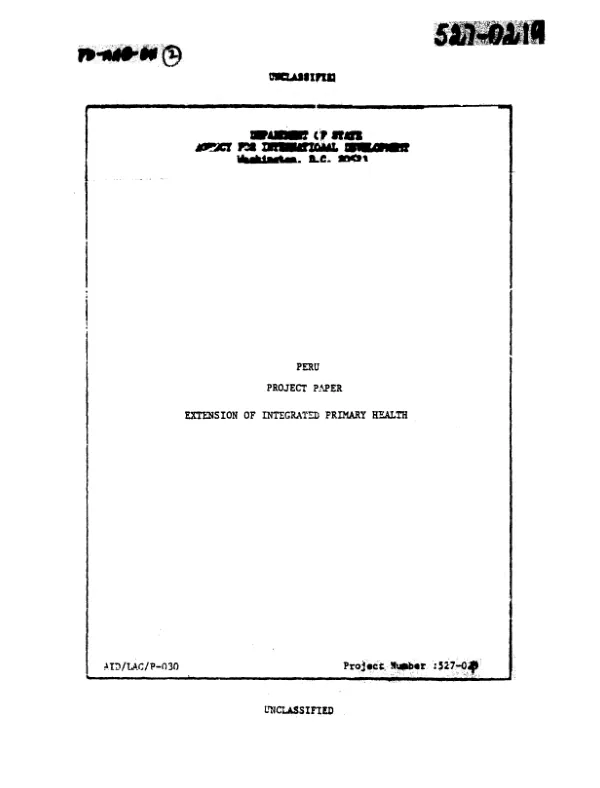
Extension of Integrated Primary Health Care in Peru
Extension of Integrated Primary Health Care in Peru began in 2018 with funding from USAID's assistance program.
2010 · 179 pages
Sign in to readA free account is required to download.
Abstract
The project aims to extend primary health care services to rural areas, focusing on the creation and implementation of a system of integrated primary health care including the provision of basic health services, sanitation activities, supervision of health workers, establishment of a health information system, and studies and evaluation. The project consists of five key components: (1) creation and implementation of a regional health information system, detailing each activity and requirement to achieve project objectives; (2) a statement of MOH objectives agreed upon with NFPA and WHO, identifying geographic and demographic areas where the two programs will be focused and providing for coordination of effort and reporting to each other; (3) an action plan outlining the arrangements between the MOH and regional authorities, articulating regional plans and priorities, identifying the responsibilities of the CH and regional coordinator, outlining the method of community and financial supervision, and establishing appropriate procurement requirements; (4) a plan for the procurement, storage, and distribution of health equipment and supplies; and (5) studies and evaluation. The project is subject to the following essential terms and conditions, including interest rate and terms of repayment. Peru shall repay the Loan to AID in U.S. dollars within twenty-five years from the date of first disbursement of the Loan, including a grace period of not to exceed ten years. Peru shall pay to AID in U.S. dollars interest from the date of first disbursement of the Loan at the rate of (a) two percent (2%) per annum during the first ten years, and (b) three percent (3%) per annum thereafter, on the outstanding disbursed balance of the Loan and on any due and unpaid interest accrued thereon. The project will be implemented at the regional level through regional administrators designated in accordance with the terms of the Project Agreement. Funding provided for the Project will be used to support activities at the regional level. The following waivers to AID regulations are hereby approved: U.S. and local procurement is authorized under the Grant portion of the Project. The project will be evaluated after the initial six months of project activities and two in-depth evaluations of the project, one at the end of the first year and the second at the end of the third year. Peru shall continue to provide sufficient annual budget allocations following completion of the project so as to assure continuity of the project activities. The project objectives will be implemented at the regional level through regional administrators designated in accordance with the terms of the Project Agreement. The project will be implemented in the following regions: Ancash, Apurimac, Arequipa, Ayacucho, Cajamarquilla, Cusco, Huancavelica, Huánuco, Ica, Junín, La Libertad, Lambayeque, Lima, Loreto, Pasco, Piura, San Martín, and Ucayali. The project will focus on the following geographic and demographic areas: rural areas, indigenous communities, and areas with limited access to health services. The project will be implemented through the following activities: creation and implementation of a regional health information system, provision of basic health services, sanitation activities, supervision of health workers, establishment of a health information system, and studies and evaluation. The project will be evaluated after the initial six months of project activities and two in-depth evaluations of the project, one at the end of the first year and the second at the end of the third year. The project will be implemented with the following budget allocations: $3,170 for the first year, $7,150 for the second year, and $7,150 for the third year. The project will be implemented with the following personnel: 1 regional coordinator, 1 health information system specialist, 1 sanitation specialist, 1 health worker supervisor, and 1 studies and evaluation specialist. The project will be implemented with the following equipment and supplies: health equipment, sanitation equipment, and health information system software. The project will be implemented in the following phases: phase 1, creation and implementation of a regional health information system; phase 2, provision of basic health services; phase 3, sanitation activities; phase 4, supervision of health workers; and phase 5, establishment of a health information system and studies and evaluation. The project will be implemented with the following timeline: the first year will focus on creation and implementation of a regional health information system, the second year will focus on provision of basic health services, and the third year will focus on sanitation activities, supervision of health workers, establishment of a health information system, and studies and evaluation.
Related documents