DEVTECH SYSTEMS, INC.
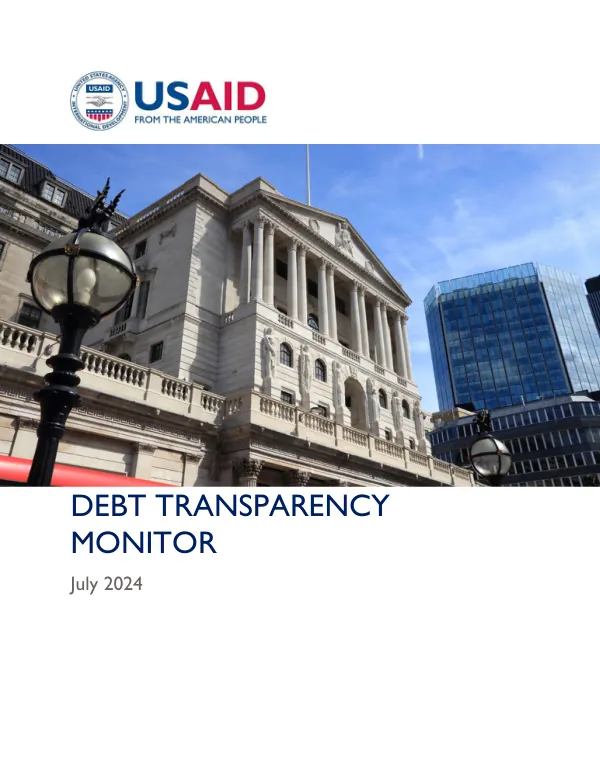
FAST Debt Transparency Monitor
Public debt levels in low- and middle-income countries (LMICs) have been on the rise for a decade.
2024 · 38 pages
Sign in to readA free account is required to download.
Abstract
The worldwide economic challenges caused by the COVID-19 pandemic have only magnified debt burdens, which in many cases have soared to unsustainable levels. International organizations such as the World Bank and the International Monetary Fund (IMF) have raised concerns that the lack of debt transparency among these countries has obscured poor borrowing practices, borrowing for infeasible projects, and borrowing for corrupt or fraudulent purposes. This rapidly rising debt, combined with weak debt transparency, can and has led to fiscal distress, leaving governments unable to meet their obligations or provide basic services to their citizens. An expanding universe of international creditors complicates the ability of LMIC governments to properly report their debt. The relative share of borrowing from Paris Club lenders and international financial institutions (IFIs) has decreased over time, giving way to a combination of commercial debt and borrowing from other bilateral creditors, most notably the People's Republic of China (PRC). PRC lending often follows practices that are inconsistent with those of Paris Club lenders and the IFIs, ranging from the collateralization of specific assets or revenue streams to confidentiality clauses that limit the reporting of official PRC loans. Such terms are not only incompatible with good practice, but also make it extremely difficult to know the full extent of the fiscal risks these debts present to debtor countries. Inadequate debt transparency not only presents risks to fiscal sustainability. It also deprives parliaments and the public of full information on the executive's financial dealings, at the expense of democratic accountability. Furthermore, opaque debt deals can buoy corrupt or authoritarian regimes and even imperil a country's economic sovereignty. Timely, accurate, and comprehensive debt reporting, on the other hand, promotes democratic checks and balances and can help ensure that democracy delivers for all of society. The Debt Transparency Scorecard (DTS) is a systematic assessment of how well LMIC governments report on public debt to their citizens. Based on a survey of 102 LMICs applying the DTS methodology, it was found that countries' debt reporting is quite incomplete: governments, on average, report only 67 percent of the debt data and information that they should, an increase from 58 percent in 2020. Moreover, of the countries with known debt obligations to the PRC, only 65 percent report on this debt. Our findings confirm that when it comes to debt transparency in LMICs, there is considerable room for improvement. International institutions and bilateral donors, such as USAID, can help partner countries improve debt transparency. Among other efforts, they can help strengthen legal frameworks governing public debt and debt reporting; strengthen inter-institutional coordination for debt control, management, reporting, and oversight; and train and provide guidance for country partners to produce strategic analyses and reports (e.g., public sector balance sheets, medium-term debt management strategies, and fiscal risk statements) that, combined, can provide a more comprehensive accounting of sovereign debt and vulnerabilities. The Debt Transparency Monitor framework has a direct causal relationship with credit score rankings and can be used to improve fiscal policy. Improvements in debt transparency can lead to better fiscal outcomes, including reduced debt burdens and improved credit ratings. By promoting transparency and accountability in debt management, the Debt Transparency Monitor can help LMIC governments make more informed decisions about their debt and improve their fiscal sustainability.