ABT ASSOCIATES
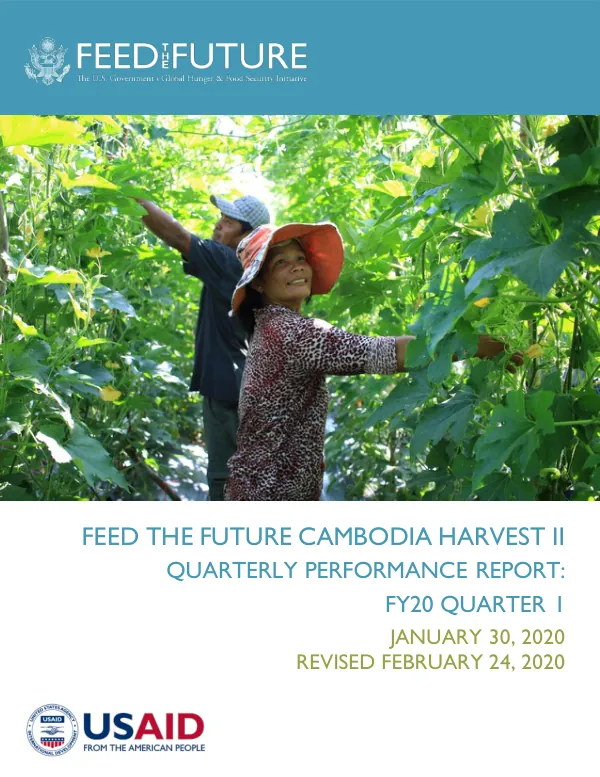
Feed the Future Cambodia Harvest II: FY20 Quarter 1 Performance Report
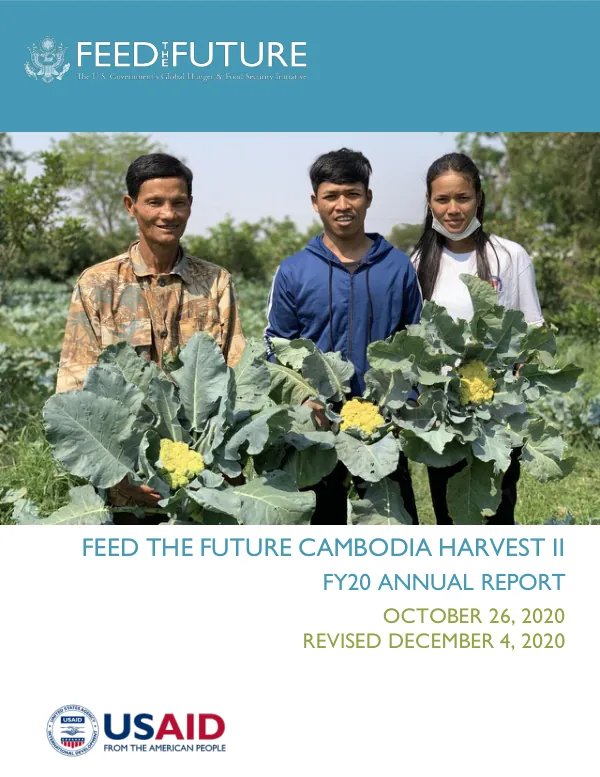
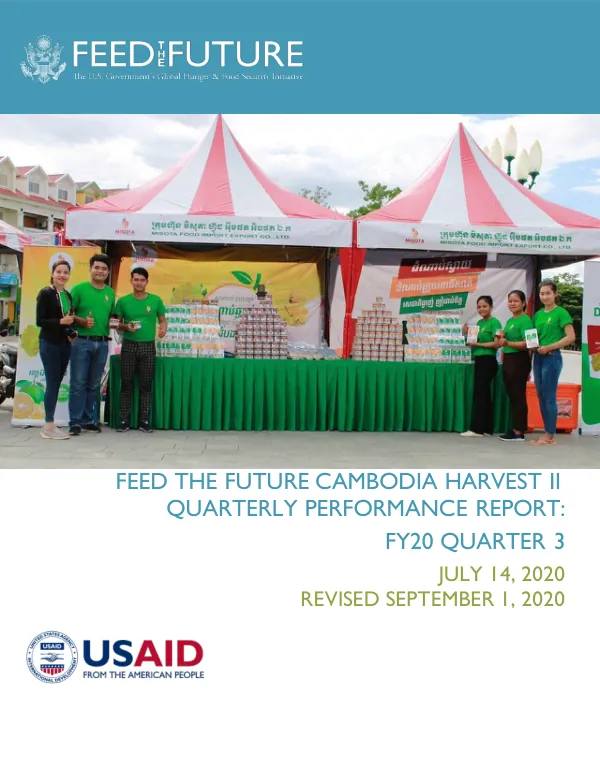
Feed the Future Cambodia Harvest II is a project aimed at accelerating the growth of the horticulture sector across the Feed the Future Zone of Influence (ZOI) in the provinces of Pursat, Battambang, Siem Reap, and Kampong Thom.
2020 · 52 pages
Sign in to readA free account is required to download.
Abstract
The project employs an integrated buyer-led and market systems approach that engages diverse market actors at various leverage points. The primary objective is to expand economic opportunities in the horticulture market. The project has three interconnected sub-purposes: Improved Capacities for Market Participation, Improved Market Linkages, and Improved Market Linkages and Enabling Environment. The first sub-purpose focuses on enhancing farmers' capacities to participate in the market, while the second sub-purpose aims to improve market linkages between farmers and buyers. The third sub-purpose seeks to create an enabling environment for market growth. In the first quarter of FY20, the project implemented several activities under each sub-purpose. For Improved Capacities for Market Participation, the project trained 1,500 farmers on safe production practices and built their capacity to meet modern supermarkets' quality standards. The training was conducted in 15 villages, with a focus on natural agriculture practices. Under Improved Market Linkages, the project established partnerships with 10 buyers, including supermarkets and wholesalers, to improve market access for farmers. The project also facilitated the sale of 1,500 tons of horticultural products to these buyers. Additionally, the project implemented a business management platform to improve the efficiency of market transactions. The project also made progress in creating an enabling environment for market growth. The project worked with the Royal Government of Cambodia to develop policies and regulations that support the growth of the horticulture sector. The project also established a public-private dialogue platform to facilitate communication between market actors. The project faced several challenges during the first quarter, including limited access to finance for farmers and limited market access for small-scale farmers. The project also encountered challenges in implementing the business management platform, which required significant technical assistance. Despite these challenges, the project made significant progress in the first quarter. The project exceeded its target of training 1,500 farmers, and the sale of horticultural products to buyers exceeded the target of 1,000 tons. The project also made progress in creating an enabling environment for market growth, with the development of policies and regulations that support the growth of the horticulture sector. The project plans to continue its activities in the second quarter, with a focus on improving market linkages and creating an enabling environment for market growth. The project will also continue to work with farmers to improve their capacities and access to finance. The project's performance indicators show that the project is on track to meet its targets. The project's progress toward its FY20 targets is as follows: 27% of farmers have improved their market access, 25% of farmers have improved their income, and 20% of farmers have improved their access to finance. The project's success stories include the establishment of a natural agriculture village in Pursat province, which has improved the income of farmers and increased their access to finance. The project also facilitated the sale of horticultural products to buyers, which has improved the income of farmers and increased their access to markets. The project's financial report shows that the project has spent $1.5 million in the first quarter, which is 25% of the total budget. The project's financial report also shows that the project has received $1.2 million in funding from USAID, which is 20% of the total budget. In conclusion, the Feed the Future Cambodia Harvest II project has made significant progress in the first quarter of FY20. The project has exceeded its targets in training farmers and improving market linkages, and has made progress in creating an enabling environment for market growth. The project plans to continue its activities in the second quarter, with a focus on improving market linkages and creating an enabling environment for market growth.