FINTRAC
Feed the Future Enabling Environment for Food Security Project
The Feed the Future Enabling Environment for Food Security Project aimed to address policy, legal, and institutional barriers for improved food security outcomes.
2017 · 8 pages
Sign in to readA free account is required to download.
Abstract
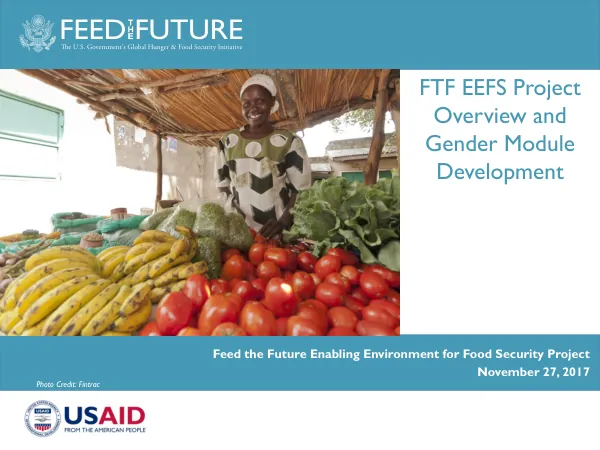
The project operated from September 2015 to September 2020, with a total budget of $13.5 million and an individual buy-in ceiling of $6 million. The project's scope involved working with local partners to build evidence for improved policy outcomes. A key component of the project was the development of a gender module. This module focused on reviewing existing datasets and identifying common challenges in prior analyses. The module also involved building question lists based on the CLIR framework. The gender tool approach was structured around five key areas: the legal framework, social dynamics, supporting institutions, implementing institutions, finance, property, education, extension, and training. The project's education, extension, and training component aimed to create a safe and facilitative environment for an advanced workforce. This involved ensuring that individuals have access to equal rights to travel, trade, and transact. The finance component focused on the degree to which individuals can make use of real and movable property to access financial services. The property component aimed to ensure that individuals have equal rights to property and can make use of it to secure financial services. The project's methodology involved soliciting and securing feedback on the approach, sourcing additional financing to validate and pilot test the methodology, and identifying the feasibility of expanding and integrating the methodology into project activities. The project's knowledge management component involved strategic knowledge sharing and facilitation of learning on policy reform. The project's advisory services component involved stakeholder engagement, strategic program design, and embedded advisors to build local capacity to form and implement reforms. The project's gender module was designed to address common challenges in prior analyses and to build question lists based on the CLIR framework. The module's approach was structured around five key areas: the legal framework, social dynamics, supporting institutions, implementing institutions, finance, property, education, extension, and training. The project's overall goal was to improve food security outcomes by addressing policy, legal, and institutional barriers. The project's knowledge management component involved strategic knowledge sharing and facilitation of learning on policy reform. This component aimed to create a platform for sharing knowledge and best practices among project stakeholders. The project's advisory services component involved stakeholder engagement, strategic program design, and embedded advisors to build local capacity to form and implement reforms. The project's overall goal was to create a supportive environment for policy reform and policy reform implementation. The project's methodology involved soliciting and securing feedback on the approach, sourcing additional financing to validate and pilot test the methodology, and identifying the feasibility of expanding and integrating the methodology into project activities. The project's gender module was designed to address common challenges in prior analyses and to build question lists based on the CLIR framework. The module's approach was structured around five key areas: the legal framework, social dynamics, supporting institutions, implementing institutions, finance, property, education, extension, and training.