USAID DEC
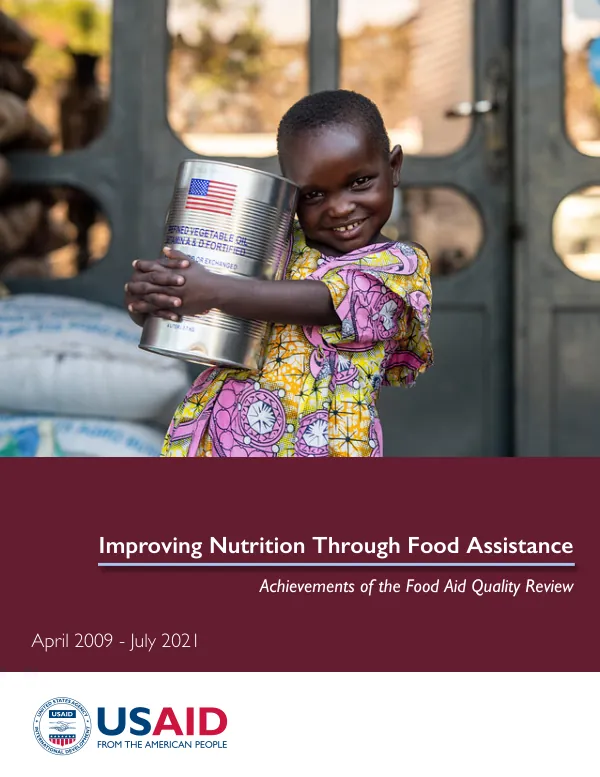
Improving Nutrition Through Food Assistance: Achievements of the Food Aid Quality Review
Sign inUNIVERSITÉ DE TUFTS
Improving Nutrition Through Food Assistance: Achievements of the Food Aid Quality Review
The Food Aid Quality Review (FAQR) is a comprehensive review of food assistance programs, focusing on improving nutrition through food assistance.
2021 · 54 pages
Sign in to readA free account is required to download.
Abstract
Initiated in 2009, the review aimed to assess the quality and effectiveness of food aid programs, identify areas for improvement, and provide recommendations for improvement. The review was conducted by Tufts University, with funding from the United States Agency for International Development (USAID) and the US Department of Agriculture (USDA). The review involved a comprehensive analysis of existing research, data collection, and field research. The research team conducted a feasibility study to assess the feasibility of using food aid to prevent and treat malnutrition. The study found that food aid can be an effective tool in preventing and treating malnutrition, particularly in emergency situations. The review also examined the prevention and treatment of moderate acute malnutrition (MAM). The research team conducted a prevention of stunting and wasting study, which found that food aid can be an effective tool in preventing stunting and wasting in children. The study also found that food aid can be used to treat MAM, with significant improvements in body composition, gut function, and brain function. The review also focused on the importance of using available data to inform decision-making. The research team developed a programming guidance with decision trees to support quality and efficiency in food assistance programs. The tool helps program managers make informed decisions about food assistance programs, taking into account the specific needs of the target population. The review also highlighted the importance of supply chain optimization. The research team developed a food assistance cost-effectiveness tool for specialized nutritious foods, which helps program managers optimize the supply chain and reduce costs. The tool also helps program managers make informed decisions about food assistance programs, taking into account the cost-effectiveness of different food options. The review also emphasized the importance of training and dissemination activities. The research team developed training programs for practitioners and researchers, focusing on the latest research and best practices in food assistance. The training programs aimed to improve the quality and efficiency of food assistance programs, as well as to promote the use of evidence-based practices. The review also highlighted the importance of evidence-based decision-making. The research team developed a framework for evidence-based decision-making, which aims to ensure that food assistance programs are based on the best available evidence. The framework includes a set of criteria for evaluating the effectiveness of food assistance programs, as well as a set of recommendations for improving the quality and efficiency of food assistance programs. The review also highlighted the importance of collaboration and partnership. The research team worked closely with researchers, practitioners, and policymakers to ensure that the research was relevant and useful to the field. The review also highlighted the importance of sharing findings and best practices with the wider community, through publications, presentations, and training programs. Overall, the Food Aid Quality Review has made significant contributions to the field of food assistance, focusing on improving nutrition through food assistance. The review has provided a comprehensive review of the current state of food assistance, identified areas for improvement, and provided recommendations for improvement.
Related documents