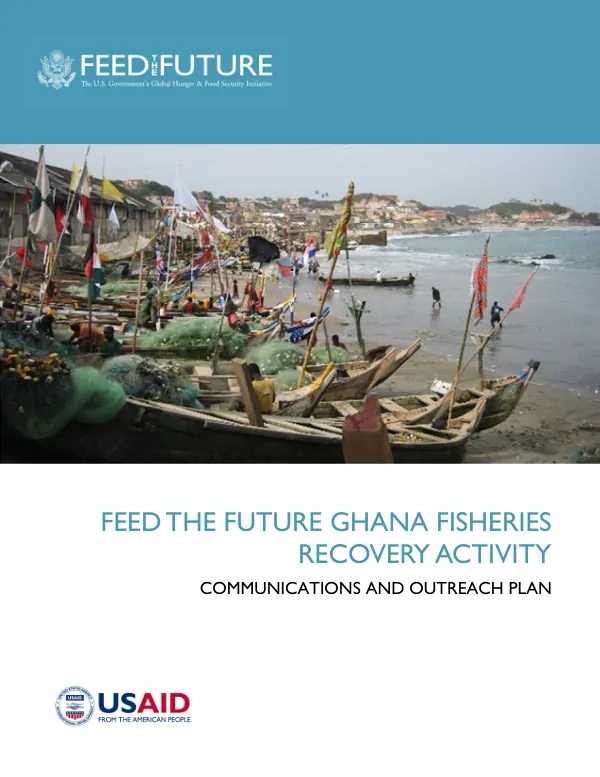
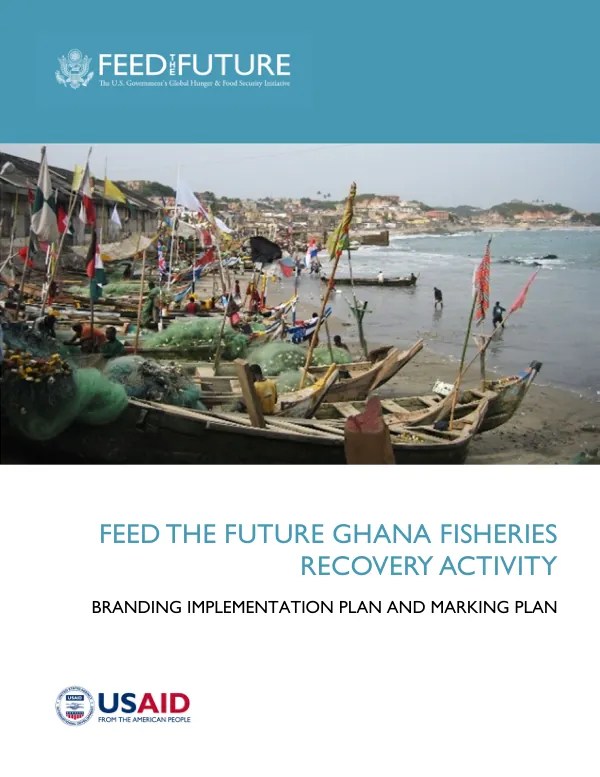
USAID DEC
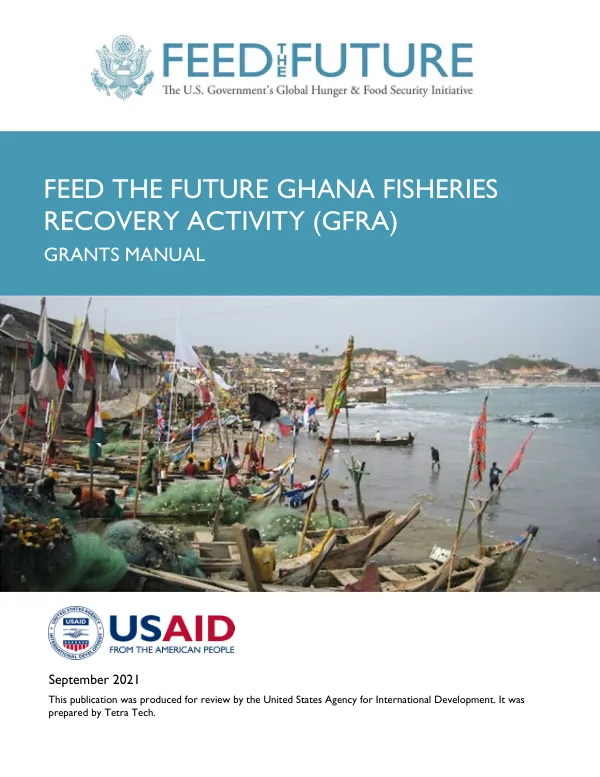
Feed the Future Ghana Fisheries Recovery Activity (GFRA) Activity Monitoring, Evaluation and Learning Plan (AMELP)
Sign inTETRA TECH
Feed the Future Ghana Fisheries Recovery Activity (GFRA) Activity Monitoring, Evaluation and Learning Plan (AMELP)
The Feed the Future Ghana Fisheries Recovery Activity (GFRA) is a five-year initiative aimed at improving the livelihoods of small-scale fishers and their families in Ghana.
2021 · 95 pages
Sign in to readA free account is required to download.
Abstract
The activity began on May 26, 2021, and is scheduled to conclude on May 25, 2026. The project is funded by the United States Agency for International Development (USAID) and is implemented by Tetra Tech, Inc. The GFRA is guided by a Theory of Change, which outlines the expected outcomes and impact of the activity. The theory posits that improved fisheries management and sustainable livelihoods for small-scale fishers will lead to increased food security, improved economic benefits, and enhanced biodiversity conservation. The activity's Results Framework outlines 23 performance indicators that will be tracked to measure progress towards these outcomes. The GFRA Monitoring, Evaluation, and Learning Plan (AMELP) outlines the approach and methodology for tracking these indicators. The plan emphasizes the importance of data quality control and assessment, as well as the need for regular performance monitoring and evaluation. The AMELP also outlines the roles and responsibilities of various stakeholders, including the project team, USAID, and local partners. The activity's performance indicators are grouped into several categories, including fisheries management, sustainable livelihoods, and biodiversity conservation. These indicators include metrics such as fishing mortality at maximum sustainable yield (Fmsy), biomass to produce maximum sustainable yield (Bmsy), and the number of people trained in financial literacy and entrepreneurship programs. The GFRA AMELP also outlines a data management plan, which includes procedures for data collection, security, and storage. The plan emphasizes the importance of ensuring data quality and integrity, as well as the need for regular data analysis and reporting. The activity's implementation is guided by a Results Framework, which outlines the expected outcomes and impact of the project. The framework includes 23 performance indicators that will be tracked to measure progress towards these outcomes. The indicators are grouped into several categories, including fisheries management, sustainable livelihoods, and biodiversity conservation. The GFRA AMELP is an essential tool for tracking progress towards the activity's outcomes and impact. The plan provides a clear framework for monitoring and evaluation, and outlines the roles and responsibilities of various stakeholders. By tracking the activity's performance indicators, the GFRA AMELP will provide valuable insights into the effectiveness of the project and inform future programming and decision-making. The GFRA AMELP also highlights the importance of collaboration and coordination among various stakeholders, including the project team, USAID, and local partners. The plan emphasizes the need for regular communication and feedback, as well as the importance of ensuring data quality and integrity. Overall, the GFRA AMELP is a critical component of the Feed the Future Ghana Fisheries Recovery Activity. The plan provides a clear framework for monitoring and evaluation, and outlines the roles and responsibilities of various stakeholders. By tracking the activity's performance indicators, the GFRA AMELP will provide valuable insights into the effectiveness of the project and inform future programming and decision-making.
Related documents