GOVERNMENT OF GHANA
Feed the Future Ghana Fisheries Recovery Activity: Communications and Outreach Plan
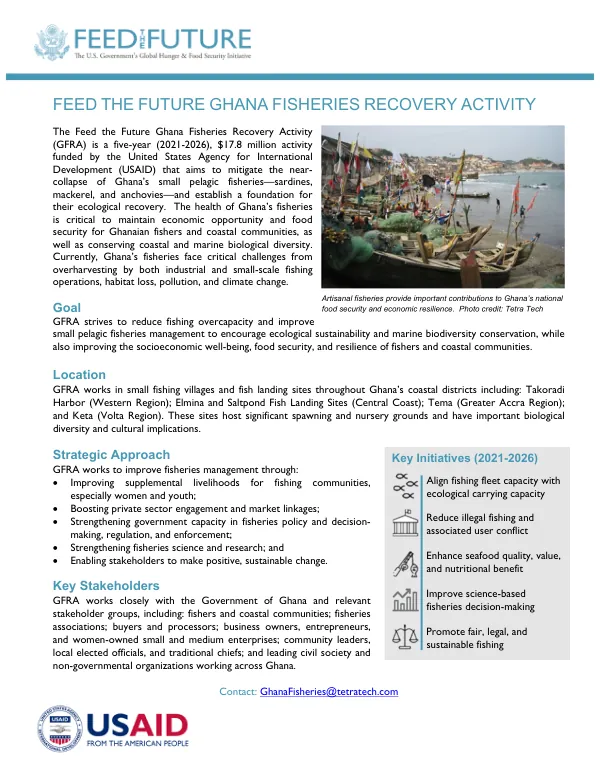
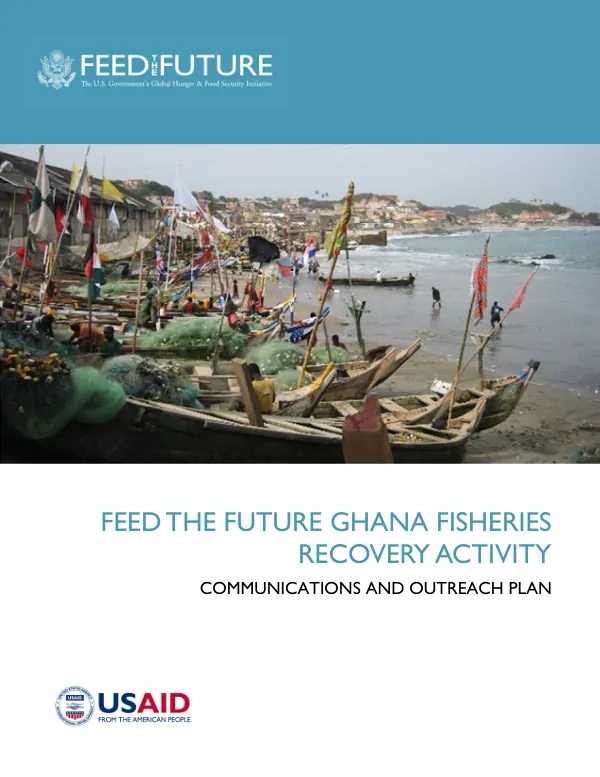
The Ghana Fisheries Recovery Activity (GFRA) aims to mitigate the near collapse of Ghana's small pelagic fisheries sector and establish a durable basis for its ecological recovery.
2021 · 23 pages
Sign in to readA free account is required to download.
Abstract
The overall purpose of GFRA is to reduce fishing overcapacity and increase controlled access over Ghana's small pelagic fisheries sector, encouraging ecological sustainability while enhancing socio-economic well-being and local resilience of artisanal fishing communities. GFRA is being implemented in fishing villages and at fish landing sites across the nation's four coastal regions for the benefit of artisanal fishers, fish processors and traders, fishing association and local community members, local and national government, and university researchers. The program places a special emphasis on creating tangible benefits for women and youth working in the fisheries sector by strengthening their capacity to successfully advocate for ecologically sustainable, safe, and inclusive pelagic fisheries operations and management. GFRA aims to achieve five interdependent objectives: aligning fisheries capacity with ecological carrying capacity of the small pelagic fisheries while enhancing the socio-economic well-being and resilience of artisanal fishing communities; increasing the quality and value of artisanal fish products to maintain household income and enhance availability of nutritious foods for local and regional markets; strengthening transparency, accountability, and co-management in governance practices for fisheries policymaking, regulation, and enforcement; strengthening constituencies to promote and implement sustainable fisheries management; and improving the use of science and research for policy and management decisions. Effective communication and outreach with target audiences will support the project to achieve these goals. The Ghana Fisheries Recovery Activity Communications and Outreach (C&O) Plan outlines the communication principles, objectives, activities, approaches, communications products and tools, and target audiences that will support achievement of project benchmarks, with stakeholder convergence as a key goal. The guiding principles underlying the C&O Plan are consistent with GFRA's approaches, including commitment to the inclusion of gender and youth, private sector engagement, a participatory multi-stakeholder approach, political neutrality, and an evidence-based approach. The C&O Plan will engage with multiple stakeholders from across the political spectrum, and will not engage in any political discourse. All communication will focus on promoting sustainable and effective fisheries management. The C&O Plan aims to achieve several communication objectives, including awareness raising, advocacy, and social and behavior change; project marketing; and high-quality contractual deliverables. The plan will use communications to align the shared goals and interests of project actors in the pursuit of improved and sustainable ecosystem approaches to fishery management (EAFM). A template for an audience-specific C&O Implementation Plan has been included in the document as Annex 1. The GFRA Branding Implementation Plan and Marking Plan, developed by Tetra Tech and submitted to USAID in June 2021, is aligned with this C&O Plan. The plan will be implemented in collaboration with key stakeholders at the community, regional, and national levels, and will be designed, monitored, and adjusted to fit within the local context and respond to emerging needs. The C&O Plan will focus on promoting sustainable and effective fisheries management, and will engage with multiple stakeholders from across the political spectrum. The plan will use communications to align the shared goals and interests of project actors in the pursuit of improved and sustainable ecosystem approaches to fishery management (EAFM). The plan will also strengthen constituencies to promote and implement sustainable fisheries management, and improve the use of science and research for policy and management decisions.