USAID DEC
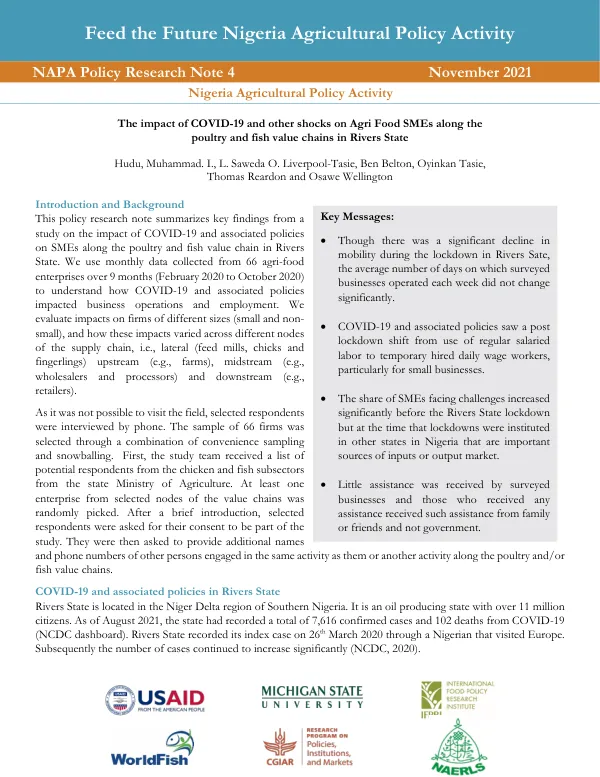
Feed the Future Nigeria Agricultural Policy Activity NAPA Policy Research Note 4 The impact of COVID-19 and other shocks on Agri Food SMEs along the poultry and fish value chains in Rivers State
Sign inINTERNATIONAL FOOD AND POLICY RESEARCH INSTITUTE
Feed the Future Nigeria Agricultural Policy Activity NAPA Policy Research Note 4 The impact of COVID-19 and other shocks on Agri Food SMEs along the poultry and fish value chains in Rivers State
The agricultural sector in Rivers State, Nigeria, is a significant contributor to the state's economy.
2021 · 8 pages
Sign in to readA free account is required to download.
Abstract
The poultry and fish value chains are key components of this sector, with the majority of businesses operating in the state's metropolitan areas, particularly in Port Harcourt and Obio/Akpor Local Government Areas. These areas are hubs for commercial activities, including agriculture, and are home to a large proportion of the state's population. The COVID-19 pandemic and associated policies had a significant impact on the poultry and fish value chains in Rivers State. The state government imposed a lockdown on May 7, 2020, which was later relaxed in some areas. The lockdown led to a decline in mobility, with a sharp decrease in retail and recreational movement and an increase in residential movement. However, the average number of days on which surveyed businesses operated each week did not change significantly during the lockdown period. The lockdown also led to a shift from the use of regular salaried labor to temporary hired daily wage workers, particularly among small businesses. This shift was observed after June, with a drop in the use of regular salaried workers and an increase in the hiring of temporary labor. The fluctuations in wage rates may have contributed to this adjustment, with business owners unable to pay salaries and resorting to temporary labor later in the year. The share of SMEs facing challenges increased significantly before the Rivers State lockdown but at the time when other states in Nigeria instituted lockdowns. This reflects the links between supply chain actors across state boundaries, with businesses in Rivers State facing challenges due to disruptions in the supply chain. The sharp rise in the share of businesses facing challenges in March and April is evident in Figure 5, with 65% to 68% of businesses reporting challenges during this period. The Niger Delta region, where Rivers State is located, has limited poultry production due to climatic conditions. However, there has been an increase in chicken population in the region, with a 7.5% increase from 2019 to 2020. Demand for fisheries and aquaculture products in Rivers State is rising due to increasing population, but fish farmers are unable to meet demand due to the nature of operations that have made fish expensive and thus regarded as food for the rich. The artisanal fishing sector in Rivers State is characterized by subsistence fishing, remoteness, and difficult access, as well as outdated and obsolete fishing gears and crafts. The COVID-19 pandemic and associated policies have had a significant impact on the poultry and fish value chains in Rivers State, with businesses facing challenges due to disruptions in the supply chain and a shift from regular salaried labor to temporary hired labor.
Related documents