USAID DEC
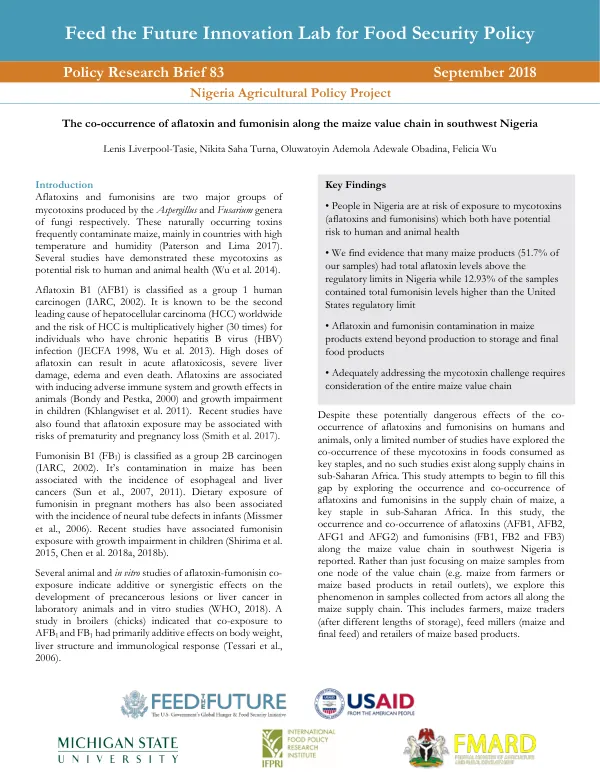
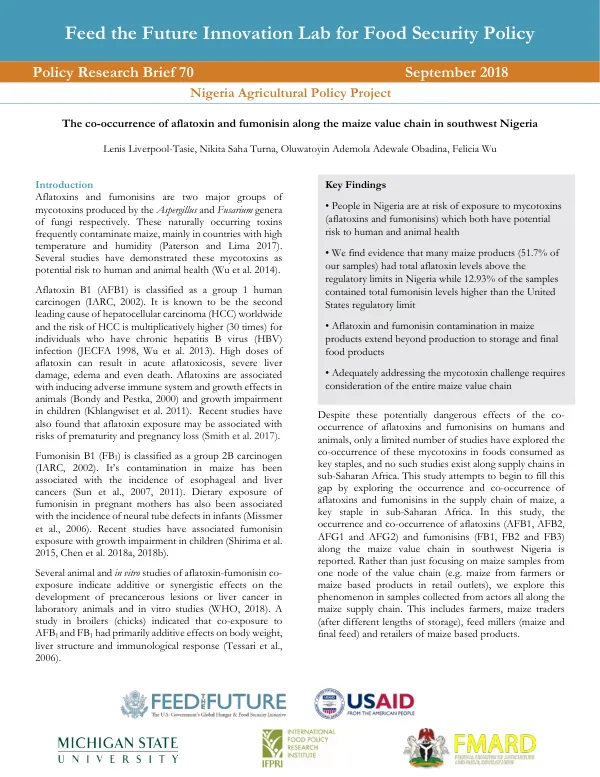
Feed the Future Research Brief: Aflatoxin and Fumonisin Contamination in Maize Value Chain in Nigeria
Sign inINTERNATIONAL FOOD AND POLICY RESEARCH INSTITUTE
Feed the Future Research Brief: Aflatoxin and Fumonisin Contamination in Maize Value Chain in Nigeria
The maize value chain in southwest Nigeria is a significant source of aflatoxin and fumonisin contamination.
2018 · 5 pages
Sign in to readA free account is required to download.
Abstract
Aflatoxins and fumonisins are two major groups of mycotoxins produced by the Aspergillus and Fusarium genera of fungi, respectively. These naturally occurring toxins frequently contaminate maize, mainly in countries with high temperature and humidity. Several studies have demonstrated these mycotoxins as potential risks to human and animal health. Aflatoxin B1 (AFB1) is classified as a group 1 human carcinogen and is known to be the second leading cause of hepatocellular carcinoma worldwide. High doses of aflatoxin can result in acute aflatoxicosis, severe liver damage, edema, and even death. Aflatoxins are associated with inducing adverse immune system and growth effects in animals and growth impairment in children. Fumonisin B1 (FB1) is classified as a group 2B carcinogen and its contamination in maize has been associated with the incidence of esophageal and liver cancers. The study area is the Greater Ibadan Area of Oyo State in southwest Nigeria. This area was selected for several reasons, including its higher probability of exposure to mycotoxin challenges. Farmers from two local government areas (LGAs) of Oyo State, Atisbo and Saki West, were selected for the samples of maize. Three major maize wholesale markets in the Greater Ibadan area of Oyo State, Nigeria, were selected for collection of maize samples from traders. Ten feed-mills from two LGAs (Lagelu and Egbeda) of the greater Ibadan area of Oyo state were selected for the collection of poultry feed and maize samples. The study found that people in Nigeria are at risk of exposure to mycotoxins (aflatoxins and fumonisins) which both have potential risks to human and animal health. The study also found that aflatoxin and fumonisin contamination in maize products extend beyond production to storage and final food products. Adequately addressing the mycotoxin challenge requires consideration of the entire maize value chain. In farmer's stored maize, the total aflatoxin level in the samples tends to increase with time of storage, but the total fumonisin levels do not follow any specific pattern with length of storage time. The geometric mean of total aflatoxin level at harvest was 4.2 ppb, but after 4 months of storage, the level went up to 42.7 ppb, which is much higher than the Nigerian maximum total aflatoxin regulatory limit in maize of 4 ppb. At harvest, 37.5% of the samples had aflatoxin levels more than 4 ppb, and after 4 months of storage, 87.5% of the samples had aflatoxin levels > 4 ppb. In maize from local maize traders, the total aflatoxin and total fumonisin levels do not follow any specific pattern with length of storage time. The total aflatoxin and fumonisin levels in maize samples collected from maize traders after 1 week and 2 weeks of storage were not statistically significantly different. In maize samples from feed millers, the total aflatoxin levels in the final feed are much greater than in the stored maize, but there is no difference for the total fumonisin levels. The total aflatoxin and fumonisin levels in maize flour samples were collected from feed millers from their storage and feed samples produced out of their stored maize. For branded and non-branded maize-based food products, total aflatoxins levels in samples from farmers, maize traders, feed millers, and maize retailers are well above the national regulatory limits. The geometric means of total aflatoxin levels in farmer's maize samples stored for 2-4 months, samples from maize traders stored for over 2 weeks, final feed samples from feed millers, and the non-branded maize snacks were higher than 4 ppb, which is the maximum allowable limit in maize set by the Nigerian government.