FHI 360
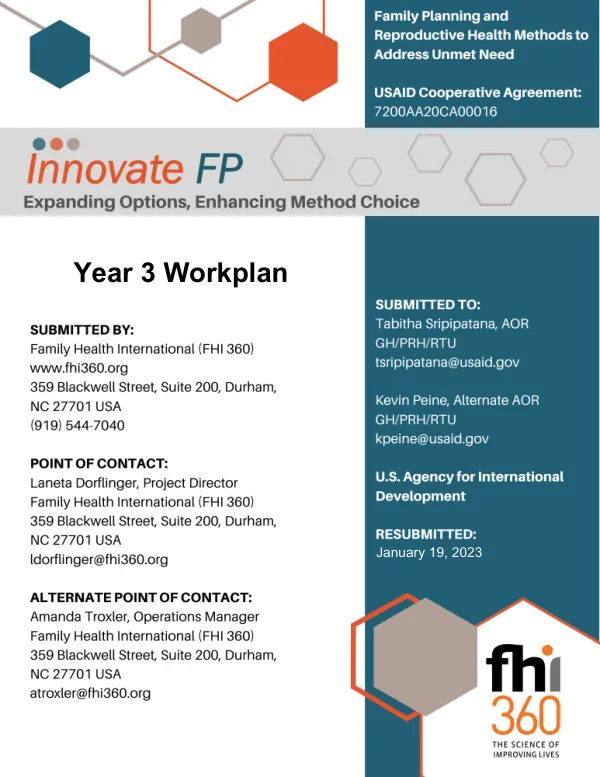
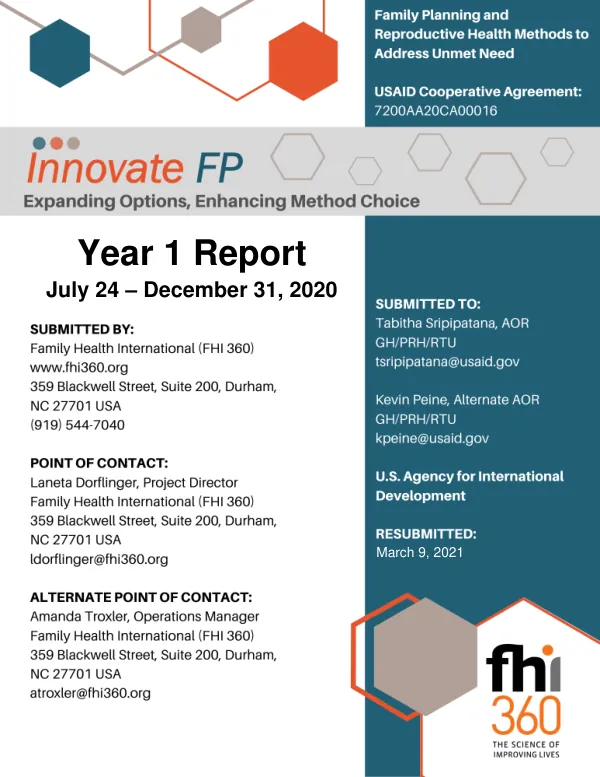
FHI 360 Innovate FP Year 1 Report (Apr-Jun 2021)
The goal of Innovate FP is to expand desirable, affordable, quality contraceptive options to enable women to better meet their changing needs and desires throughout their reproductive lives.
2021 · 22 pages
Sign in to readA free account is required to download.
Abstract
The proposed research agenda aligns with three specific aims outlined in the original USAID Annual Program Statement: refining existing methods to address method-related reasons for non-use, responding to product-related issues about existing methods, and developing new methods that address method-related non-use and/or fill gaps. Strengthening current and building new partnerships are key to advancing the aims of Innovate FP. Aim 1 focuses on refining and advancing knowledge on mid- to long-acting contraceptives, with a specific focus on extending duration and lowering the overall dose of depot medroxyprogesterone acetate (DMPA) injectables. The highest priority is implementing a safety and effectiveness trial of a 6-month DMPA product, known as DMPA XT. This product has the potential to be approved as early as 2025/26 by a European regulatory agency, far ahead of other 6-month injectables currently in development. The new product will use the same 150mg/mL vial as the 3-month DMPA IM formulation and will be co-packaged with an SC syringe, keeping manufacturing costs low and contributing to a substantially shorter time to market. The pivotal Phase 3 trial for DMPA XT will enroll up to 750 women willing to use the product every 6 months as their only means of contraception for 12 months. The trial will evaluate efficacy, safety, bleeding changes, and acceptability, as well as assess the impact of the lower-dose strategy on bone mineral density and characterize how pharmacogenomic differences among participants may influence side effects or outcomes. Major milestones include enrollment completion, interim analysis, follow-up completion, final analysis, and clinical study report. Activities, accomplishments, and challenges in the past three months include receiving protocol approval from USAID, finalizing the Investigator's Brochure and generic consent form, and submitting these study documents to FHI 360's IRB. Revised budgets were received from clinical study sites in the Dominican Republic, Chile, and South Africa, and subagreements were drafted for these sites. A purchase order was executed with Assay, a Clinical Research Organization in the UK, who will assist with regulatory and ethical committee submissions and budget and agreement negotiations for the UK clinical sites. Plans for the next three months include finalizing site budgets and agreements with the clinical study sites, finalizing a subcontract with Assay supporting ongoing regulatory affairs, clinical monitoring, and safety management, and executing contracts with local clinical monitors. The study team will also obtain final PHSC approval for the protocol and generic consent form, submit the final protocol for translation into Spanish, prepare IRB submissions for the sites, and submit to the local IRBs. Regulatory documents will be prepared and submitted to the UK Medicines and Healthcare products Regulatory Agency (MHRA), and the manufacturing partner's WHO PQ dossier will be evaluated to develop the Investigational Medicinal Product Dossier (IPMD) portion of the Clinical Trial Authorization (CTA) submission. The Innovate FP Year One Work Plan outlines the implementation timeline, which includes site selection, preparation, and training, protocol development, IRB submission/approvals, regulatory submissions/approvals, manufacturing partner agreement execution, and DMPA SC extended use: user and service delivery considerations. The latter study is being co-funded by the Children's Investment Fund Foundation (CIFF) and aims to evaluate and understand market implications, including user, provider, and other stakeholder perspectives, on adding multiple extended DMPA SC products to the method mix.
Related documents