FHI 360
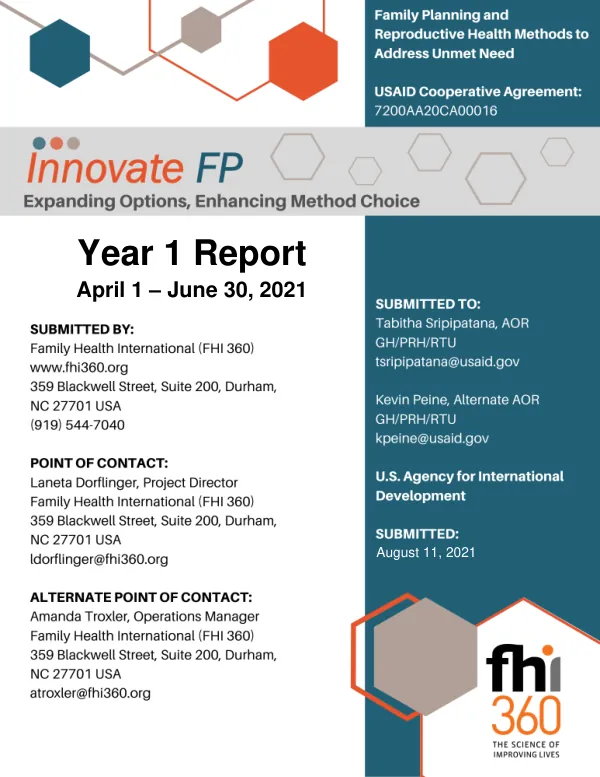
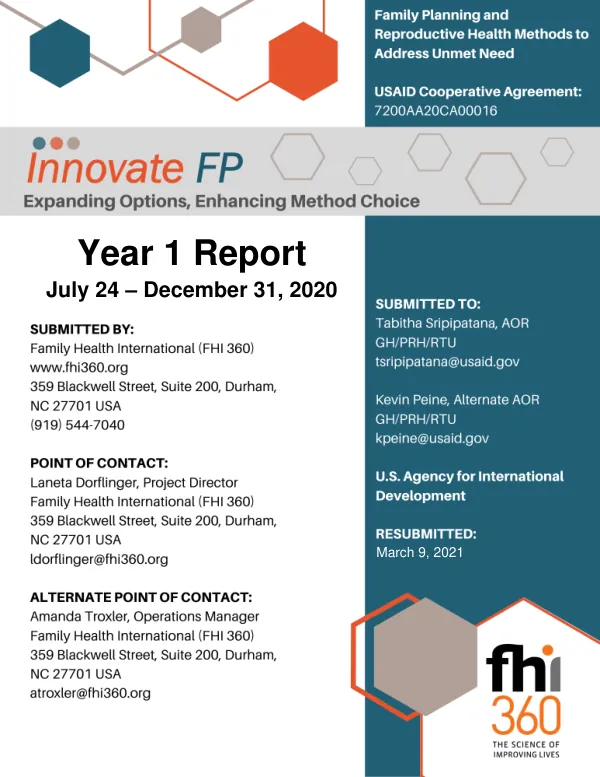
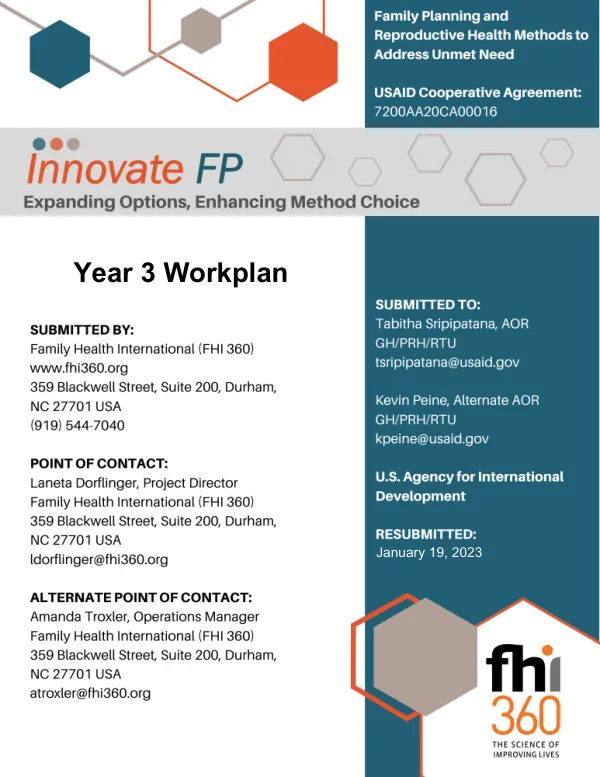
FHI 360 Innovate FP Year 3 Workplan
The goal of Innovate FP is to expand desirable, affordable, quality contraceptive options to enable women to better meet their changing needs and desires throughout their reproductive lives.
2023 · 21 pages
Sign in to readA free account is required to download.
Abstract
The proposed research agenda aligns with three specific aims outlined in the original USAID Annual Program Statement: refining existing methods to address method-related reasons for non-use, responding to product-related issues about existing methods, and developing new methods that address method-related non-use and/or fill gaps. Strengthening current and building new partnerships are key to advancing the aims of Innovate FP. Aim 1 focuses on refining and advancing knowledge on mid- to long-acting contraceptives, with a specific focus on extending duration and lowering the overall dose of depot medroxyprogesterone acetate (DMPA) injectables. The highest priority is implementing a safety and effectiveness trial of a 6-month DMPA product, known as DMPA XT. This product is a 6-month subcutaneous (SC) contraceptive injectable based on an existing, generic 3-month DMPA intramuscular (IM) formulation. The trial aims to enroll up to 750 women willing to use DMPA XT every 6 months as their only means of contraception for 12 months and evaluate efficacy, safety, bleeding changes, and acceptability. The trial will also assess the impact of this lower-dose strategy on bone mineral density and characterize how pharmacogenomic differences among participants may influence side effects or outcomes. Major milestones include enrollment completion, interim analysis, follow-up completion, and final analysis and clinical study report. A pharmaceutical company with a WHO-prequalified DMPA IM product has committed to co-funding and providing clinical supplies for the trial. The company is interested in marketing DMPA XT in FP2020 countries and will seek an eventual marketing authorization in an EU member country via a hybrid generic application under the decentralized procedure. Aim 2 focuses on developing new methods that address method-related non-use and/or fill gaps. The goal is to develop a 4-month DMPA SC injectable in Uniject and a 6-month DMPA SC injectable (syringe and vial; DMPA XT) to the method mix. The study will use multiple methods, including qualitative interviews and human-centered design (HCD) research and workshops, to solicit user and stakeholder opinions, preferences, and suggestions on the prospect of introducing these new injectable products. The study will conduct in-depth interviews with FP providers, program implementers, policy makers, and others in Nigeria and Uganda to explore opportunities, challenges, and preferences for the introduction of multiple new injectable products. The study will also conduct triads with males/partners, mini focus group discussions (FGDs) with users, and facilitate HCD workshops with potential users to explore preferred approaches for providing different duration injectables and types. The workshops will also be used to generate communication strategies and marketing messages for these new products. A second manuscript, focused on provider and other key FP stakeholder perspectives on the introduction of new injectables of varying durations, will be drafted and submitted to USAID for review by the start of Year 3. The Innovate FP Year 3 Workplan includes several key activities and milestones. Regulatory approvals are expected to be obtained in 2022, and initiation training and activation of trial sites will begin in October 2022. Interim analysis will be conducted in Q4 2023, and centralized and on-site monitoring will be ongoing throughout the year. The study on DMPA SC extended use will evaluate and understand market implications, including user, provider, and other stakeholder perspectives, on adding multiple extended DMPA SC products to the method mix. The study will use multiple methods, including qualitative interviews and HCD research and workshops, to solicit user and stakeholder opinions, preferences, and suggestions on the prospect of introducing these new injectable products. The study will conduct in-depth interviews with FP providers, program implementers, policy makers, and others in Nigeria and Uganda to explore opportunities, challenges, and preferences for the introduction of multiple new injectable products. The study will also conduct triads with males/partners, mini focus group discussions (FGDs) with users, and facilitate HCD workshops with potential users to explore preferred approaches for providing different duration injectables and types. The workshops will also be used to generate communication strategies and marketing messages for these new products.
Related documents