USAID DEC
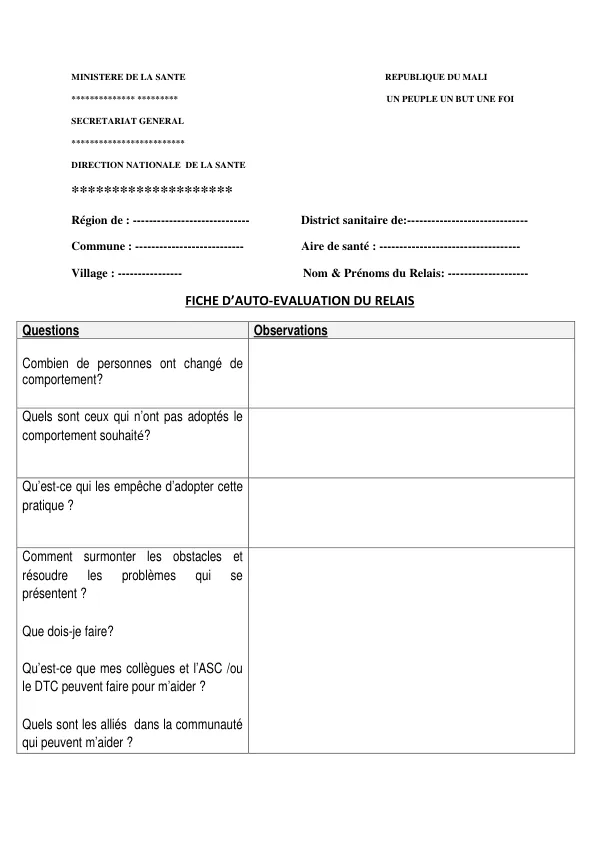
FICHE D’AUTO-EVALUATION DU RELAIS
The Ministry of Health in Mali conducted an auto-evaluation of a health relay in a specific region.
1 pages
Sign in to readA free account is required to download.
Abstract
The relay is located in a particular district, commune, and village, serving a specific area of health. The evaluation aimed to assess the effectiveness of the health relay in promoting behavioral change among community members. According to the evaluation, the number of individuals who changed their behavior is not specified. However, the document highlights the challenges faced by some community members in adopting the desired behavior. The main obstacles to adopting the desired practice include a lack of awareness, limited access to resources, and social and cultural barriers. To overcome these obstacles and resolve the problems presented, the health relay is encouraged to engage with community leaders and other stakeholders to raise awareness and promote the adoption of the desired behavior. The document suggests that the health relay should also collaborate with its colleagues and the local health authorities to access additional resources and support. The community members who can provide assistance to the health relay include local leaders, traditional healers, and other community-based organizations. These allies can help promote the health relay's activities and provide support to community members who are struggling to adopt the desired behavior. By working together, the health relay and its allies can overcome the challenges and achieve their goals in promoting health and well-being in the community. The evaluation highlights the importance of community engagement and collaboration in promoting behavioral change. By building relationships with community members and leaders, the health relay can increase its effectiveness and make a greater impact in the community. The document provides a framework for the health relay to assess its progress, identify areas for improvement, and develop strategies to overcome the challenges it faces.
Related documents