FAO
Final Evaluation Report: IPFE Pilot Project
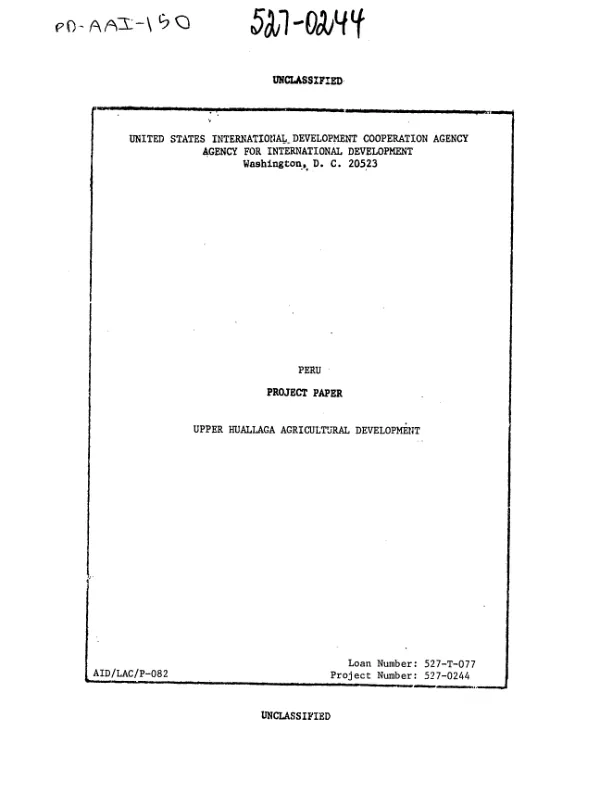
The agricultural development initiative in Peru began in 1977 with funding from USAID's Rural Cooperative Development Program.
2010 · 5 pages
Sign in to readA free account is required to download.

Abstract
The project, designed and approved by IPFE, aimed to conduct training in agricultural production techniques for independent farmers and cooperatives. IPFE was responsible for conducting training in the rural sector, and the project was initially designed to be implemented in conjunction with Agrarian Reform cooperatives. The project focused on training farmers in sustainable agricultural practices, including crop rotation, composting, and irrigation techniques. The training was conducted using an audio-visual methodology, which was developed by IPFE in collaboration with the Agrarian Reform office. The project also aimed to improve the efficiency of the training process by using a standardized curriculum and training materials. The project was implemented in several provinces, including Mantaro Valley, where 16 courses were conducted, with a total of 309 participants. The participants expressed satisfaction with the course, although some felt that it was too limited. The project also aimed to extend its activities to other provinces, including Cauca, Cajamarquilla, and Loreto. However, the project faced challenges, including a lack of coordination between IPFE and the Agrarian Region, which resulted in duplication of efforts. IPFE was also criticized for not informing USAID about the audio-visual courses it was developing. The project also faced competition from other organizations, including CENCIRA, which was developing similar training programs. Despite these challenges, the project made progress, and several courses were completed, including training on potato production, rice irrigation, and pig raising. The project also identified future training needs and made recommendations for future coordination between IPFE, CENCIRA, and USAID. In 1980, a meeting was held between IPFE, CENCIRA, and USAID to coordinate future activities and identify course content and training needs. However, the project's success was ultimately limited by the lack of coordination and duplication of efforts.