USAID DEC
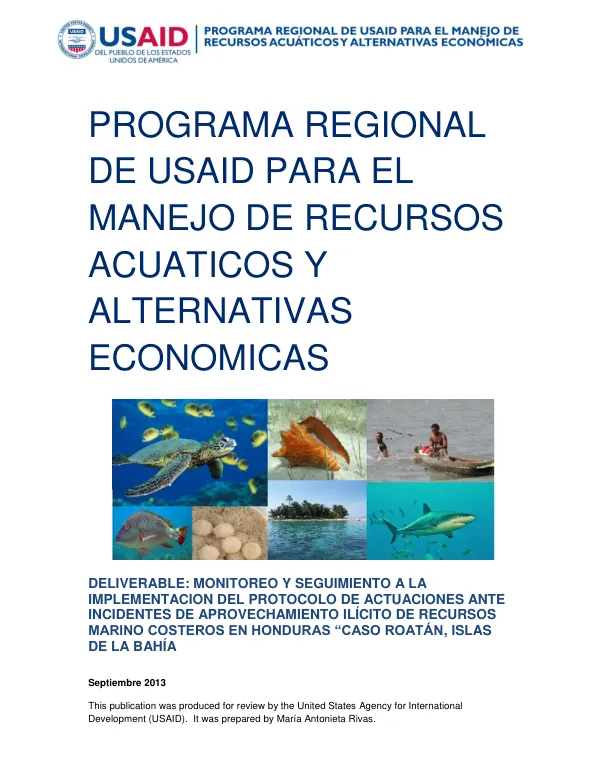
Final Report: Construction of a Protocol of Actions against Illicit Use of Marine Coastal Resources in Honduras: Case Roatán
Sign inUSAID
Final Report: Construction of a Protocol of Actions against Illicit Use of Marine Coastal Resources in Honduras: Case Roatán
The agricultural development initiative in Honduras began with the implementation of an Operational Protocol for coastal and marine crimes in the Bay Islands department.
2013 · 22 pages
Sign in to readA free account is required to download.
Abstract
The protocol was designed to address the issue of illegal use of coastal and marine resources, particularly in the "Caso Roatán" area. Twelve participating institutions, including government and non-governmental organizations, drafted a Plan of Action for Follow-up and Monitoring of the Protocol. The protocol was implemented from April to September 2013, in the jurisdiction of Roatán, Utila, and Guanaja municipalities. The group identified four indicators and created a monitoring plan, which was implemented during the five-month period. Prior to that, a set of indicators had been identified and applied to the most frequent types of crimes to assess improvements in environmental coastal-marine law compliance and enforcement. The implementation of the protocol involved three workshops to draft the protocol, with a fourth workshop focused on inspections, which are the cornerstone of environmental law enforcement programs. The twelve institutions and non-governmental organizations agreed that the protocol would be applied in the jurisdiction of the three municipalities in the Bay Islands department for a period of five months. The monitoring plan was implemented during the five-month period, and the results showed a significant improvement in environmental coastal-marine law compliance and enforcement. The protocol was designed to address the issue of illegal use of coastal and marine resources, particularly in the "Caso Roatán" area, and the implementation of the protocol showed a positive impact on the environment. The protocol was revised and validated by the participating institutions, and the final version was approved for publication. The implementation of the protocol was a collaborative effort between government and non-governmental organizations, and it demonstrated the importance of working together to address environmental issues. The results of the implementation of the protocol were presented in a report, which included information on the number of crimes and reports submitted during the implementation of the surveillance and enforcement plans in each municipality. The report also included a revision of the content of the Operational Protocol for final publication. The implementation of the protocol was a significant step towards addressing the issue of illegal use of coastal and marine resources in the Bay Islands department. The protocol provided a framework for the participating institutions to work together to address this issue, and the results of the implementation showed a positive impact on the environment. The protocol was designed to be a model for other areas in Honduras, and it demonstrated the importance of working together to address environmental issues. The implementation of the protocol was a collaborative effort between government and non-governmental organizations, and it showed that with the right approach, it is possible to make a positive impact on the environment.
Related documents