USAID DEC
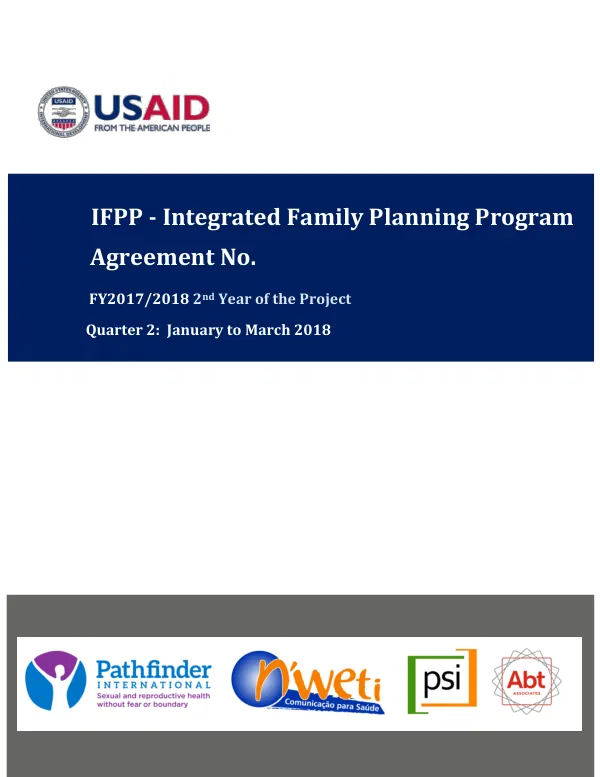
Final Report: IFPP - Integrated Family Planning Program FY2017/2018 2nd Year of the Project
Sign inPOPULATION SERVICES INTERNATIONAL/DKT INTERNATIONAL
Final Report: IFPP - Integrated Family Planning Program FY2017/2018 2nd Year of the Project
The Integrated Family Planning Program (IFPP) is a project aimed at increasing access to modern contraceptive methods and quality family planning/reproductive health (FP/RH) services.
2018 · 55 pages
Sign in to readA free account is required to download.
Abstract
The program is implemented in Mozambique, with a focus on improving the health and well-being of women and children. The IFPP is divided into three main components: increased access to modern contraceptive methods and quality FP/RH services, increased demand for modern contraceptive methods and quality FP/RH services, and strengthened FP/RH health systems. The program's goal is to increase the use of modern contraceptive methods and improve the quality of FP/RH services. In the first quarter of 2018, the IFPP implemented several activities to achieve its objectives. The program increased access to modern contraceptive methods and quality FP/RH services by providing training to health care workers and community health workers. The program also improved the management of commodities to ensure availability at local levels. The IFPP worked with various stakeholders, including the Government of the Republic of Mozambique, community-based organizations, and non-governmental organizations. The program's activities were monitored and evaluated to ensure that they were effective in achieving its objectives. The IFPP's results showed that the program was successful in increasing access to modern contraceptive methods and quality FP/RH services. The program's activities also improved the management of commodities and strengthened FP/RH health systems. The IFPP's success can be attributed to its strong partnerships with stakeholders and its effective implementation of its activities. The program's results demonstrate that with the right approach, it is possible to improve the health and well-being of women and children in Mozambique. The IFPP's activities were implemented in various provinces, including Nampula and Sofala. The program's results showed that the implementation of its activities led to an increase in the use of modern contraceptive methods and improved the quality of FP/RH services. The IFPP's success has implications for the development of FP/RH services in Mozambique. The program's results demonstrate that with the right approach, it is possible to improve the health and well-being of women and children in Mozambique. The IFPP's success also highlights the importance of strong partnerships and effective implementation of activities.