USAID DEC
Final Report: Success Story in Zambia, Future Pharmacists Learn Logistics for Life-Saving HIV/AIDS Drugs
Sign inJOHN SNOW INTERNATIONAL
Final Report: Success Story in Zambia, Future Pharmacists Learn Logistics for Life-Saving HIV/AIDS Drugs
In Zambia, the HIV/AIDS prevalence rate is one of the highest in the world, with approximately 15 percent of the population between ages 15 and 49 affected by the disease in 2008.
2010 · 2 pages
Sign in to readA free account is required to download.
Abstract
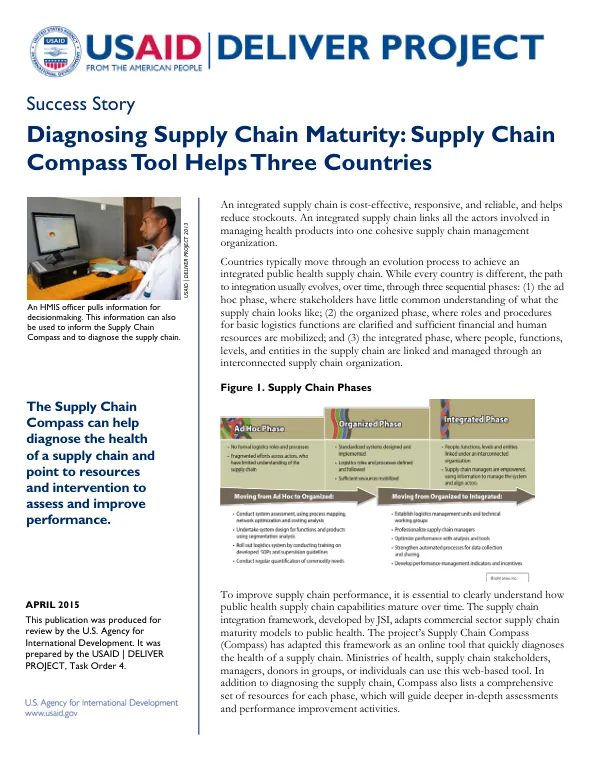
According to the Centers for Disease Control and Prevention, fewer than half of the approximately 330,000 people who needed antiretroviral treatment were receiving it. A strong supply chain is a principal factor in distributing antiretroviral (ARV) drugs, which depends on well-trained staff at local clinics, hospitals, and pharmacies. Evelyn Hone College of Applied Arts and Commerce, one of two recognized pharmacy training institutions in Zambia, trains approximately 120 of the country's estimated 180 graduating pharmacy students each year. In February 2010, the college and the USAID | DELIVER PROJECT agreed to integrate a supply chain management curriculum into the college's pharmacy program. The project's expertise in supply chain management was sought to address the special need for training on HIV and AIDS health product distribution. The USAID | DELIVER PROJECT, Task Order 1, is funded by the U.S. Agency for International Development and implemented by John Snow, Inc. The project improves essential health commodity supply chains by strengthening logistics management information systems, streamlining distribution systems, identifying financial resources for procurement and supply chain operations, and enhancing forecasting and procurement planning. The project also encourages policymakers and donors to support logistics as a critical factor in the overall success of their health care mandates. In April and May 2010, three senior advisors from the project conducted a two-week lecturers' workshop for thirteen college lecturers, covering the basic principles of supply chain management for HIV and AIDS health commodities. The lecturers were trained in adult learning theory, a participatory teaching methodology that incorporates adult students' life experience and knowledge. The reaction to the course was overwhelmingly positive, with one participant stating, "My eyes and mind are now opened to appreciate that the logistics system as a whole must be at the center of SDP (service delivery points) to our clients." The program is scheduled to be fully implemented for all pharmacy students at Evelyn Hone by fall 2011. This will benefit not only the pharmacy technologists as they embark on their new careers but also will help to improve the lives of patients, who can receive needed treatment, whether ARV drugs or any other medicine. The integration of supply chain management themes into the curriculum will prepare each class of graduating students to maintain the supply chain before entering the workforce, offering a sustainable way to train the public health workforce.