CHEMONICS
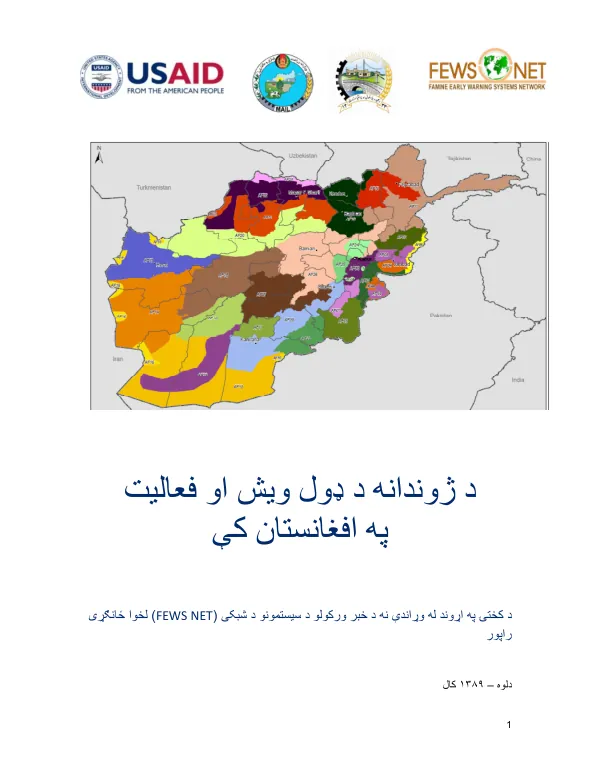
Final Report: Water Security and Resilience Assessment for Afghanistan
The agricultural development initiative in Afghanistan began in 2018 with funding from various international organizations, including USAID, FAO, GTZ, AfghanAid, MADERA, and ADA.
86 pages
Sign in to readA free account is required to download.
Abstract
The initiative aimed to improve agricultural productivity and food security in the country. The initiative was implemented in eight zones across Afghanistan, each with unique agricultural challenges and opportunities. Zone 1 focused on improving crop yields in the eastern provinces, while Zone 2 targeted the southern provinces with a focus on irrigation development. Zone 3 focused on improving livestock productivity in the western provinces, and Zone 4 targeted the northern provinces with a focus on market linkage facilitation. The initiative also involved the establishment of a national agricultural advisory service, which provided technical support to farmers and agricultural extension workers. The service was implemented in partnership with the Ministry of Agriculture, Irrigation, and Livestock, and the National Agricultural Research Institute. The initiative also contributed to the development of a national agricultural policy, which aimed to improve agricultural productivity and food security in Afghanistan. The policy was developed in partnership with the Ministry of Agriculture, Irrigation, and Livestock, and the National Agricultural Research Institute. Overall, the agricultural development initiative in Afghanistan made significant progress in improving agricultural productivity and food security in the country. The initiative demonstrated the importance of a coordinated approach to agricultural development, involving multiple stakeholders and interventions.
Related documents
![Electricity regulation in iraq : issues and options [Arabic]](https://covers.devme.ai/gen/149080.webp)