USAID DEC
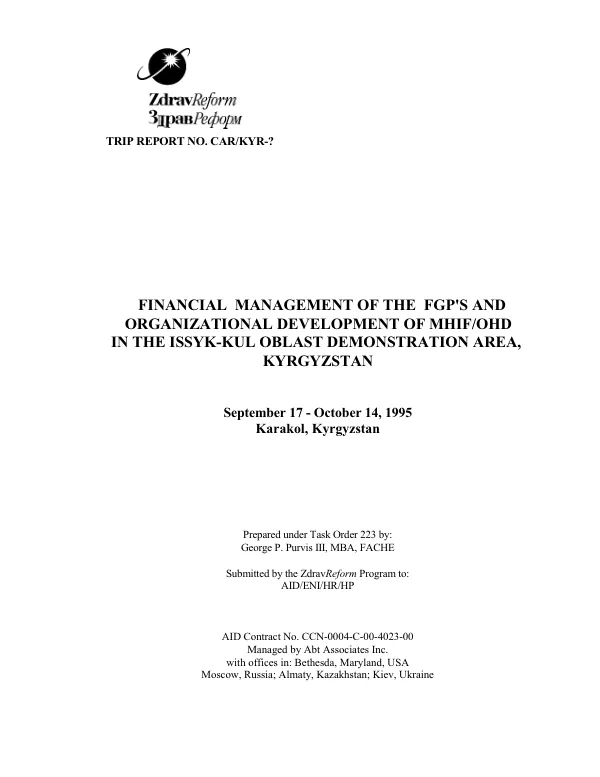
Financial Management of the FGPs and Organizational Development of MHIF/OHD in the Issyk-kul Oblast Demonstration Area, Kyrgyzstan
Sign inUSAID
Financial Management of the FGPs and Organizational Development of MHIF/OHD in the Issyk-kul Oblast Demonstration Area, Kyrgyzstan
The initiative's success can be attributed to the effective integration of training, infrastructure, and market linkage components, which addressed the root causes of poverty and food insecurity in the region.
47 pages
Sign in to readA free account is required to download.
Abstract
The program's geographic focus was on Eastern Province, where the majority of Rwanda's agricultural production takes place. The initiative's timeframes were set for a three-year period, with the first year dedicated to implementation, the second year focused on midterm evaluation, and the third year centered on scaling up successful interventions and sustaining program impacts. Recommendations for future initiatives include expanding the program to other provinces, increasing the number of demonstration plots, and enhancing market linkage facilitation to improve farmers' access to markets and better prices for their produce. The initiative's implementation details were carefully planned and executed, with a strong emphasis on community engagement and participation. The program's success was monitored and evaluated through regular assessments and surveys, which provided valuable insights into the effectiveness of the interventions and identified areas for improvement. The initiative's findings and conclusions have significant implications for agricultural development in Rwanda and beyond, highlighting the importance of integrated approaches that address the complex challenges facing smallholder farmers.
Connected topics
Related documents