HEALTH POLICY PLUS
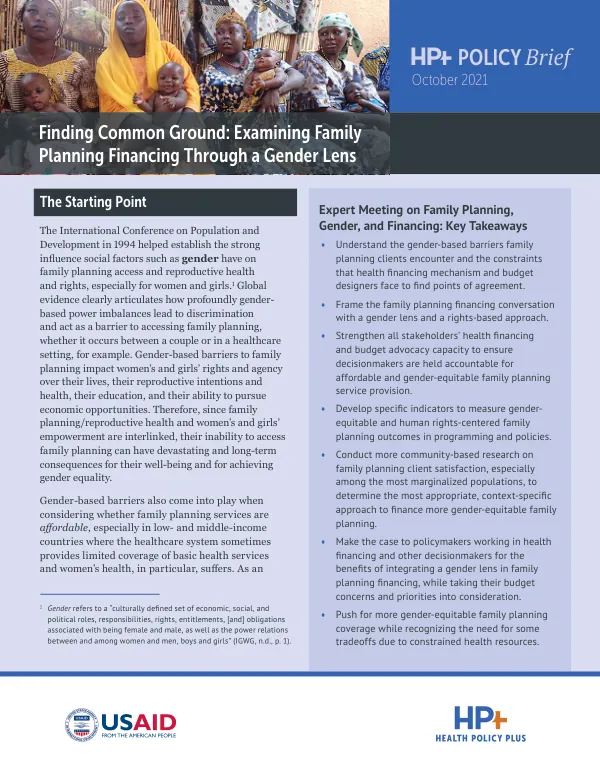
Finding Common Ground: Examining Family Planning Financing Through a Gender Lens
The International Conference on Population and Development in 1994 highlighted the significant influence of social factors, including gender, on family planning access and reproductive health and rights.
2021 · 8 pages
Sign in to readA free account is required to download.
Abstract
Global evidence demonstrates how profoundly gender-based power imbalances lead to discrimination and act as a barrier to accessing family planning. Gender-based barriers impact women's and girls' rights and agency over their lives, reproductive intentions, and health. The primary focus of the brief is to advance dialogue on including a gender lens in family planning financing, recognizing that gender is not the only factor inhibiting individuals' access to family planning. Those from typically marginalized groups, such as ethnic minorities, young people, or persons living with disabilities, may also face discrimination due to provider bias when seeking family planning. Applying a human rights-based approach to family planning financing helps uphold all individuals' rights to affordable and high-quality family planning information and services. This approach ensures that individuals have agency in decisions about their reproductive intentions and do not face any form of discrimination when seeking information about or access to family planning services. On May 13, 2021, the Health Policy Plus project convened family planning, gender, and family planning financing experts to discuss how to better integrate gender into family planning and health financing systems. The meeting objectives included discussing integrating a gender lens into family planning and health financing systems, exploring how health financing systems can reasonably integrate a gender perspective in family planning financing, and determining practical next steps for complementary research and advocacy agendas. A panel discussion with four experts representing family planning, gender, and family planning financing topic areas framed the conversation, presenting the realities and challenges of the health financing system that have typically not focused on nor included gender-equitable and rights-based family planning. The poor health outcomes for all members of society and inefficient use of resources that result from gender-based barriers and the omission of a human rights-based approach in family planning and health financing systems were also highlighted. Small group discussions followed the panel discussion to explore potential future focus on complementary research and policy advocacy agendas to better integrate a gender lens and rights-based approach into family planning and health financing systems.