USAID DEC
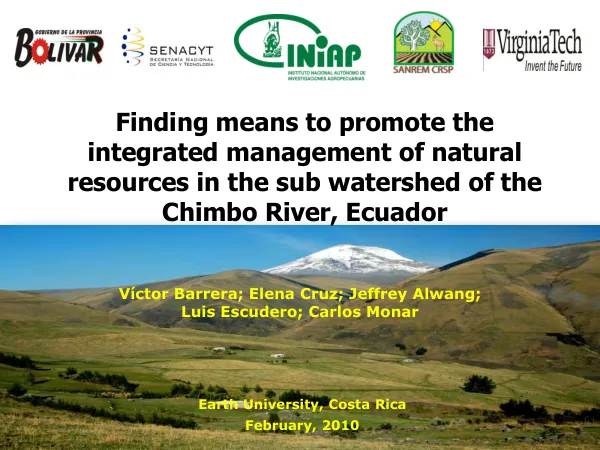
Finding means to promote the integrated management of natural resources in the sub watershed of the Chimbo River, Ecuador
Sign inUSAID DEC
Finding means to promote the integrated management of natural resources in the sub watershed of the Chimbo River, Ecuador
The Chimbo River sub watershed in Ecuador spans 3635 square kilometers and is a critical component of the Guayas River basin, providing approximately 30-40% of the total water flow.
2010 · 21 pages
Sign in to readA free account is required to download.
Abstract
The region is characterized by three distinct ecological zones, including paramo, high plain, and subtropical areas, with elevations ranging from 300 to 4500 meters and annual rainfall varying between 500 and 4000 millimeters. The sub watershed is home to a population of approximately 169,370 people, with high rates of illiteracy, poverty, and malnutrition. Socioeconomic conditions in the sub watershed are marked by significant challenges, including high rates of erosion, sedimentation, and turbidity in the water, as well as substantial reductions in water levels and flows due to deforestation and agricultural expansion. Agro-chemical contamination of surface waters is also a pressing concern, resulting from runoff from cultivation on steep slopes, limited ground cover, and intensive tillage. The region's environmental conditions are further exacerbated by the lack of integrated management of natural resources, which has contributed to the flooding problems in the low-lying areas. To address these challenges, the integrated adaptive watershed management approach seeks to promote the appropriate use of natural resources, balancing economic growth, equity, and environmental sustainability. This approach involves continuous management of watersheds using scientific techniques in coordination with local actors. The plan focuses on problem identification through biological and socioeconomic diagnostics, followed by the identification of zones of intervention and actual interventions, including applied research and planning with community stakeholders. The watershed management plan involves the participation of communities, local and provincial governments, and other stakeholders in monitoring, maintenance, and implementation activities. The plan aims to work with two communities, Illangama and Alumbre, to promote sustainable management of natural resources, diffusion of livelihood strategies, social capital improvement, and local governance reinforcement. Watershed modeling using tools such as SWAT and others will be employed to support the implementation of the plan. The conceptual framework for integrated watershed management emphasizes the importance of coordination and cooperation among stakeholders, including communities, farmer groups, local governments, and other stakeholders. The plan seeks to promote the appropriate use of natural resources, seeking an equilibrium between economic growth, equity, and environmental sustainability, with the overall objective of improving the quality of life for human populations in the sub watershed.
Related documents
Documents in this collection
 2015
2015USAID DEC
Advancing Landscapes in the Andean Amazon (ASLAA) | ICAA
Open record 2014
2014USAID DEC
Estrategia Consensuada con autoridades de gobierno para reducir la deforestación y presión sobre el bosque, amparada en las políticas y el marco legal de bosques, áreas protegidas y territorios indígenas del Ecuador
Open record