USAID DEC
Findings from the use of a narrative story and leaflet to influence shifts along the behavior change continuum toward postpartum contraceptive uptake in Sylhet District, Bangladesh
Sign inJHPIEGO
Findings from the use of a narrative story and leaflet to influence shifts along the behavior change continuum toward postpartum contraceptive uptake in Sylhet District, Bangladesh
Postpartum women and their families have unique needs when it comes to family planning (FP).
2014 · 7 pages
Sign in to readA free account is required to download.
Abstract
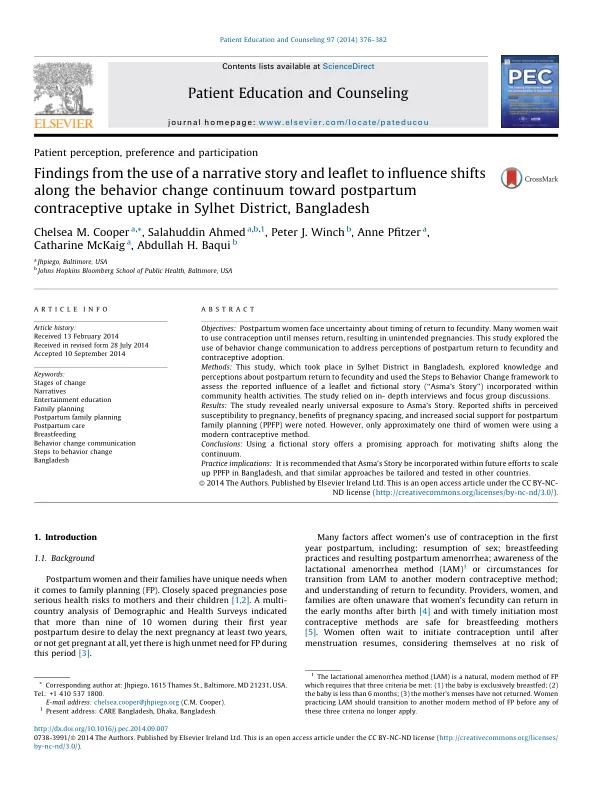
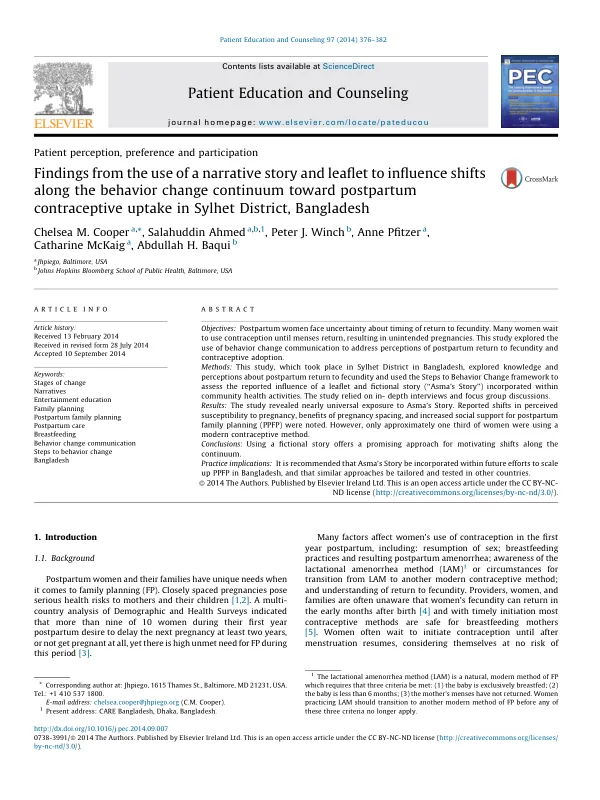
Closely spaced pregnancies pose serious health risks to mothers and their children. A multi-country analysis of Demographic and Health Surveys indicated that more than nine of 10 women during their first year postpartum desire to delay the next pregnancy at least two years, or not get pregnant at all, yet there is high unmet need for FP during this period. Many factors affect women's use of contraception in the first year postpartum, including resumption of sex, breastfeeding practices and resulting postpartum amenorrhea, awareness of the lactational amenorrhea method (LAM), and understanding of return to fecundity. In Sylhet District, Bangladesh, almost half (46.5%) of non-first births occurred at short intervals of less than 36 months since the previous birth. Under-five and neonatal mortality and total fertility are higher, and contraceptive prevalence is lower in Sylhet Division compared to the rest of Bangladesh. The Healthy Fertility Study (HFS) promoted optimal pregnancy spacing by integrating postpartum family planning (PPFP) within a community-based maternal and newborn health program. Female community health workers (CHWs) counseled women on PPFP and provided contraception to women during household visits. To address noted gaps in PPFP knowledge and understanding, the HFS study team developed a leaflet including "Asma's Story" and a pictorial on one side, and critical messages about return to fecundity on the reverse. The leaflet and story were shared and discussed with women during counseling sessions with postpartum women and group meetings with mothers-in-law, postpartum women, and men. Asma's Story tells how one woman (Asma) incorrectly assessed her risk of pregnancy to be minimal during the months before her menstruation returned. Asma says she will wait until her menstruation returns before starting a modern FP method, but then becomes pregnant. She learns that conception can occur before menstruation returns, and it is important to start using an FP method soon after giving birth. The study aimed to assess knowledge and perceptions regarding return to fecundity among postpartum women, husbands, and mothers/mothers-in-law; short-term outcomes of efforts to raise awareness about postpartum return to fecundity and encourage PPFP use; and the ways in which the approach may have affected postpartum women's progression along the steps to behavior change (SBC) continuum toward modern contraceptive use. The study found that nearly universal exposure to Asma's Story was reported, with noted shifts in perceived susceptibility to pregnancy, benefits of pregnancy spacing, and increased social support for postpartum family planning (PPFP). However, only approximately one third of women were using a modern contraceptive method.
Related documents
Documents in this collection
 2014
2014USAID DEC
Findings from the use of a narrative story and leaflet to influence shifts along the behavior change continuum toward postpartum contraceptive uptake in Sylhet District, Bangladesh
Open record 2015
2015USAID DEC