DFID
FALAH Launches Mass Media Campaign to Promote Birth Spacing
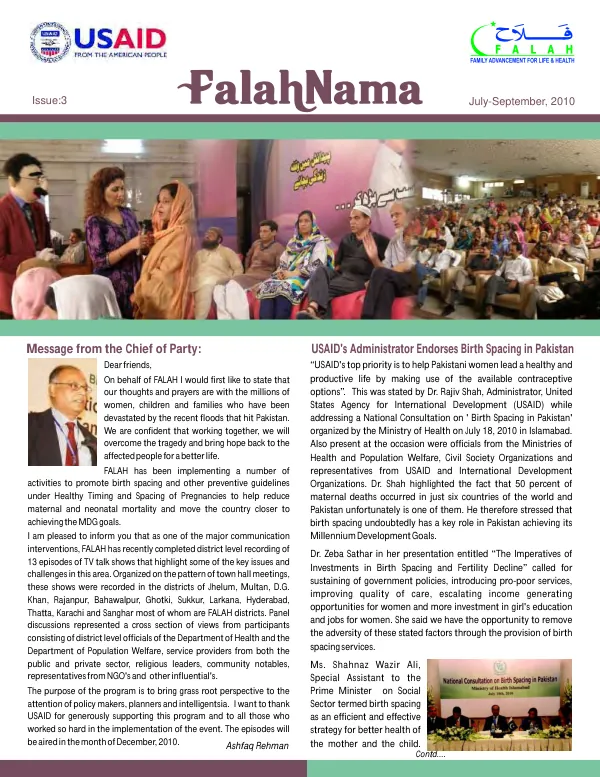
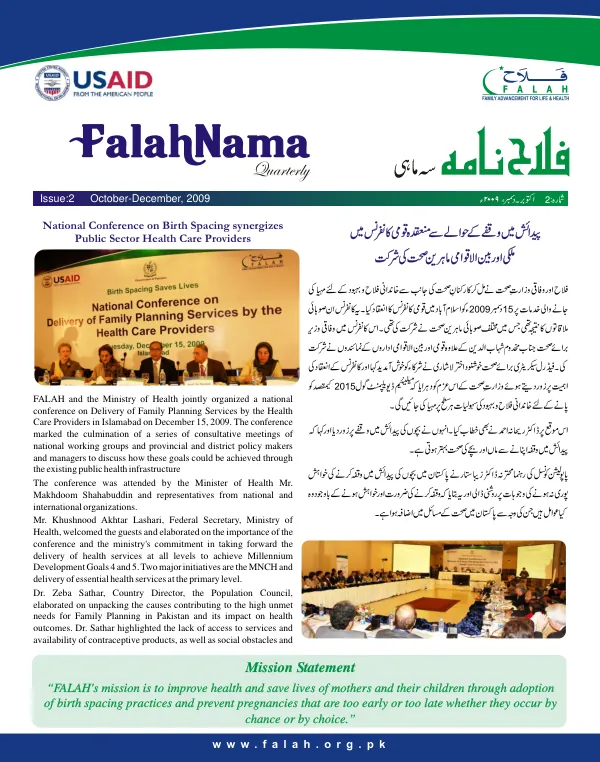
The national conference on Delivery of Family Planning Services by the Health Care Providers in Islamabad was organized by FALAH and the Ministry of Health on December 15, 2009.
2009 · 8 pages
Sign in to readA free account is required to download.
Abstract
The conference aimed to discuss how to achieve the goals of family planning through the existing public health infrastructure. The event was attended by the Minister of Health, Mr. Makhdoom Shahabuddin, and representatives from national and international organizations. The conference highlighted the importance of family planning in achieving Millennium Development Goals 4 and 5. Dr. Zeba Sathar, Country Director of the Population Council, emphasized the need to address the high unmet needs for family planning in Pakistan, which is attributed to lack of access to services, availability of contraceptive products, and social obstacles. Dr. Sathar also highlighted the importance of expanding and enhancing the coverage of services and improved counseling by health providers to mitigate the fear of side effects. The conference also discussed the role of the Ministry of Health in fulfilling its role in family planning. Professor Dr. Rashid Jooma, Director General (Health), Ministry of Health, provided a roadmap identifying three main areas that need to be strengthened. Dr. Rehana Ahmed, International FP/RH expert, spoke on the importance of birth spacing and how it can improve maternal and neo-natal health outcomes. The conference concluded with a vote of thanks by Ms. Shahida Azfar, Chief of Party of the FALAH project. FALAH has also launched a mass media campaign to promote birth spacing. A catchy jingle was produced to create awareness of birth spacing and the waiting period of 2 years from birth to the next pregnancy. The jingle was extensively aired through FM radio stations in the FALAH districts and national broadcasts of Radio Pakistan. Four television commercials were produced to focus on the main communication objectives of the project, including raising awareness of pregnancy-related risks for women under 18, addressing male child preference as a barrier to birth spacing, and promoting the health benefits of a two-year waiting period. Community mobilization is also a key component of FALAH's strategy. A community mobilization pilot project was conducted in Thatta, where a local counselor, Muhammad Asif Soomro, was trained to trigger change. Soomro was able to convince the parents of a 15-year-old girl to delay her marriage by at least three years, citing the negative impact of early marriage on the girl's health. This success has brought more confidence to Soomro, and he plans to convey other messages of FALAH on birth spacing and healthy timing of pregnancy. FALAH has also signed an agreement to expand the role of the commercial sector in family planning. The private sector companies, particularly ZAFA pharmaceuticals and United Distributors Ltd. (UDL), have played an important role in enhancing contraceptive security by providing contraceptives that are sourced and financed without donor funding. FALAH will provide technical assistance and financial support to ZAFA and UDL in strengthening their demand-generating activities, such as communications targeting both potential clients and private sector health providers. FALAH is also supporting the Nursing Council to strengthen the existing family planning curriculum. The council's committee will review the curriculum and incorporate it as part of their syllabus, with a focus on shifting from family planning to the benefits of birth spacing. The training was conducted by Jhpiego, a technical partner in the FALAH project, and covered the standardization of pre-service education on updated family planning curricula. The new teaching material on learning resource packages on birth spacing was shared with the participants, and the feedback was positive, with participants motivated to implement the policy and incorporate the benefits of birth spacing into their curriculum.