UNITED NATIONS
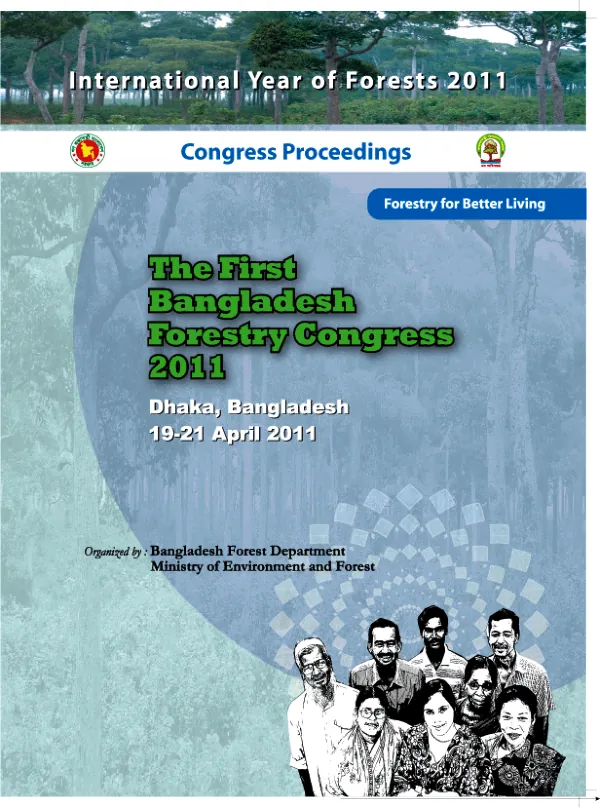
First Bangladesh Forestry Congress 2011: Forests for Better Living
The First Bangladesh Forestry Congress 2011 was held in Dhaka, Bangladesh from April 19-21, 2011.
2011 · 417 pages
Sign in to readA free account is required to download.
Abstract
The congress aimed to raise awareness about the importance of forests in the country's economy, welfare of the rural population, and environmental protection. The event was organized by the Forest Department, Ministry of Environment and Forest, Government of the People's Republic of Bangladesh. Bangladesh is home to two global ecological zones, Tropical Rain Forest (TAF) and Tropical Moist Deciduous Forest (TMD). The country has five forest types, including Tropical Wet Evergreen Forest, Tropical Moist Deciduous Forest, Tidal Swamp Forest, Tropical Fresh Water Swamp Forest, and Littoral Forest. The forests of Bangladesh are generally dense, uneven-aged, and multi-storied with rich biodiversity. Historically, forests were viewed as wilderness areas, and their beneficial services were not recognized. Clearing of forests for agriculture, development of homesteads, and shifting cultivation were common practices. The area of the Sundarbans Forest reduced significantly during the 18th and 19th centuries. Scientific management of forests began when the British government took direct rule of India in 1857, and the Forest Department was established. During the Pakistan regime, forest-based industries were developed, and extensive extraction occurred through clear felling of natural forests. Plantations were developed in clear-felled areas, mainly with teak. The establishment of Forest Extension Divisions and forest extension nurseries, as well as the commencement of coastal afforestation, were significant breakthroughs in forest management. After Bangladesh's liberation in 1971, extensive development activities were undertaken in all sectors, including rural areas. The transformation of Thana to Upazilla, establishment of municipalities, and population growth led to increased pressure on forest land and resources. To address these challenges, the Bangladesh Forest Department and the Government of Bangladesh implemented various innovative management initiatives, including social forestry, coastal afforestation, and protected area management. The Forest Department has organized training programs, seminars, workshops, and other events to raise awareness about forest conservation and development. These efforts have led to a substantial increase in tree resources, particularly in rural areas. The National Forest and Tree Resources Assessment 2005-2007 report indicates that almost 50% of Bangladesh's area has some type of tree cover. The report also estimates that rural areas have a total of 140 million cubic meters of tree resources, a 255% increase from the 1981 village forest inventory report. Despite these achievements, the protection of forest land and conservation of forests remains a challenge. The prevailing land tenure and land record system contributes to forest destruction, and policymakers often overlook the importance of forestry issues. Climate change has become a pressing concern, and Bangladesh is recognized as one of the most vulnerable countries in the world. The government has emphasized the need for vulnerable countries to receive assistance from developed countries to mitigate and adapt to climate change.