MINISTRY OF FINANCE
Fiscal Decentralization in Practice: Jordan’s Nascent Experience
Fiscal decentralization is a key policy initiative in Jordan, aimed at transferring power and decision-making authority from the central government to local governorate councils.
2019 · 72 pages
Sign in to readA free account is required to download.
Abstract
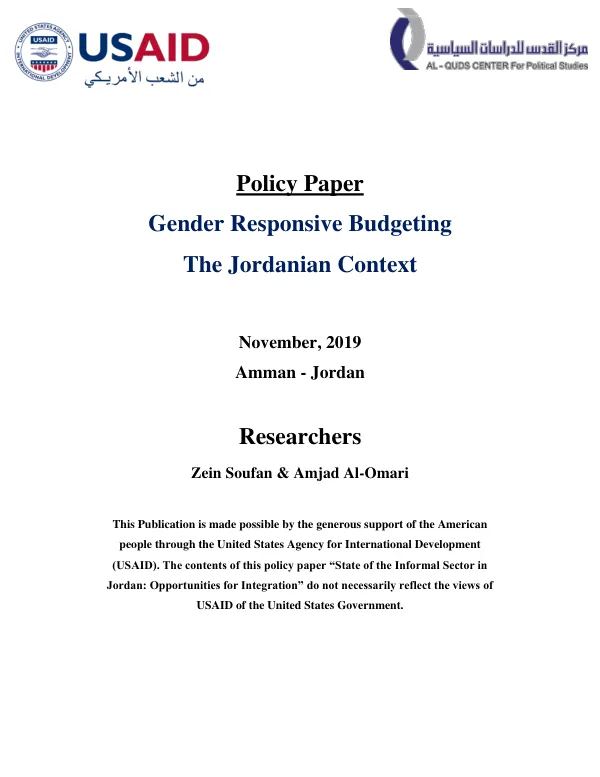
The country's experience with decentralization began in 2017, with the implementation of Law 49/2015, which established the framework for fiscal decentralization. The law mandated the transfer of 15% of seats in governorate councils to ensure the presence of experienced and knowledgeable individuals in local planning and service delivery. The policy paper, developed by the Al Quds Center for Political Studies with funding from USAID, examines the extent to which the implementation of fiscal decentralization in Jordan has enabled governorate councils to distribute budget allocations in accordance with local needs and enhance public services at the local level. The paper is based on a two-year study (2017-2018) and includes the results of three focus groups conducted with subnational government representatives, as well as validation and enrichment through one-to-one phone calls and meetings with decentralization units from the Ministry of Finance and the Ministry of Political and Parliamentary Affairs. The study found that Jordan's approach to decentralization is unique, with a focus on careful and gradual steps towards the transfer of power from the center to local authorities. The governorate councils, established under Law 49/2015, have been given a significant degree of autonomy in decision-making, with 15% of seats reserved for experienced and knowledgeable individuals in local planning and service delivery. The paper highlights the importance of fiscal decentralization in achieving better results for public systems, including increased public service responsiveness to needs, effectiveness, efficiency, and sustainability. The study also notes that decentralization is not implemented in the same way in all countries, and even if the same principles are followed, results may not be the same. Jordan's approach to decentralization is built on the concept of careful and gradual steps towards the transfer of power from the center to local authorities. The study identifies several challenges faced by governorate councils in Jordan, including power, accountability, and authority issues, legislative and regulatory issues, budget planning challenges, budget execution challenges, administrative issues, and capacity issues. The paper also highlights the importance of gender perspective in decentralization, with a focus on representation of women in subnational bodies, gender-sensitive budgeting, and gender equality consideration in public consultation. The study concludes that fiscal decentralization in Jordan has the potential to enhance public services at the local level and improve the distribution of budget allocations in accordance with local needs. However, the implementation of decentralization requires careful planning, coordination, and capacity building to ensure its success. The paper recommends several policies and actions to support the decentralization process in Jordan, including the establishment of a supportive structure and legislative environment, tracking progress and measuring success and impact, and enhancing the capacities and awareness of governorate councils. The study also highlights the importance of coordination between governorate councils and the central government, as well as the need for resources and independence for governorate councils to effectively implement decentralization. The paper concludes by emphasizing the need for continued support and capacity building for governorate councils to ensure the success of the decentralization process in Jordan.
Related documents